
News
-
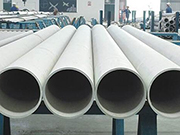
A detailed overview of the characteristics, properties, and applications of S32109 seamless stainless steel pipe
Chemical Composition of S32109 Stainless Seamless Steel Pipe. Commonly used standards for S32109 stainless steel pipe: ASME SA-312/SA-312M, ASME SA-213/SA213M, GB/T14976 Chemical composition of S32109 stainless steel pipe: Carbon: 0.04~0.10, Silicon: ≤1.0, Manganese: ≤2.00, Sulfur: ≤0.030, Phosph...Read more -
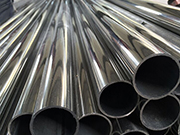
Why are stainless steel welded pipes now also suitable for the boiler industry
As a key industrial material, stainless steel welded pipes, with their unique physical and chemical properties, play an indispensable role in many fields. In the boiler industry in particular, stainless steel welded pipes, with their superior performance and adaptability, are gradually replacing ...Read more -
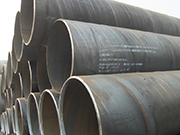
Spiral welded submerged arc welded steel pipe is a high-quality pipeline construction material
As an important pipeline construction material, spiral welded submerged arc welded steel pipe plays an irreplaceable role in the engineering field. Its unique production process and excellent performance characteristics make it widely used in the oil, gas, chemical, power, water supply, and drain...Read more -
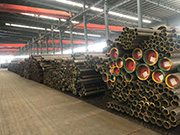
Manufacturing Process, Applications, and Maintenance of ASME SB165 Seamless Alloy Steel Pipe
First, Characteristics of ASME SB165 Seamless Alloy Steel Pipe. ASME SB165 seamless alloy steel pipe is primarily composed of nickel and copper, with nickel accounting for approximately 67% and copper for approximately 23%, along with smaller amounts of iron, manganese, and silicon. This alloy of...Read more -
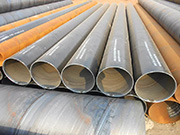
Characteristics, Applications, and Advantages of D500 Spiral Welded Steel Pipe
Spiral welded steel pipe is a common type of steel pipe, widely used in various fields, especially in construction and engineering projects. As a high-quality steel material, D500 spiral welded steel pipe plays a vital role in modern construction. First, Characteristics of D500 Spiral Weld...Read more -
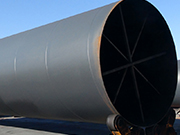
The Impact of Carbon Steel Pipe on Reverse Osmosis Membranes
In today’s era of increasingly scarce water resources, reverse osmosis (RO) technology, as a highly efficient water treatment method, has gradually become an important choice for industrial, agricultural, and domestic water purification. In RO membrane systems, the selection and application...Read more