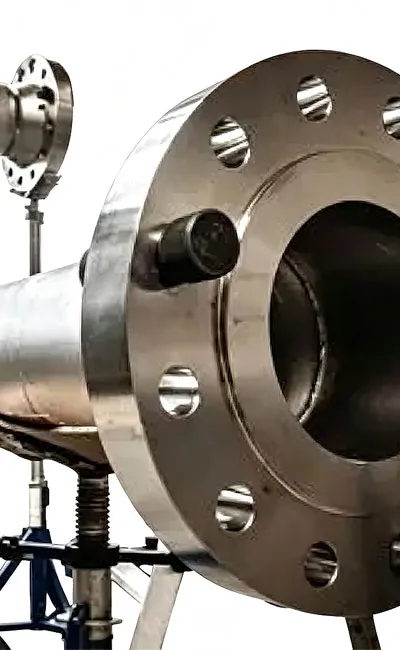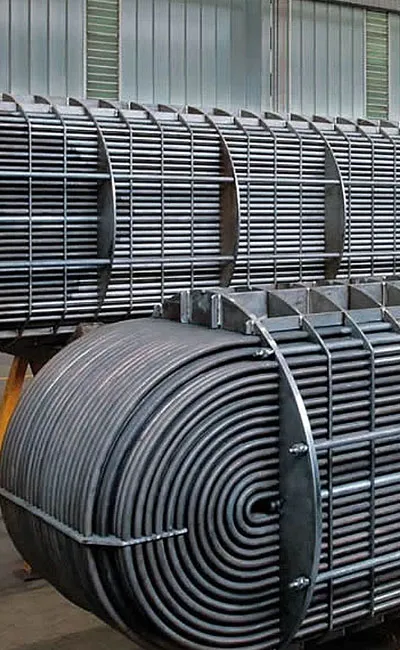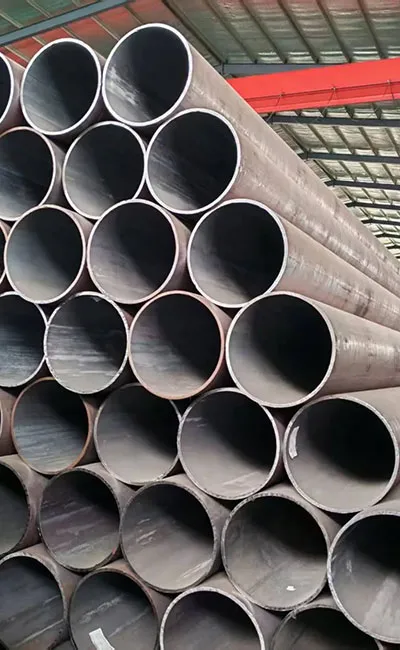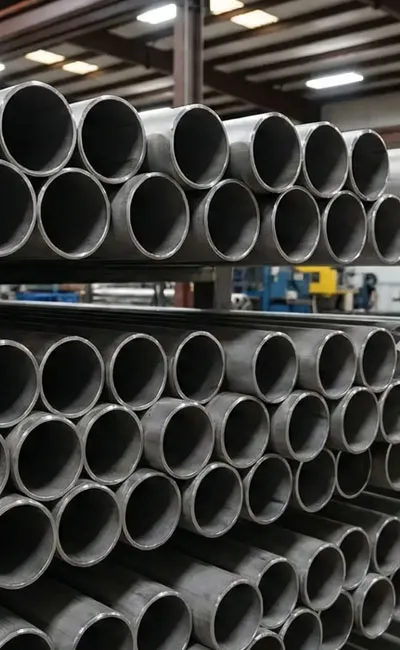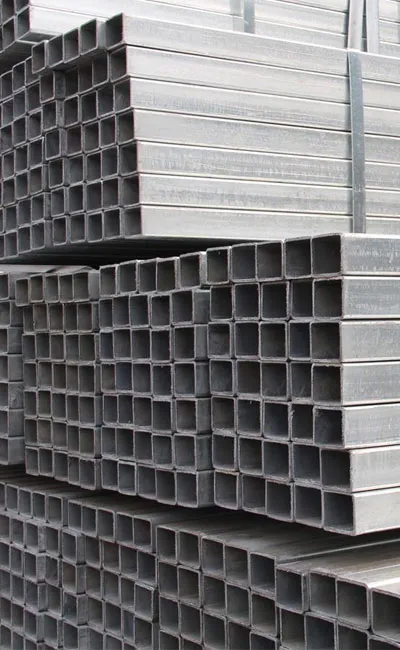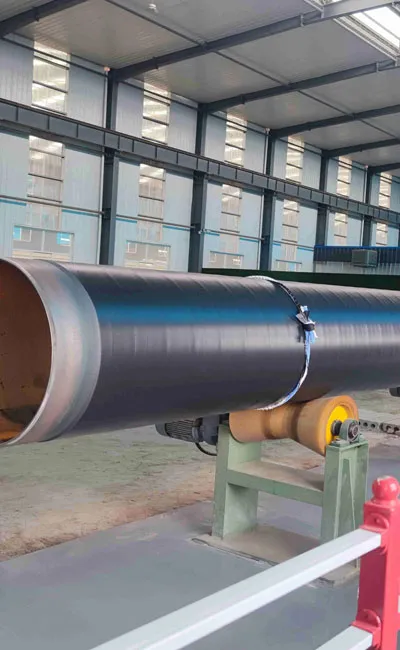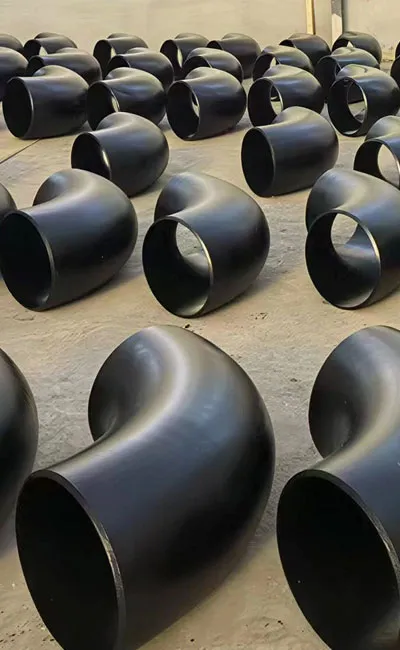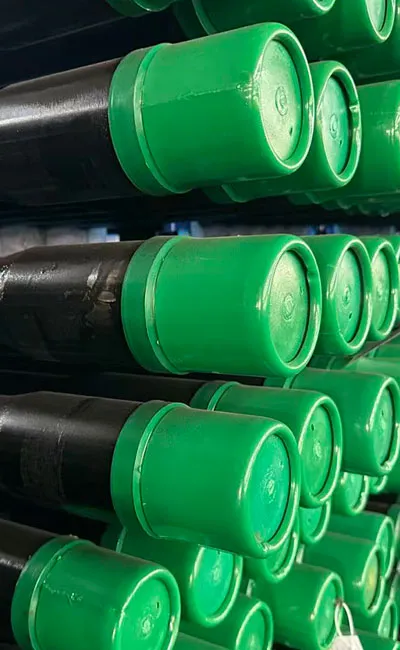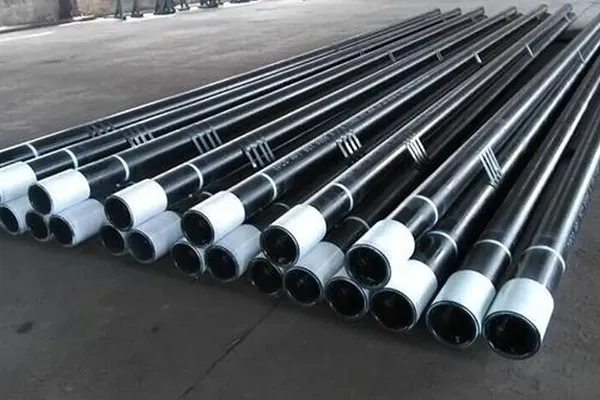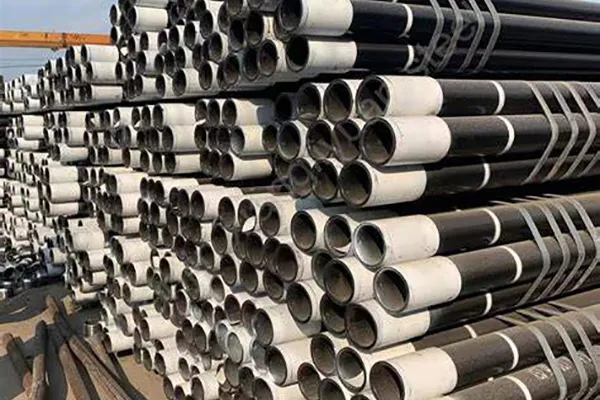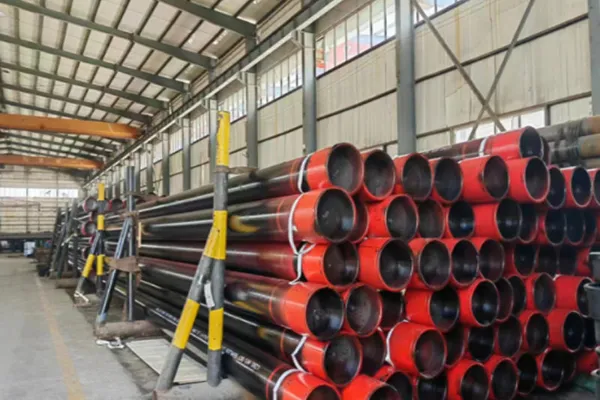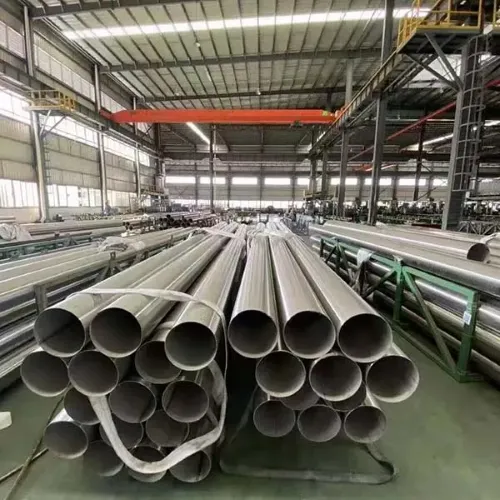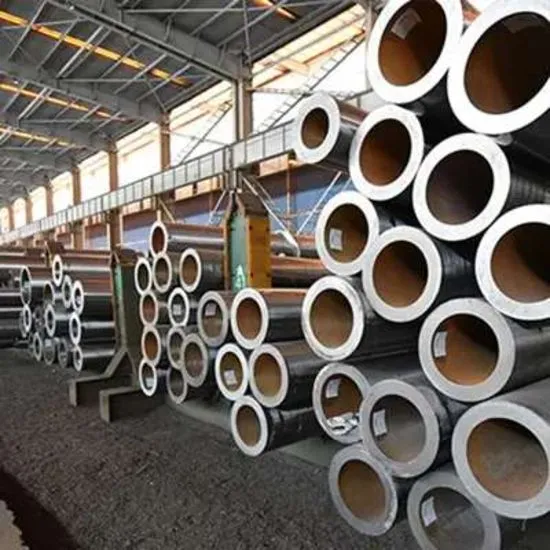

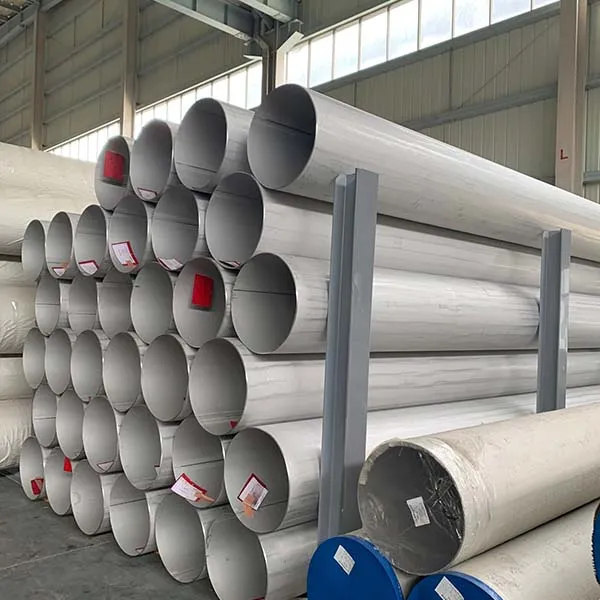
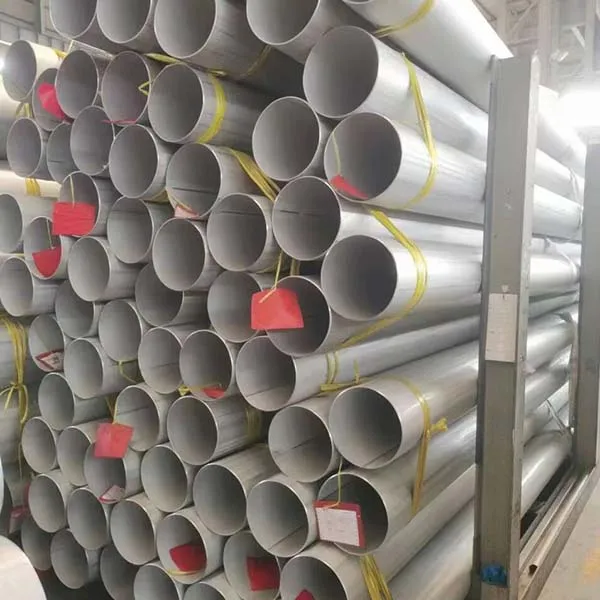
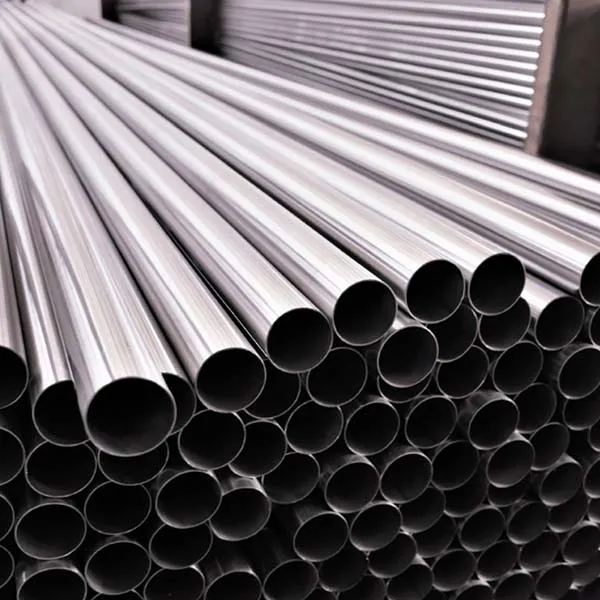
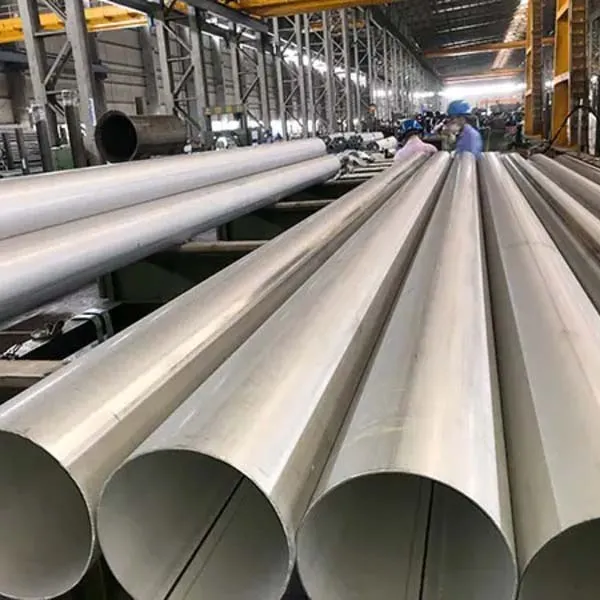
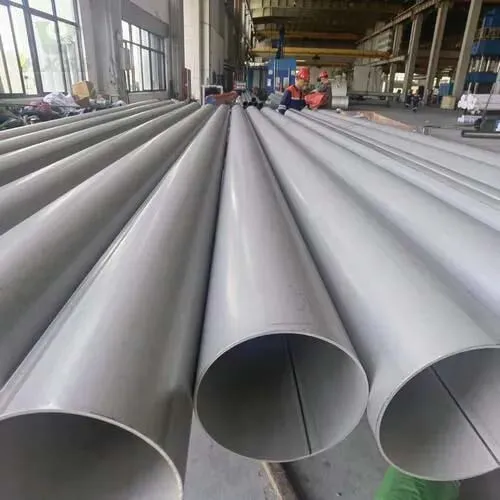
Stainless steel welded pipe is a high cost-performance industrial piping solution manufactured by strip rolling and precision welding. Featuring high production efficiency, full specification coverage and stable quality, it is widely adopted for medium and low-pressure fluid transmission scenarios, serving as an economical and reliable alternative to seamless steel pipes.
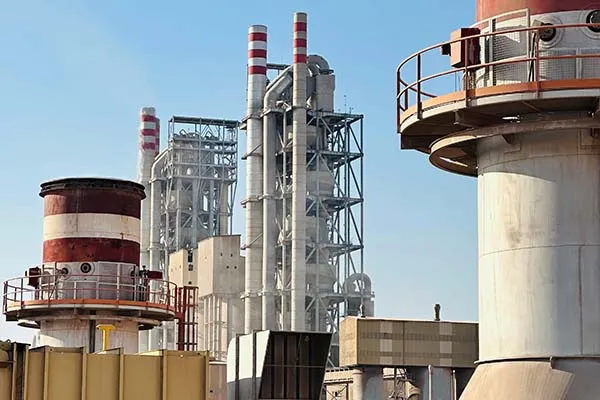
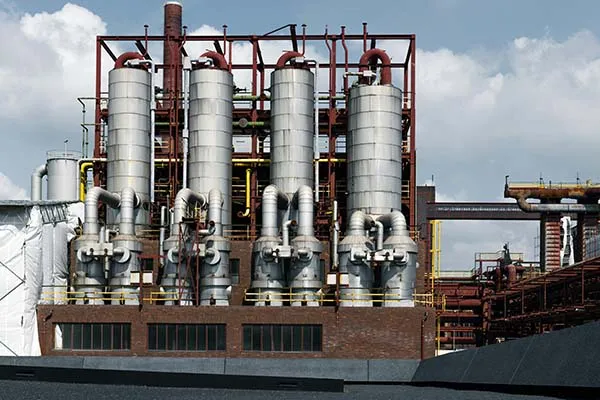
Our stainless steel welded tubing delivers excellent corrosion resistance, high-temperature stability and great ductility, requiring minimal maintenance for long-term service in harsh environments. We supply complete material grades including austenitic, ferritic, martensitic and duplex stainless steel, covering chemical, food, pharmaceutical, oil & gas, power generation and marine industrial piping applications.
|
Product Name |
Executive Standard |
Dimension |
Steel Code / Steel Grade |
|
Industrial Pipes
|
ASTM A312, A358, A778, JIS G3459
|
OD: 1/4"~40" |
TP304, TP304L, TP316L, SUS304TP
|
|
WT: SCH5S~SCH80S |
|||
|
Tubes for Boiler and Heat-Exchanger,
|
ASTM A249, A269, JIS G3463
|
OD: 15.9~139.8mm |
TP304, TP304L, TP316L, SUS304TB
|
|
WT: 1.6~5.0mm |
|||
|
Mechanical and Structural Tubes
|
ASTM A554, JIS G3446
|
OD: 7.9~152.4mm |
MT304, MT304L, MT316L, MT430 Grade 201, 202
|
|
WT: 0.5~6.5mm |
|||
|
Square Tubes
|
ASTM A554
|
OD: 12.7x12.7~150x150mm |
MT304, MT304L, MT316L, MT430 Grade 201, 202
|
|
WT: 0.7~6.5mm |
|||
|
Rectangular Tubes
|
ASTM A554
|
OD: 10x20~100x200mm |
MT304, MT304L, MT316L, MT430 Grade 201, 202
|
|
WT: 0.7~6.5mm |
|||
|
Sanitary Tubing
|
ASTM A270 |
OD: 25.4~165.2mm |
TP304, TP304L, TP316L, SUS304TBS
|
|
JIS G3447 |
WT: 0.8~3.05mm |
||
|
Large Gauge Pipes for Ordinary
|
JIS G3448
|
OD: 15.88~318.5mm |
SUS304TPD
|
|
WT: 0.8~3.0mm |
|||
|
Large Diameter Pipes
|
JIS G3468
|
OD: 14"~40" |
SUS304TPY
|
|
WT: SCH5S~SCH40S |
|
NPS Designator |
Permissible Variations in Outside Diameter |
|
|
|
Over In. |
Under In. |
|
1/8 to 1-1/2, incl |
1/64 (0.015) |
1/32 (0.031) |
|
Over 1-1/2 to 4, incl |
1/32 (0.031) |
1/32 (0.031) |
|
Over 4 to 8, incl |
1/16 (0.062) |
1/32 (0.031) |
|
Over 8 to 18, incl |
3/23 (0.093) |
1/32 (0.031) |
|
Outside Diameter |
Outside Diameter |
Nominal Wall Thickness (mm) |
||||||||
|
ASME B36.19M |
ASME B36.10M |
|||||||||
|
SCH 5S |
SCH 10S |
SCH 40S |
SCH 80S |
SCH 5 |
SCH 10 |
SCH 20 |
STD |
XS |
||
|
1/4 |
13.72 |
— |
1.65 |
2.24 |
3.02 |
|
1.65 |
— |
2.24 |
3.02 |
|
3/8 |
17.15 |
— |
1.65 |
2.31 |
3.2 |
|
1.65 |
— |
2.31 |
3.2 |
|
1/2 |
21.34 |
1.65 |
2.11 |
2.77 |
3.73 |
1.65 |
2.11 |
— |
2.77 |
3.73 |
|
3/4 |
26.67 |
1.65 |
2.11 |
2.87 |
3.91 |
1.65 |
2.11 |
— |
2.87 |
3.91 |
|
1 |
33.4 |
1.65 |
2.77 |
3.38 |
4.55 |
1.65 |
2.77 |
— |
3.38 |
4.55 |
|
1 1/4 |
42.16 |
1.65 |
2.77 |
3.56 |
4.85 |
1.65 |
2.77 |
— |
3.56 |
4.85 |
|
1 1/2 |
48.26 |
1.65 |
2.77 |
3.68 |
5.08 |
1.65 |
2.77 |
— |
3.68 |
5.08 |
|
2 |
60.33 |
1.65 |
2.77 |
3.91 |
5.54 |
1.65 |
2.77 |
— |
3.91 |
5.54 |
|
2 1/2 |
73.03 |
2.11 |
3.05 |
5.16 |
7.01 |
2.11 |
3.05 |
— |
5.16 |
7.01 |
|
3 |
88.9 |
2.11 |
3.05 |
5.49 |
7.62 |
2.11 |
3.05 |
— |
5.49 |
7.62 |
|
3 1/2 |
101.6 |
2.11 |
3.05 |
5.74 |
8.08 |
2.11 |
3.05 |
— |
5.74 |
8.08 |
|
4 |
114.3 |
2.11 |
3.05 |
6.02 |
8.56 |
2.11 |
3.05 |
— |
6.02 |
8.56 |
|
5 |
141.3 |
2.77 |
3.4 |
6.55 |
9.53 |
2.77 |
3.4 |
— |
6.55 |
9.53 |
|
6 |
168.28 |
2.77 |
3.4 |
7.11 |
10.97 |
2.77 |
3.4 |
— |
7.11 |
10.97 |
|
8 |
219.08 |
2.77 |
3.76 |
8.18 |
12.7 |
2.77 |
3.76 |
6.35 |
8.18 |
12.7 |
|
10 |
273.05 |
3.4 |
4.19 |
9.27 |
12.7 |
3.4 |
4.19 |
6.35 |
9.27 |
12.7 |
|
12 |
323.85 |
3.96 |
4.57 |
9.53 |
12.7 |
3.96 |
4.57 |
6.35 |
9.53 |
12.7 |
|
14 |
355.6 |
3.96 |
4.78 |
9.53 |
12.7 |
3.96 |
6.35 |
7.92 |
9.53 |
12.7 |
|
16 |
406.4 |
4.19 |
4.78 |
9.53 |
12.7 |
4.19 |
6.35 |
7.92 |
9.53 |
12.7 |
|
18 |
457.2 |
4.19 |
4.78 |
9.53 |
12.7 |
4.19 |
6.35 |
7.92 |
9.53 |
12.7 |
|
20 |
508 |
4.78 |
5.54 |
9.53 |
12.7 |
4.78 |
6.35 |
9.53 |
9.53 |
12.7 |
|
22 |
558.8 |
4.78 |
5.54 |
|
|
4.78 |
6.35 |
9.53 |
9.53 |
12.7 |
|
24 |
609.6 |
5.54 |
6.35 |
9.53 |
12.7 |
5.54 |
6.35 |
9.53 |
9.53 |
12.7 |
|
26 |
660.4 |
— |
— |
— |
— |
— |
7.92 |
12.7 |
9.53 |
12.7 |
|
28 |
711.2 |
— |
— |
— |
— |
— |
7.92 |
12.7 |
9.53 |
12.7 |
|
30 |
762 |
6.35 |
7.92 |
— |
6.35 |
— |
7.92 |
12.7 |
9.53 |
12.7 |
|
32 |
812.8 |
Thinkness: 8.63-30mm |
||||||||
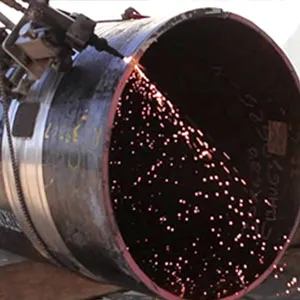
The standardized production of stainless steel welded pipes follows a complete, rigorous process flow to ensure stable product quality, accurate dimensions and reliable service performance.
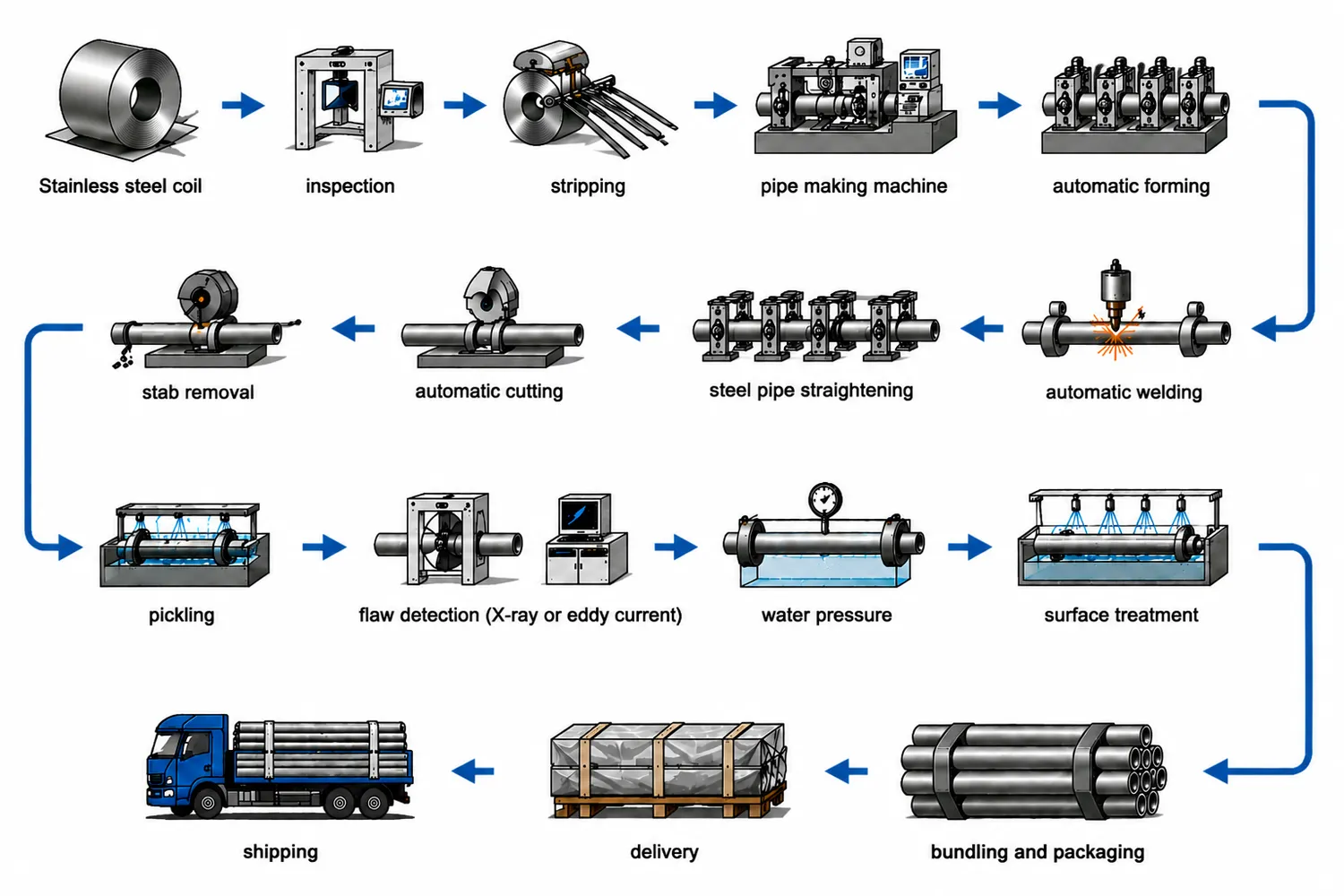
To adapt to conventional market demands and control costs, most manufacturers simplify basic processes for ordinary-grade welded pipes used in conventional low-pressure fluid transmission scenarios, appropriately omitting pickling, non-destructive flaw detection and hydrostatic testing procedures. For projects requiring high safety, high precision and suitability for harsh working environments, all standard inspection and treatment processes can be customized and supplemented to meet special industrial application requirements, with adjusted specifications and prices accordingly.
We conduct comprehensive standardized testing for stainless steel welded pipes to ensure stable mechanical performance, accurate dimensions and zero internal or external defects. Our full test scope covers chemical composition analysis, mechanical property tests (tensile strength, yield strength, elongation), and technical performance tests including flattening, bending, blow and impact tests. We also complete strict exterior dimension inspection, hydrostatic pressure testing and professional X-ray nondestructive testing to meet international quality standards.All products are available with authoritative mill test certificates (EN 10204 3.1 & EN 10204 3.2). Third-party inspection by SGS, BV, Lloyds and other reputable institutions is supported on request, delivering fully verified, traceable quality for global industrial projects.
A1: Stainless steel welded pipe is a high cost-performance piping alternative to seamless pipe. It boasts high dimensional accuracy, excellent corrosion resistance, good structural durability and a neat surface appearance. Featuring rich specifications and flexible production, it perfectly meets most standard industrial piping needs and effectively reduces overall project costs.
A2: Based on weld seam structure, stainless steel welded pipes are mainly divided into straight seam welded pipes and spiral welded pipes. Straight seam welded pipes have simple processes, high production efficiency and low cost, suitable for various small-diameter piping systems. Spiral welded pipes feature higher structural strength and wider raw material adaptability, which are widely used for large-diameter and medium-pressure pipeline projects.
A3: Compared with stainless steel seamless pipes, welded pipes have simpler production processes, richer specifications and lower manufacturing costs, though their extreme structural strength is slightly lower. With continuous advancements in welding and finishing technology, the overall quality and operational stability of welded pipes have been greatly improved, gradually replacing seamless pipes in most medium and low-pressure industrial application scenarios.
A4: Stainless steel welded pipes are widely used for conventional low-pressure fluid transmission. They are applicable for conveying water, gas, air, heating steam and hot water. With optional ordinary or thickened wall thickness and threaded or non-threaded pipe end designs, they fully adapt to building plumbing, heating and general industrial utility piping systems.
A5: Welded stainless steel pipes cover diversified professional industrial scenarios. Straight seam welded pipes are commonly used for electrical wire protection casings, thin-walled piping and transformer cooling pipelines. High-strength spiral welded pipes are ideal for medium-pressure fluid transmission and large infrastructure construction, including bridge and dock pile foundation projects, providing stable and cost-effective industrial piping solutions.
|
NPS Designator |
Permissible Variations in Outside Diameter |
|
|
|
Over In. |
Under In. |
|
1/8 to 1-1/2, incl |
1/64 (0.015) |
1/32 (0.031) |
|
Over 1-1/2 to 4, incl |
1/32 (0.031) |
1/32 (0.031) |
|
Over 4 to 8, incl |
1/16 (0.062) |
1/32 (0.031) |
|
Over 8 to 18, incl |
3/23 (0.093) |
1/32 (0.031) |
|
Outside Diameter |
Outside Diameter |
Nominal Wall Thickness (mm) |
||||||||
|
ASME B36.19M |
ASME B36.10M |
|||||||||
|
SCH 5S |
SCH 10S |
SCH 40S |
SCH 80S |
SCH 5 |
SCH 10 |
SCH 20 |
STD |
XS |
||
|
1/4 |
13.72 |
— |
1.65 |
2.24 |
3.02 |
|
1.65 |
— |
2.24 |
3.02 |
|
3/8 |
17.15 |
— |
1.65 |
2.31 |
3.2 |
|
1.65 |
— |
2.31 |
3.2 |
|
1/2 |
21.34 |
1.65 |
2.11 |
2.77 |
3.73 |
1.65 |
2.11 |
— |
2.77 |
3.73 |
|
3/4 |
26.67 |
1.65 |
2.11 |
2.87 |
3.91 |
1.65 |
2.11 |
— |
2.87 |
3.91 |
|
1 |
33.4 |
1.65 |
2.77 |
3.38 |
4.55 |
1.65 |
2.77 |
— |
3.38 |
4.55 |
|
1 1/4 |
42.16 |
1.65 |
2.77 |
3.56 |
4.85 |
1.65 |
2.77 |
— |
3.56 |
4.85 |
|
1 1/2 |
48.26 |
1.65 |
2.77 |
3.68 |
5.08 |
1.65 |
2.77 |
— |
3.68 |
5.08 |
|
2 |
60.33 |
1.65 |
2.77 |
3.91 |
5.54 |
1.65 |
2.77 |
— |
3.91 |
5.54 |
|
2 1/2 |
73.03 |
2.11 |
3.05 |
5.16 |
7.01 |
2.11 |
3.05 |
— |
5.16 |
7.01 |
|
3 |
88.9 |
2.11 |
3.05 |
5.49 |
7.62 |
2.11 |
3.05 |
— |
5.49 |
7.62 |
|
3 1/2 |
101.6 |
2.11 |
3.05 |
5.74 |
8.08 |
2.11 |
3.05 |
— |
5.74 |
8.08 |
|
4 |
114.3 |
2.11 |
3.05 |
6.02 |
8.56 |
2.11 |
3.05 |
— |
6.02 |
8.56 |
|
5 |
141.3 |
2.77 |
3.4 |
6.55 |
9.53 |
2.77 |
3.4 |
— |
6.55 |
9.53 |
|
6 |
168.28 |
2.77 |
3.4 |
7.11 |
10.97 |
2.77 |
3.4 |
— |
7.11 |
10.97 |
|
8 |
219.08 |
2.77 |
3.76 |
8.18 |
12.7 |
2.77 |
3.76 |
6.35 |
8.18 |
12.7 |
|
10 |
273.05 |
3.4 |
4.19 |
9.27 |
12.7 |
3.4 |
4.19 |
6.35 |
9.27 |
12.7 |
|
12 |
323.85 |
3.96 |
4.57 |
9.53 |
12.7 |
3.96 |
4.57 |
6.35 |
9.53 |
12.7 |
|
14 |
355.6 |
3.96 |
4.78 |
9.53 |
12.7 |
3.96 |
6.35 |
7.92 |
9.53 |
12.7 |
|
16 |
406.4 |
4.19 |
4.78 |
9.53 |
12.7 |
4.19 |
6.35 |
7.92 |
9.53 |
12.7 |
|
18 |
457.2 |
4.19 |
4.78 |
9.53 |
12.7 |
4.19 |
6.35 |
7.92 |
9.53 |
12.7 |
|
20 |
508 |
4.78 |
5.54 |
9.53 |
12.7 |
4.78 |
6.35 |
9.53 |
9.53 |
12.7 |
|
22 |
558.8 |
4.78 |
5.54 |
|
|
4.78 |
6.35 |
9.53 |
9.53 |
12.7 |
|
24 |
609.6 |
5.54 |
6.35 |
9.53 |
12.7 |
5.54 |
6.35 |
9.53 |
9.53 |
12.7 |
|
26 |
660.4 |
— |
— |
— |
— |
— |
7.92 |
12.7 |
9.53 |
12.7 |
|
28 |
711.2 |
— |
— |
— |
— |
— |
7.92 |
12.7 |
9.53 |
12.7 |
|
30 |
762 |
6.35 |
7.92 |
— |
6.35 |
— |
7.92 |
12.7 |
9.53 |
12.7 |
|
32 |
812.8 |
Thinkness: 8.63-30mm |
||||||||
The standardized production of stainless steel welded pipes follows a complete, rigorous process flow to ensure stable product quality, accurate dimensions and reliable service performance.
To adapt to conventional market demands and control costs, most manufacturers simplify basic processes for ordinary-grade welded pipes used in conventional low-pressure fluid transmission scenarios, appropriately omitting pickling, non-destructive flaw detection and hydrostatic testing procedures. For projects requiring high safety, high precision and suitability for harsh working environments, all standard inspection and treatment processes can be customized and supplemented to meet special industrial application requirements, with adjusted specifications and prices accordingly.
We conduct comprehensive standardized testing for stainless steel welded pipes to ensure stable mechanical performance, accurate dimensions and zero internal or external defects. Our full test scope covers chemical composition analysis, mechanical property tests (tensile strength, yield strength, elongation), and technical performance tests including flattening, bending, blow and impact tests. We also complete strict exterior dimension inspection, hydrostatic pressure testing and professional X-ray nondestructive testing to meet international quality standards.All products are available with authoritative mill test certificates (EN 10204 3.1 & EN 10204 3.2). Third-party inspection by SGS, BV, Lloyds and other reputable institutions is supported on request, delivering fully verified, traceable quality for global industrial projects.
A1: Stainless steel welded pipe is a high cost-performance piping alternative to seamless pipe. It boasts high dimensional accuracy, excellent corrosion resistance, good structural durability and a neat surface appearance. Featuring rich specifications and flexible production, it perfectly meets most standard industrial piping needs and effectively reduces overall project costs.
A2: Based on weld seam structure, stainless steel welded pipes are mainly divided into straight seam welded pipes and spiral welded pipes. Straight seam welded pipes have simple processes, high production efficiency and low cost, suitable for various small-diameter piping systems. Spiral welded pipes feature higher structural strength and wider raw material adaptability, which are widely used for large-diameter and medium-pressure pipeline projects.
A3: Compared with stainless steel seamless pipes, welded pipes have simpler production processes, richer specifications and lower manufacturing costs, though their extreme structural strength is slightly lower. With continuous advancements in welding and finishing technology, the overall quality and operational stability of welded pipes have been greatly improved, gradually replacing seamless pipes in most medium and low-pressure industrial application scenarios.
A4: Stainless steel welded pipes are widely used for conventional low-pressure fluid transmission. They are applicable for conveying water, gas, air, heating steam and hot water. With optional ordinary or thickened wall thickness and threaded or non-threaded pipe end designs, they fully adapt to building plumbing, heating and general industrial utility piping systems.
A5: Welded stainless steel pipes cover diversified professional industrial scenarios. Straight seam welded pipes are commonly used for electrical wire protection casings, thin-walled piping and transformer cooling pipelines. High-strength spiral welded pipes are ideal for medium-pressure fluid transmission and large infrastructure construction, including bridge and dock pile foundation projects, providing stable and cost-effective industrial piping solutions.








 English
 Español
 русский язык
 Português