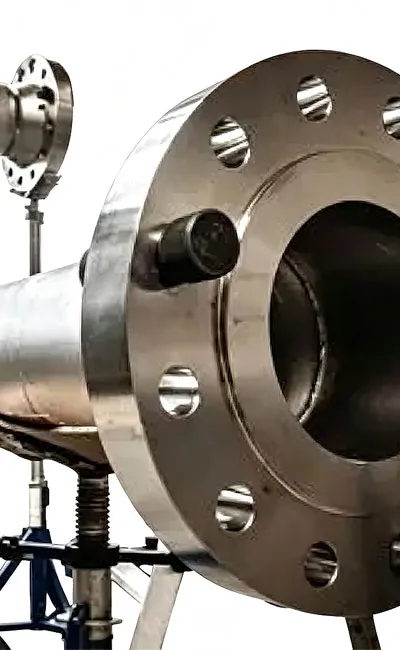
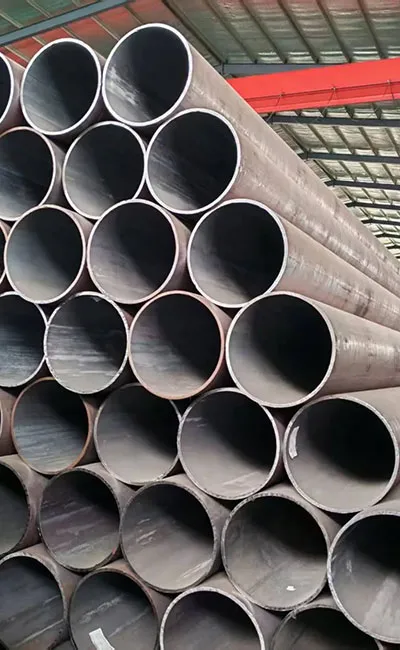
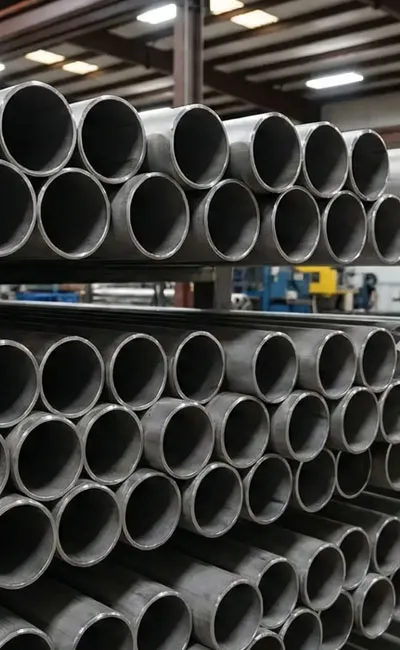
The ASTM A335 Alloy Steel Pipe (also known as ASME SA335 or chrome-moly pipe) is a seamless ferritic alloy steel pipe manufactured for high-temperature service. The specification covers nominal wall and minimum wall seamless chromium-molybdenum (Cr-Mo) pipes, which are suitable for bending, flanging, and similar forming operations, as well as for fusion welding. With the addition of chromium (Cr) and molybdenum (Mo), ASTM A335 pipes offer excellent tensile strength, superior resistance to high-temperature oxidation, creep deformation, and hydrogen attack. Molybdenum increases creep strength while chromium provides oxidation and sulfidation resistance. Standard grades under ASTM A335 include P1, P2, P5, P9, P11, P12, P22, P91, and P92, each designed for specific temperature and pressure ranges.
Applications:
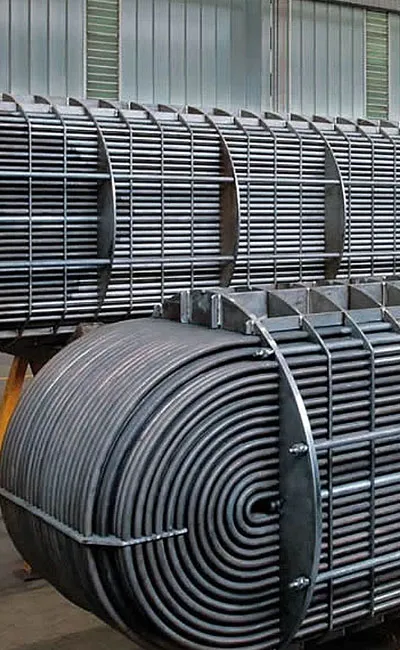
ASTM A335 pipes are essential in industries where piping operates continuously at elevated temperatures. P11, P22, and P91 are the most common grades in power generation, used for main steam piping, superheater tubes, reheater tubes, and boiler headers in subcritical and supercritical power plants, handling temperatures up to 620°C. P5 and P9 dominate the petrochemical sector, serving in hydrogenation reactor feed pipes, cracking furnace tubes, refinery heaters, and high-temperature heat exchanger bundles where hydrogen-rich and sulfur-containing environments demand robust materials. Additionally, these pipes find use in nuclear power secondary steam systems (P11 and P22), chemical processing plants, industrial furnace components, and high-pressure boiler tubing. With resistance to hydrogen sulfide corrosion, hot sulfide cracking, and suitability for NACE sour service applications, ASTM A335 is also specified for oil and gas transmission in extreme environments.
We supply ASTM A335 alloy steel pipes in a comprehensive range of sizes and schedules to meet the specific design requirements of our clients. The specifications cover nominal wall and minimum wall seamless ferritic alloy-steel pipe. The pipes are suitable for bending, flanging (vanstoning), and similar forming operations, as well as fusion welding.
Our inventory includes standard grades such as P1, P2, P5, P9, P11, P12, P22, P91, and P92. The dimensions generally range from small bore tubing to large diameter main steam lines. We can provide pipes with various wall thicknesses, defined by "Schedules" (SCH) or specific weight classes like Standard (STD), Extra Strong (XS), and Double Extra Strong (XXS).
|
Parameter |
Specification Details |
|
Product Name |
ASTM A335 Seamless Alloy Steel Pipe |
|
Standard |
ASTM A335 / ASME SA335 |
|
Grades Available |
P1, P2, P5, P9, P11, P12, P22, P91, P92 |
|
Outer Diameter (OD) |
1/8" to 48" (10.3 mm to 1219 mm) |
|
Wall Thickness (WT) |
SCH 10, SCH 20, SCH 30, SCH 40, STD, XS, SCH 80, SCH 120, SCH 160, XXS |
|
Length |
Single Random Length (SRL), Double Random Length (DRL), or Fixed Length (up to 12m) |
|
End Finish |
Plain End, Beveled End (for welding), Threaded |
|
Surface Finish |
Black Painting, Varnished, Oiled, or as per customer requirement |
|
Testing |
Hydrostatic Test, Eddy Current, Ultrasonic Testing (UT), Hardness Test |
The ASTM A335 standard governs the manufacturing of seamless ferritic alloy-steel pipe for high-temperature service. The chemical composition of each grade is strictly controlled to ensure the material performs as expected under thermal stress. The addition of Chromium provides oxidation resistance, while Molybdenum increases strength at high temperatures.
Key Grades and Chemical Composition
The table below outlines the chemical requirements for the most common A335 grades. Note that all values are in percentages by weight.
|
Grade |
Cr (%) |
Mo (%) |
Max Temp (°C) |
Yield (min MPa) |
Primary Applications |
|
P1 |
— |
0.44-0.65 |
~482 |
205 |
Low-alloy piping, moderate temp service |
|
P5 |
4.0-6.0 |
0.45-0.65 |
~593 |
205 |
Refinery heaters, sulfur service |
|
P9 |
8.0-10.0 |
0.90-1.10 |
~593 |
205 |
High-temp hydrogen environments |
|
P11 |
1.00-1.50 |
0.44-0.65 |
~538 |
205 |
Boiler superheater piping, steam headers |
|
P22 |
1.90-2.60 |
0.87-1.13 |
~565 |
205 |
Main steam piping, hydroprocessing |
|
P91 |
8.0-9.5 |
0.85-1.05 |
~593 |
415 |
Ultra-supercritical boilers, heavy-wall |
|
P92 |
8.5-9.5 |
0.30-0.60 |
~620 |
440 |
Advanced USC plants, creep-strength enhanced |
|
Grade |
Carbon (C) |
Manganese (Mn) |
Phosphorus (P) |
Sulfur (S) |
Silicon (Si) |
Chromium (Cr) |
Molybdenum (Mo) |
|
P11 |
0.05-0.15 |
0.30-0.60 |
0.025 max |
0.025 max |
0.50-1.00 |
1.00-1.50 |
0.44-0.65 |
|
P22 |
0.05-0.15 |
0.30-0.60 |
0.025 max |
0.025 max |
0.50 max |
1.90-2.60 |
0.87-1.13 |
|
P5 |
0.15 max |
0.30-0.60 |
0.025 max |
0.025 max |
0.50 max |
4.00-6.00 |
0.44-0.65 |
|
P91 |
0.08-0.12 |
0.30-0.60 |
0.020 max |
0.010 max |
0.20-0.50 |
8.00-9.50 |
0.85-1.05 |
Mechanical Properties
In addition to chemical composition, the standard mandates specific mechanical properties. For instance, Grade P11 typically requires a minimum tensile strength of 415 MPa and a minimum yield strength of 205 MPa. Grade P91, being a martensitic steel, requires higher strength, with a minimum tensile strength of 585 MPa and yield strength of 415 MPa.
All pipes must undergo heat treatment (normalizing and tempering or full annealing) to achieve the required microstructure and hardness. We provide Material Test Reports (MTR) certified to EN 10204 3.1, verifying compliance with these chemical and mechanical standards.
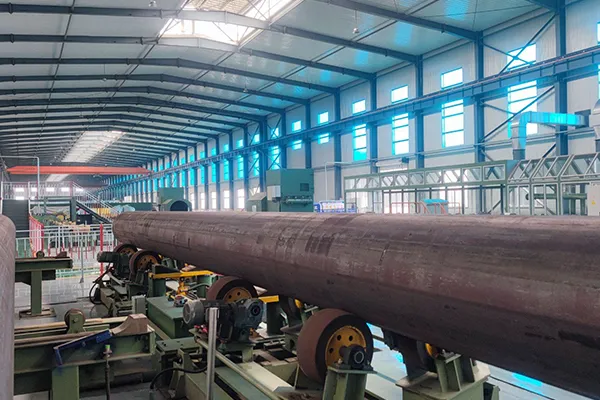
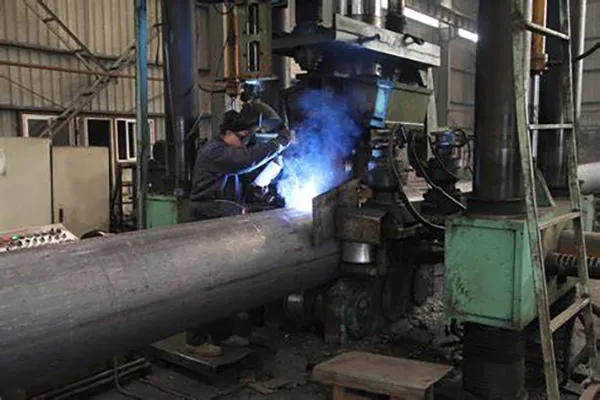
The manufacturing of ASTM A335 alloy steel pipe is a complex process that ensures the highest quality and performance. Since A335 specifies seamless pipe, the production differs significantly from welded pipe manufacturing.
Raw Material Preparation: The process begins with high-quality alloy steel billets. These billets are inspected for surface defects and chemical composition before heating.
Hot Rolling: The heated billet is pierced by a mandrel to create a hollow shell (bloom). This shell is then elongated and rolled to reduce its wall thickness and increase its diameter. This hot working process refines the grain structure of the steel.
Sizing: The pipe passes through a series of sizing rolls to achieve the precise outer diameter and roundness required by the specifications.
Heat Treatment: This is a critical step for alloy steel. The pipes are subjected to heat treatment—typically normalizing and tempering—to relieve internal stresses, soften the material for workability, and achieve the specific tensile properties required by the grade (e.g., P22 or P91).
Finishing and Testing: Finally, the pipes are cut to length, straightened, and undergo rigorous testing, including hydrostatic pressure tests and non-destructive examinations (Ultrasonic or Eddy Current) to detect any internal or surface flaws.
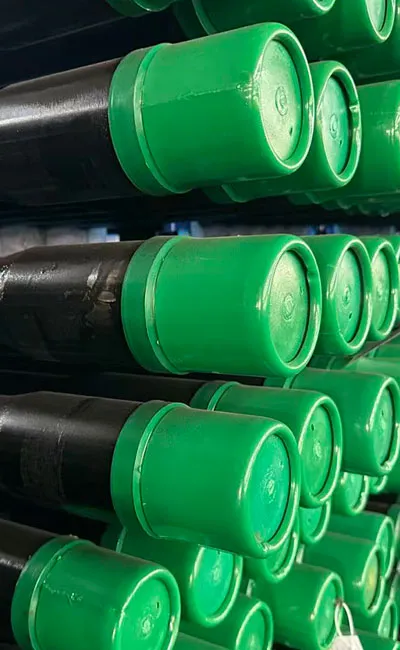
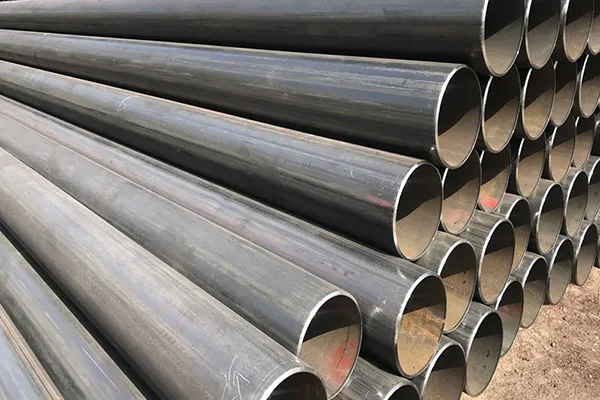
Proper packing of ASTM A335 Alloy Steel Pipe is essential to protect against mechanical damage, surface corrosion, and moisture ingress during transit and long-term storage. End protection: Every pipe receives heavy-duty plastic caps (for diameters up to 6″) or reinforced plastic donut rings (for larger diameters). Beveled ends are protected with specialized caps to prevent deformation. Threaded ends (when specified) are fitted with steel or plastic thread protectors.
Surface protection: For standard shipments, a thin removable rust-preventive oil (solvent-based) is applied to the external surface. For extended storage or high-humidity export routes, each pipe is wrapped with VCI (Volatile Corrosion Inhibitor) paper, and desiccant bags are placed inside the bore.
Bundling & Crating: Small diameters (≤4″) are formed into hexagonal bundles (19-61 pipes per bundle) and secured with steel strapping, with cardboard strips under each strap to prevent galvanic corrosion. Large diameters (≥8″) are strapped individually with wooden separators. For sea freight, bundles are wrapped in woven polypropylene fabric (220 g/m²) plus LDPE film (0.15 mm), heat-sealed, and placed on ISPM 15-certified wooden pallets. Each bundle carries a waterproof label with grade (e.g.,“A335 P11”), size, heat number, quantity, net weight, and handling symbols (“KEEP DRY”,“DO NOT ROLL”). A detailed packing list is enclosed in a waterproof sleeve attached to the bundle.
A: ASTM A335 (also ASME SA335) is the standard specification for seamless ferritic alloy steel pipe designed for high-temperature service. The“chrome-moly”name comes from its chromium and molybdenum alloying elements, which provide excellent creep strength, oxidation resistance, and hydrogen attack resistance at elevated temperatures. Common grades include P5, P9, P11, P22, and P91.
A: P11 (1.25Cr-0.5Mo) is suitable for moderate high-temperature applications up to ~538°C (1000°F), while P22 (2.25Cr-1Mo) extends service to ~565°C (1050°F) and offers better hydrogen resistance. P22 requires higher preheat (200-250°C) and contains higher chromium content (1.90-2.60%).
A: Yes, but preheating and post-weld heat treatment (PWHT) are mandatory. P11 requires preheat at 150-200°C and PWHT at 677-727°C. P91 requires preheat at 200-300°C and PWHT at 730-770°C with strict temperature control.
A: P11 up to ~538°C, P22 up to ~565°C, P91 up to ~593°C, and P92 up to ~620°C, based on ASME B31.1/B31.3 allowable stress tables.
A: EN 10204 Type 3.1 mill test certificates (MTC) with full traceability to heat number, chemical analysis, mechanical properties, NDE results, and PWHT records. Type 3.2 certificates with third-party verification are also available. NACE MR0175 certification for sour service can be supplied upon request.