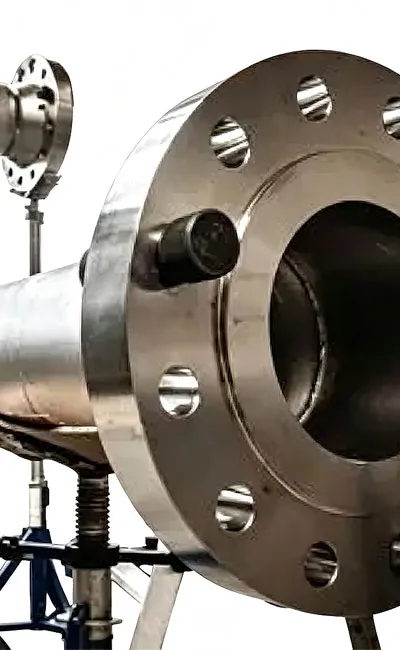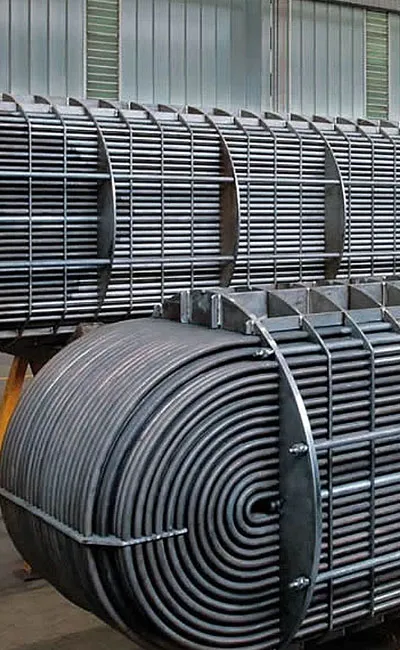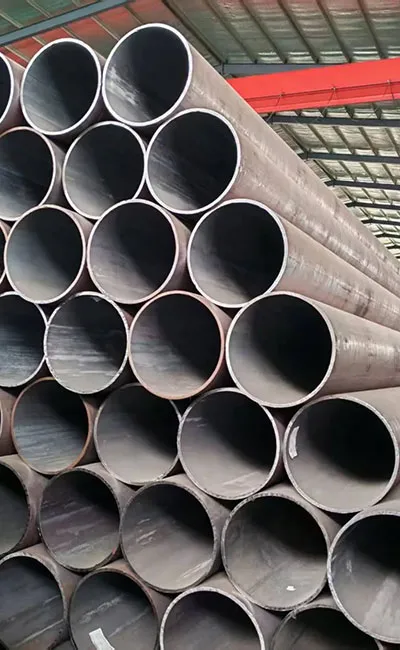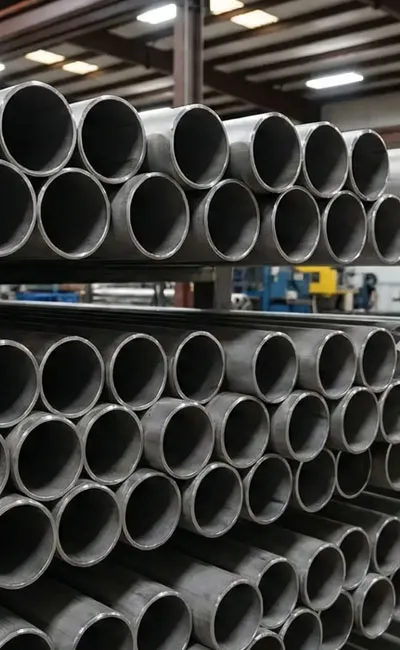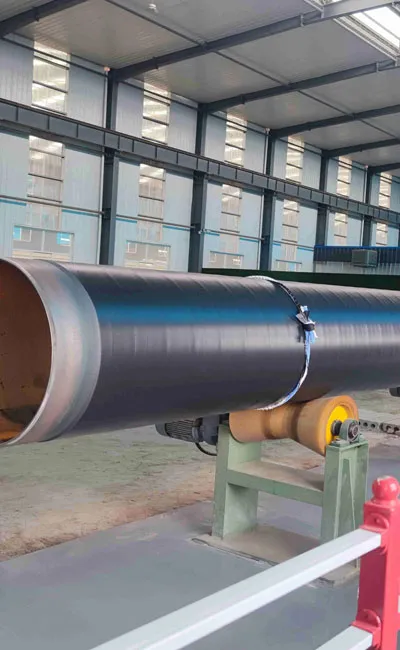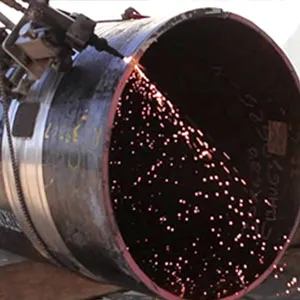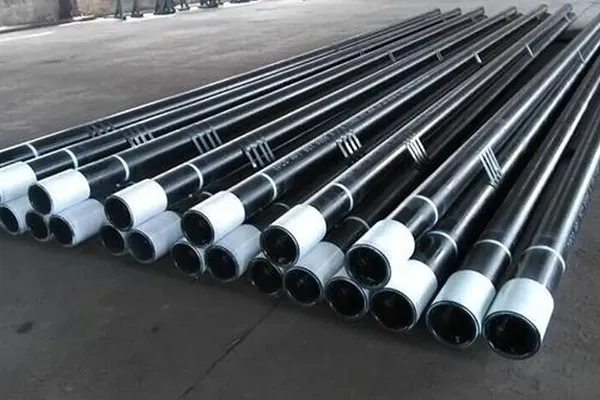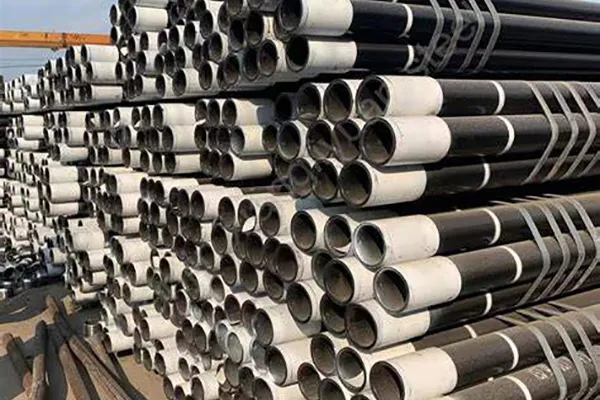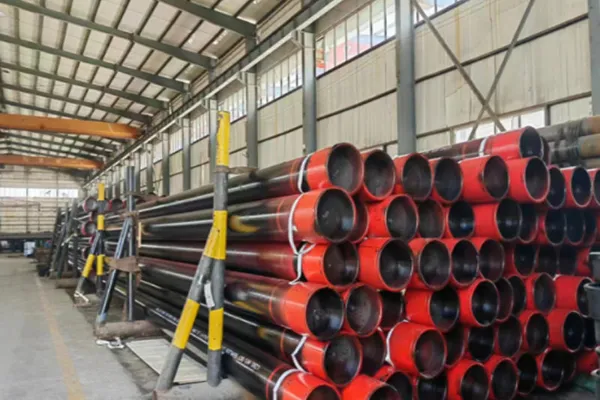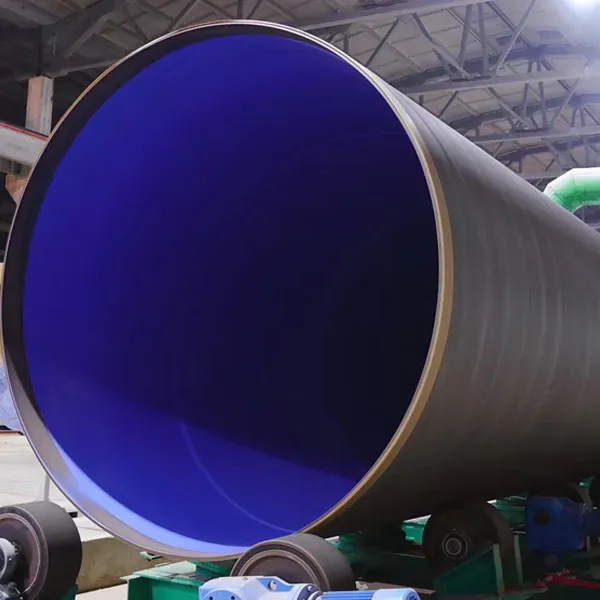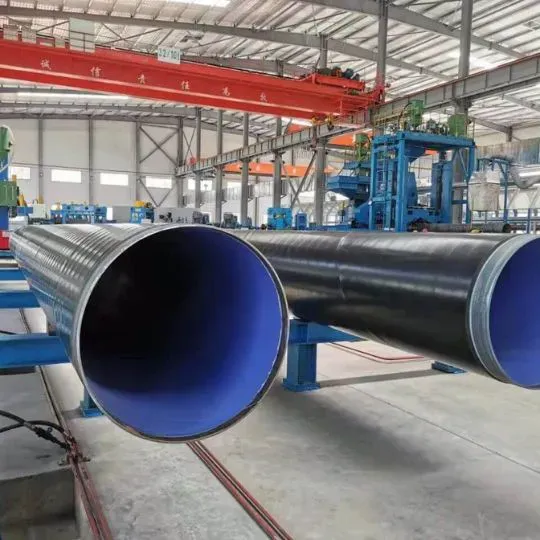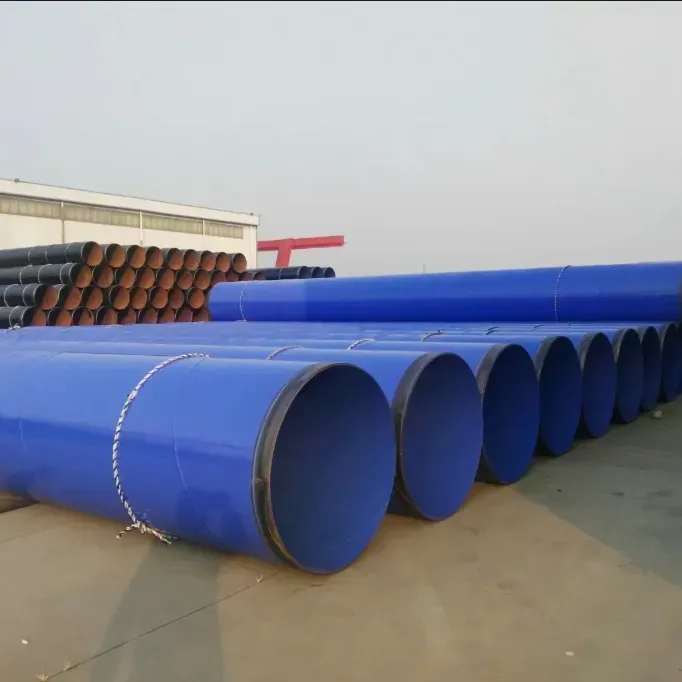

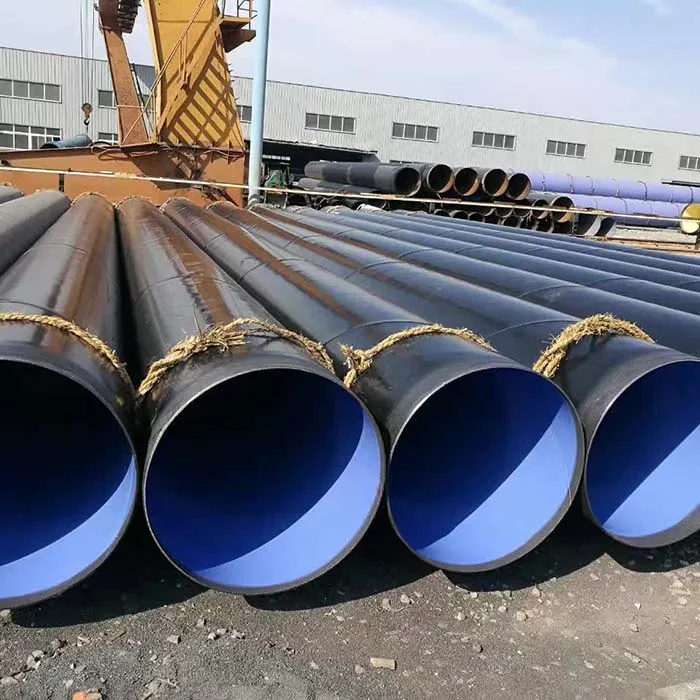
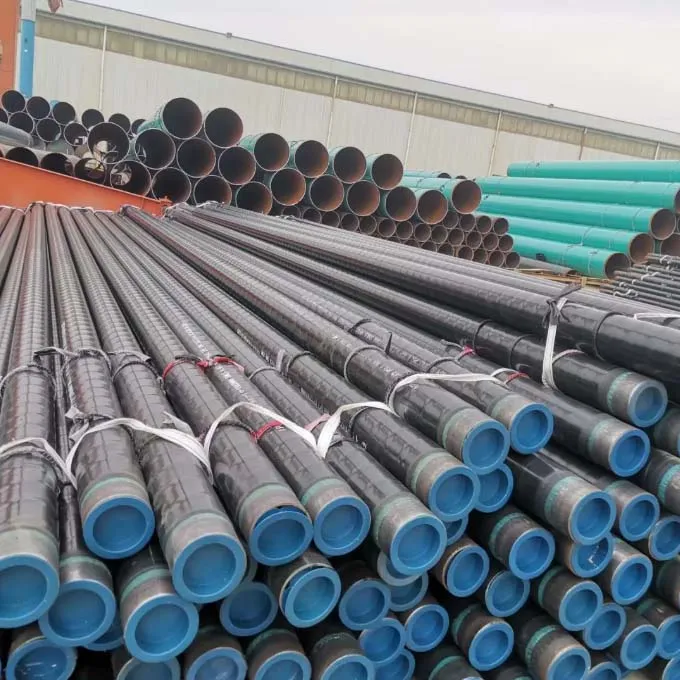
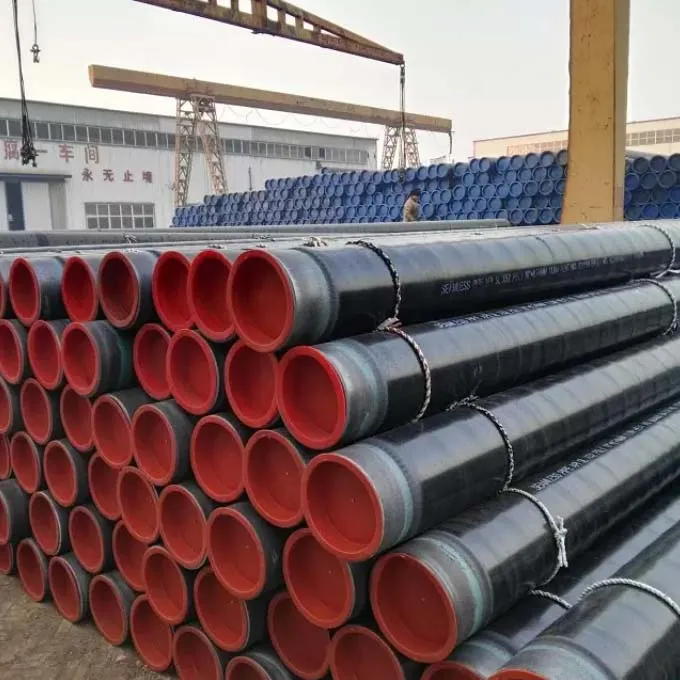
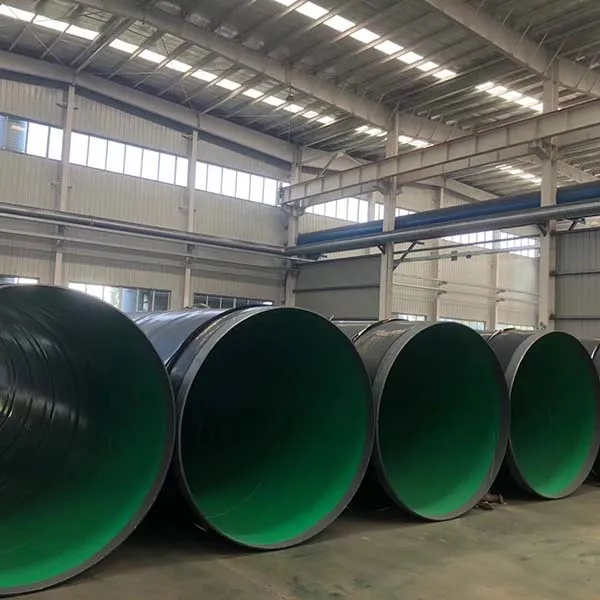
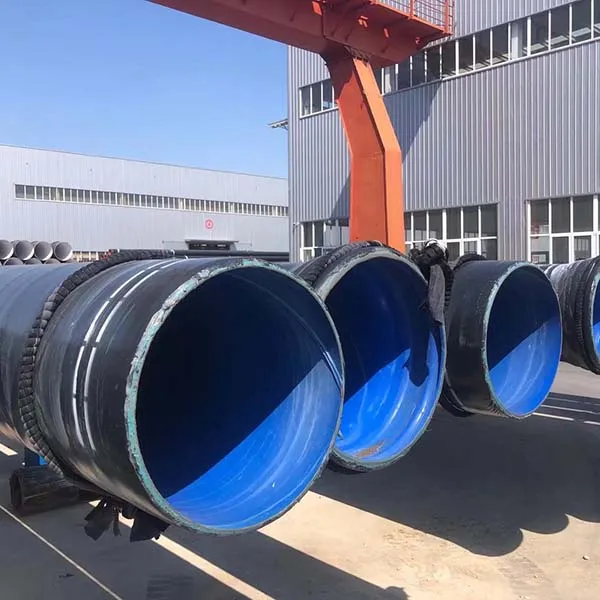
3PE Anti-Corrosion Steel Pipe (Three-Layer Polyethylene)represents the gold standard in external pipeline protection for buried infrastructure. This advanced coating system combines the superior corrosion resistance of Fusion Bonded Epoxy (FBE) with the exceptional mechanical protection of High-Density Polyethylene (HDPE), bonded together by a specialized copolymer adhesive layer. This "three-in-one" structure creates a robust, seamless shield that effectively isolates the steel pipe from soil, moisture, and chemical contaminants, significantly extending the service life of the pipeline to 30-50 years.
The primary advantage of 3PE coating lies in its dual functionality. The inner epoxy layer provides excellent chemical resistance and cathodic disbondment properties, preventing the steel from rusting even if the coating is slightly damaged. The outer polyethylene layer offers high impact resistance, protecting the pipe from physical damage during transportation, handling, and backfilling. It also provides superior resistance to soil stress and abrasion.
Applications:
Due to its reliability and durability, 3PE anti-corrosion steel pipe is extensively used in:
• Oil and Gas Transmission: Long-distance pipelines for crude oil, natural gas, and refined products (both onshore and offshore).
• Urban Infrastructure: Municipal water supply networks, heating supply pipelines (district heating), and gas distribution systems.
• Industrial Projects: Petrochemical plant piping, sewage treatment discharge lines, and slurry transport.
• Infrastructure Protection: Cable casing pipes for highways and power transmission lines.
Whether for seamless steel pipes, LSAW, or SSAW (spiral) pipes, the 3PE coating ensures the structural integrity of the pipeline remains intact in harsh underground environments.
The specifications for 3PE Anti-Corrosion Steel Pipe are governed by rigorous international standards, primarily GB/T 23257-2017 (China) and DIN 30670 (Germany/Europe). The coating thickness varies based on the pipe diameter and the required protection level (Normal vs. Reinforced).
Coating Structure:
Layer 1 (Bottom): Fusion Bonded Epoxy (FBE) - Provides corrosion protection and adhesion to steel.
Layer 2 (Middle): Copolymer Adhesive (AD) - Bonds the FBE to the outer polyethylene.
Layer 3 (Top): High-Density Polyethylene (PE) - Provides mechanical strength and weather resistance.
|
Parameter |
Normal Grade (Standard) |
Reinforced Grade (Heavy Duty) |
|
Pipe Diameter (DN) |
Min Thickness (mm) |
Min Thickness (mm) |
|
DN≤100 |
1.8 |
2.5 |
|
100 < DN≤250 |
2.0 |
2.7 |
|
250 < DN≤500 |
2.2 |
2.9 |
|
500 < DN≤800 |
2.5 |
3.2 |
|
DN≥800 |
3.0 |
3.7 |
Layer Thickness Details (Typical Values):
FBE Layer:≥80μm (typically 100–150μm)
Adhesive Layer: 170–250μm
PE Layer: Varies from 1.8mm to 3.7mm depending on diameter and grade.
Base Pipe Specifications:
Material: API 5L (Gr. B, X42, X52, X60, X70), ASTM A106, Q235, Q345.
Diameter Range:Φ60mm toΦ1420mm (and larger upon request).
End Finish: Plain ends with a reserved welding area (typically 100-150mm of bare steel at each end) or beveled ends.
The3PE Anti Corrosion Steel Pipeis manufactured and tested in compliance with a comprehensive range of international and national standards. The table below summarizes the key applicable standards.
Applicable Standards for 3PE Coating
|
Standard |
Full Title |
Key Features |
|
ISO 21809-1 |
Petroleum and natural gas industries – External coatings for buried or submerged pipelines used in pipeline transportation systems – Part 1: Polyolefin coatings (3-layer PE and 3-layer PP) |
Modern international standard; performance-based approach; detailed high-temperature performance requirements; compatible with global ISO standards-16 |
|
DIN 30670 |
Polyethylene coatings on steel pipes and fittings – Requirements and tests |
Veteran German/European standard; decades of history; strictly regulated; clear guidance for every step of 3LPE coating-16 |
|
GB/T 23257-2017 |
Polyethylene anticorrosion coating for buried steel pipelines |
Current Chinese national standard; more stringent and detailed performance requirements than most international standards-11-35 |
|
SY/T 0413-2002 |
Technical standard for polyethylene anticorrosion coating for buried steel pipelines |
Chinese industry standard (predecessor to GB/T 23257); some contents still applicable-35-40 |
|
CSA Z245.21 |
External polyethylene coating for steel pipe |
Canadian standard; applicable for North American projects-11 |
|
NFA 49-710 |
External coating – Three-layer polyethylene coating – Steel tubes |
French standard-11 |
|
API Spec 5L |
Specification for line pipe |
Standard for base steel pipe for pipeline transportation systems-35 |
|
API Spec 2B |
Specification for fabrication of structural steel pipe |
For offshore steel structures- |
Standard Comparison – Key Differences
|
Performance Index |
DIN 30670 (2012) |
ISO 21809-1 (2018) |
Engineering Insight |
|
Total Thickness |
Fixed values for classes (e.g., 3.2 mm) |
Variable minimum, calibrated according to pipe diameter |
ISO provides more economical method |
|
Test Speed/Angle |
Specified fixed parameters |
More flexible performance-based criteria |
DIN more prescriptive; ISO results-oriented |
|
High-Temp Performance |
Less detailed |
More detailed and stricter |
ISO preferred for modern oil/gas pipelines |
The cleaned steel pipe is heated via medium-frequency induction heating to a precise temperature range of 180-220℃(for general coating) or 230±10℃(for epoxy powder application).
Step 3–Epoxy Powder (FBE) Application
The first layer of fusion bonded epoxy powder is applied using high-voltage electrostatic spraying equipment. The FBE layer thickness is maintained at≥80μm for standard grade, or 100-400μm for reinforced grade. This layer forms a chemical bond with the steel substrate, providing excellent adhesion and corrosion protection.
Step 4–Adhesive (AD) Application
The copolymer adhesive is extruded and applied simultaneously at 200-230℃using a side-winding extruder or circular die, forming a thickness of 170-250μm. This layer ensures strong inter-layer bonding between the epoxy and the polyethylene.
Step 5–Polyethylene (PE) Extrusion Coating
High-density polyethylene is extruded onto the adhesive layer using a side-extrusion or circular die process, achieving a thickness of 1.8-3.7mm depending on the corrosion grade. The PE layer provides mechanical protection, impact resistance, and moisture barrier properties.
Step 6–Water Cooling and Quality Inspection
The coated pipe passes through a segmented gradient water cooling system (cooling rate≤30℃/min) to solidify the coating layers. Final quality inspection includes thickness measurement, electrical spark leak detection, adhesion testing, impact testing, and chemical resistance testing per applicable standards. The entire manufacturing system employs 17 coordinated control procedures to ensure functional complementarity of the three-layer structure.
Proper packing of 3PE Anti Corrosion Steel Pipe is essential to prevent coating damage, mechanical deformation, moisture ingress, and corrosion during transit and long-term storage.
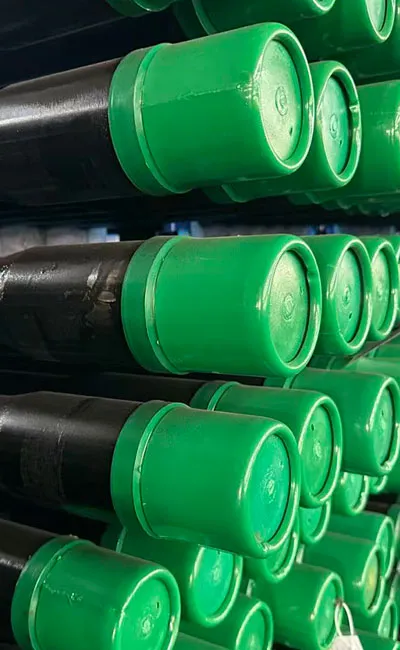
End Protection: Every pipe receives plastic end caps (for diameters up to 4″) or reinforced plastic donut rings (for larger diameters) to protect beveled ends and prevent dirt ingress. For threaded ends, steel or plastic thread protectors are fitted.
Surface Protection: The 3PE coating is robust but can be damaged by impact, friction, or compression during transportation. For export shipments, each pipe is wrapped with VCI (Volatile Corrosion Inhibitor) paper or polyethylene film. Desiccant bags (500g silica gel) are placed inside the pipe bore to absorb moisture. Anti-rust oil is applied to bare steel ends.
Bundling and Securing: Small-diameter pipes (≤4″) are formed into hexagonal bundles (19-61 pipes per bundle) secured with steel strapping, with cardboard or plastic strips placed under straps to prevent coating damage. Medium and large diameters are strapped individually or in pairs with wooden separators between layers. Dedicated lifting slings and soft cushioning are used to avoid direct contact between wire ropes and the coated surface.
Weatherproof Wrapping for Export: Bundles are wrapped in woven polypropylene fabric (220 g/m²) followed by LDPE film (0.15 mm), heat-sealed to create a waterproof envelope. For sea freight, wrapped bundles are loaded into containers or placed on open-top flat racks. For breakbulk shipments, seaworthy wooden crates with reinforced corners and forklift pockets are used, complying with ISPM 15 fumigation/heat treatment standards.
Labeling: Each bundle carries a waterproof label showing customer PO, grade (e.g., “API 5L X52 3PE”), size, coating grade, quantity, net weight, and handling symbols (“KEEP DRY”, “FRAGILE COATING”, “DO NOT ROLL”).
A: The main difference is the presence of the Fusion Bonded Epoxy (FBE) layer. 2PE consists only of an adhesive layer and a polyethylene layer. 3PE adds an FBE layer as the primer. The FBE layer in 3PE provides significantly better corrosion resistance and adhesion to the steel, making 3PE the preferred choice for high-pressure oil and gas pipelines, while 2PE is often used for water or lower-risk applications.
A: Since the pipe ends are left bare for welding, the joint area must be protected after the pipes are connected on-site. We typically use Heat Shrink Sleeves (or Heat Shrink Bands) that match the 3PE specification. These sleeves are shrunk onto the joint using a torch, creating a waterproof and corrosion-resistant seal identical to the factory coating.
A: Under normal burial conditions, 3PE anti-corrosion steel pipes have a designed service life of 30 to 50 years. The longevity depends on the soil conditions, operating temperature, and the quality of the installation (specifically the field joint coating).
A: Minor damage can be repaired using heat shrink sleeves or epoxy repair putty. Larger damaged areas require removal of the compromised coating, surface cleaning to Sa2.5, and reapplication of the three-layer system using field-applied coating kits. All repairs should be tested with an electrical spark detector.
A: Use dedicated soft slings, avoid direct contact with steel wire ropes, use wooden separators between pipes, ensure proper cushioning, and cover with waterproof tarpaulins during transport. Never roll pipes directly on the ground.
The specifications for 3PE Anti-Corrosion Steel Pipe are governed by rigorous international standards, primarily GB/T 23257-2017 (China) and DIN 30670 (Germany/Europe). The coating thickness varies based on the pipe diameter and the required protection level (Normal vs. Reinforced).
Coating Structure:
Layer 1 (Bottom): Fusion Bonded Epoxy (FBE) - Provides corrosion protection and adhesion to steel.
Layer 2 (Middle): Copolymer Adhesive (AD) - Bonds the FBE to the outer polyethylene.
Layer 3 (Top): High-Density Polyethylene (PE) - Provides mechanical strength and weather resistance.
|
Parameter |
Normal Grade (Standard) |
Reinforced Grade (Heavy Duty) |
|
Pipe Diameter (DN) |
Min Thickness (mm) |
Min Thickness (mm) |
|
DN≤100 |
1.8 |
2.5 |
|
100 < DN≤250 |
2.0 |
2.7 |
|
250 < DN≤500 |
2.2 |
2.9 |
|
500 < DN≤800 |
2.5 |
3.2 |
|
DN≥800 |
3.0 |
3.7 |
Layer Thickness Details (Typical Values):
FBE Layer:≥80μm (typically 100–150μm)
Adhesive Layer: 170–250μm
PE Layer: Varies from 1.8mm to 3.7mm depending on diameter and grade.
Base Pipe Specifications:
Material: API 5L (Gr. B, X42, X52, X60, X70), ASTM A106, Q235, Q345.
Diameter Range:Φ60mm toΦ1420mm (and larger upon request).
End Finish: Plain ends with a reserved welding area (typically 100-150mm of bare steel at each end) or beveled ends.
The3PE Anti Corrosion Steel Pipeis manufactured and tested in compliance with a comprehensive range of international and national standards. The table below summarizes the key applicable standards.
Applicable Standards for 3PE Coating
|
Standard |
Full Title |
Key Features |
|
ISO 21809-1 |
Petroleum and natural gas industries – External coatings for buried or submerged pipelines used in pipeline transportation systems – Part 1: Polyolefin coatings (3-layer PE and 3-layer PP) |
Modern international standard; performance-based approach; detailed high-temperature performance requirements; compatible with global ISO standards-16 |
|
DIN 30670 |
Polyethylene coatings on steel pipes and fittings – Requirements and tests |
Veteran German/European standard; decades of history; strictly regulated; clear guidance for every step of 3LPE coating-16 |
|
GB/T 23257-2017 |
Polyethylene anticorrosion coating for buried steel pipelines |
Current Chinese national standard; more stringent and detailed performance requirements than most international standards-11-35 |
|
SY/T 0413-2002 |
Technical standard for polyethylene anticorrosion coating for buried steel pipelines |
Chinese industry standard (predecessor to GB/T 23257); some contents still applicable-35-40 |
|
CSA Z245.21 |
External polyethylene coating for steel pipe |
Canadian standard; applicable for North American projects-11 |
|
NFA 49-710 |
External coating – Three-layer polyethylene coating – Steel tubes |
French standard-11 |
|
API Spec 5L |
Specification for line pipe |
Standard for base steel pipe for pipeline transportation systems-35 |
|
API Spec 2B |
Specification for fabrication of structural steel pipe |
For offshore steel structures- |
Standard Comparison – Key Differences
|
Performance Index |
DIN 30670 (2012) |
ISO 21809-1 (2018) |
Engineering Insight |
|
Total Thickness |
Fixed values for classes (e.g., 3.2 mm) |
Variable minimum, calibrated according to pipe diameter |
ISO provides more economical method |
|
Test Speed/Angle |
Specified fixed parameters |
More flexible performance-based criteria |
DIN more prescriptive; ISO results-oriented |
|
High-Temp Performance |
Less detailed |
More detailed and stricter |
ISO preferred for modern oil/gas pipelines |
The cleaned steel pipe is heated via medium-frequency induction heating to a precise temperature range of 180-220℃(for general coating) or 230±10℃(for epoxy powder application).
Step 3–Epoxy Powder (FBE) Application
The first layer of fusion bonded epoxy powder is applied using high-voltage electrostatic spraying equipment. The FBE layer thickness is maintained at≥80μm for standard grade, or 100-400μm for reinforced grade. This layer forms a chemical bond with the steel substrate, providing excellent adhesion and corrosion protection.
Step 4–Adhesive (AD) Application
The copolymer adhesive is extruded and applied simultaneously at 200-230℃using a side-winding extruder or circular die, forming a thickness of 170-250μm. This layer ensures strong inter-layer bonding between the epoxy and the polyethylene.
Step 5–Polyethylene (PE) Extrusion Coating
High-density polyethylene is extruded onto the adhesive layer using a side-extrusion or circular die process, achieving a thickness of 1.8-3.7mm depending on the corrosion grade. The PE layer provides mechanical protection, impact resistance, and moisture barrier properties.
Step 6–Water Cooling and Quality Inspection
The coated pipe passes through a segmented gradient water cooling system (cooling rate≤30℃/min) to solidify the coating layers. Final quality inspection includes thickness measurement, electrical spark leak detection, adhesion testing, impact testing, and chemical resistance testing per applicable standards. The entire manufacturing system employs 17 coordinated control procedures to ensure functional complementarity of the three-layer structure.
Proper packing of 3PE Anti Corrosion Steel Pipe is essential to prevent coating damage, mechanical deformation, moisture ingress, and corrosion during transit and long-term storage.
End Protection: Every pipe receives plastic end caps (for diameters up to 4″) or reinforced plastic donut rings (for larger diameters) to protect beveled ends and prevent dirt ingress. For threaded ends, steel or plastic thread protectors are fitted.
Surface Protection: The 3PE coating is robust but can be damaged by impact, friction, or compression during transportation. For export shipments, each pipe is wrapped with VCI (Volatile Corrosion Inhibitor) paper or polyethylene film. Desiccant bags (500g silica gel) are placed inside the pipe bore to absorb moisture. Anti-rust oil is applied to bare steel ends.
Bundling and Securing: Small-diameter pipes (≤4″) are formed into hexagonal bundles (19-61 pipes per bundle) secured with steel strapping, with cardboard or plastic strips placed under straps to prevent coating damage. Medium and large diameters are strapped individually or in pairs with wooden separators between layers. Dedicated lifting slings and soft cushioning are used to avoid direct contact between wire ropes and the coated surface.
Weatherproof Wrapping for Export: Bundles are wrapped in woven polypropylene fabric (220 g/m²) followed by LDPE film (0.15 mm), heat-sealed to create a waterproof envelope. For sea freight, wrapped bundles are loaded into containers or placed on open-top flat racks. For breakbulk shipments, seaworthy wooden crates with reinforced corners and forklift pockets are used, complying with ISPM 15 fumigation/heat treatment standards.
Labeling: Each bundle carries a waterproof label showing customer PO, grade (e.g., “API 5L X52 3PE”), size, coating grade, quantity, net weight, and handling symbols (“KEEP DRY”, “FRAGILE COATING”, “DO NOT ROLL”).
A: The main difference is the presence of the Fusion Bonded Epoxy (FBE) layer. 2PE consists only of an adhesive layer and a polyethylene layer. 3PE adds an FBE layer as the primer. The FBE layer in 3PE provides significantly better corrosion resistance and adhesion to the steel, making 3PE the preferred choice for high-pressure oil and gas pipelines, while 2PE is often used for water or lower-risk applications.
A: Since the pipe ends are left bare for welding, the joint area must be protected after the pipes are connected on-site. We typically use Heat Shrink Sleeves (or Heat Shrink Bands) that match the 3PE specification. These sleeves are shrunk onto the joint using a torch, creating a waterproof and corrosion-resistant seal identical to the factory coating.
A: Under normal burial conditions, 3PE anti-corrosion steel pipes have a designed service life of 30 to 50 years. The longevity depends on the soil conditions, operating temperature, and the quality of the installation (specifically the field joint coating).
A: Minor damage can be repaired using heat shrink sleeves or epoxy repair putty. Larger damaged areas require removal of the compromised coating, surface cleaning to Sa2.5, and reapplication of the three-layer system using field-applied coating kits. All repairs should be tested with an electrical spark detector.
A: Use dedicated soft slings, avoid direct contact with steel wire ropes, use wooden separators between pipes, ensure proper cushioning, and cover with waterproof tarpaulins during transport. Never roll pipes directly on the ground.








 English
 Español
 русский язык
 Português