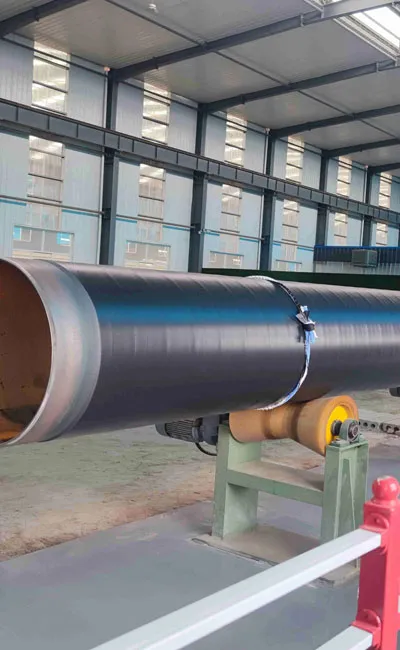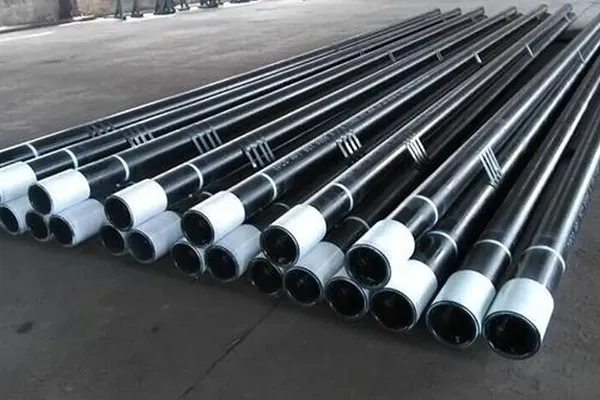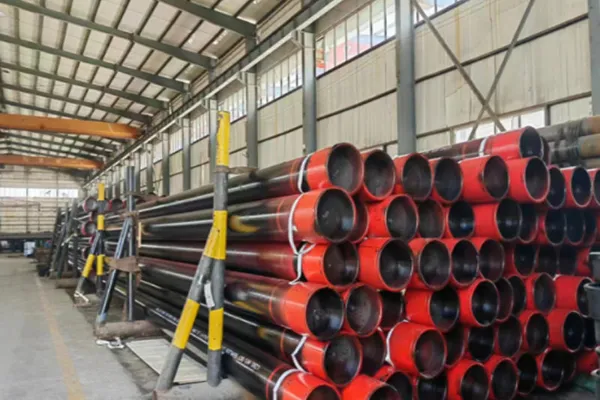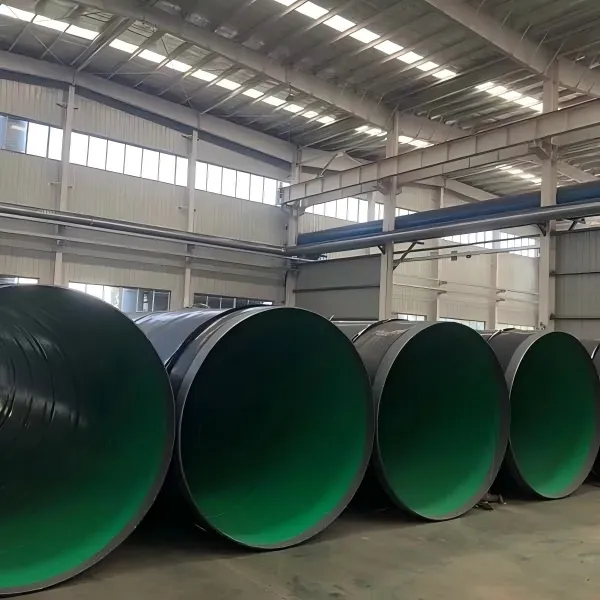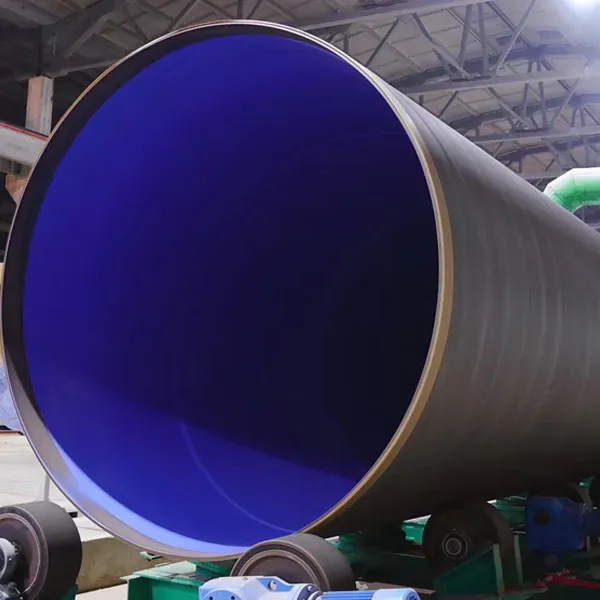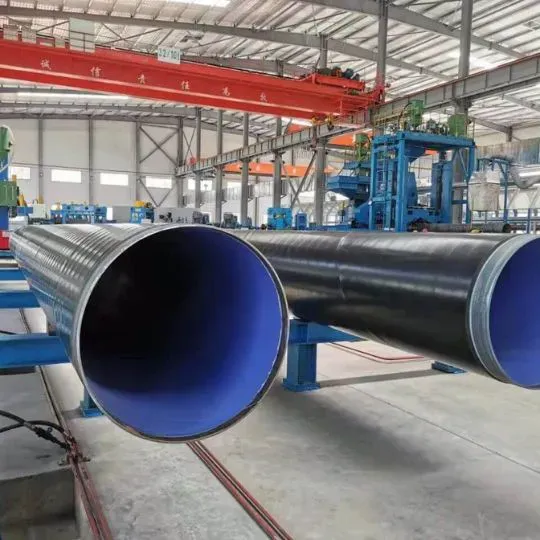

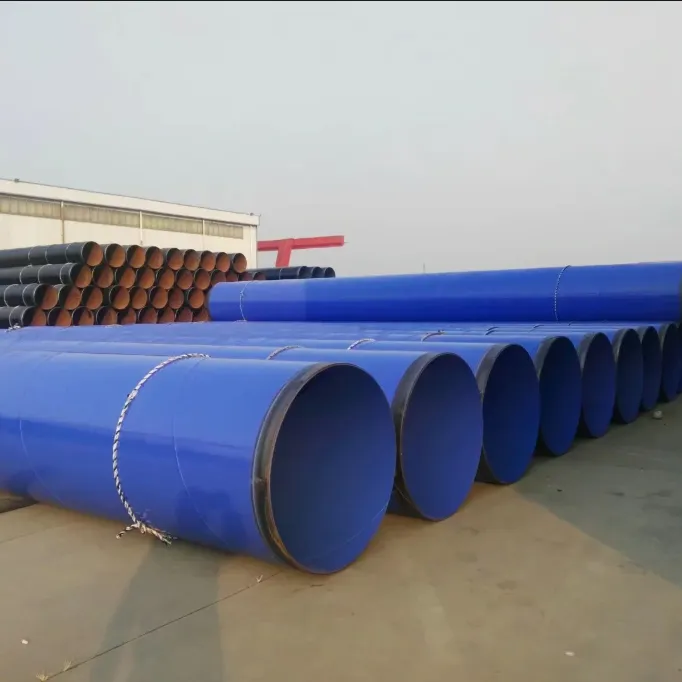
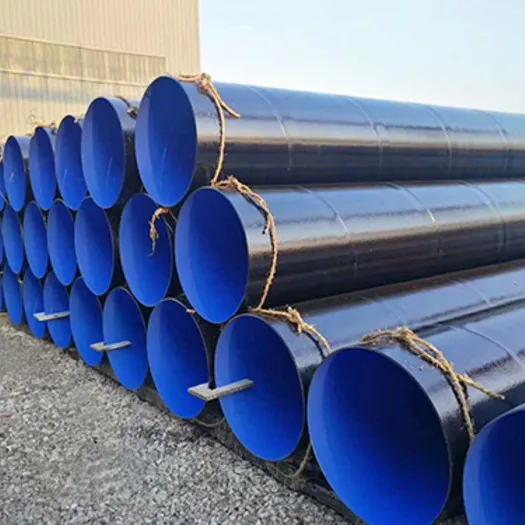
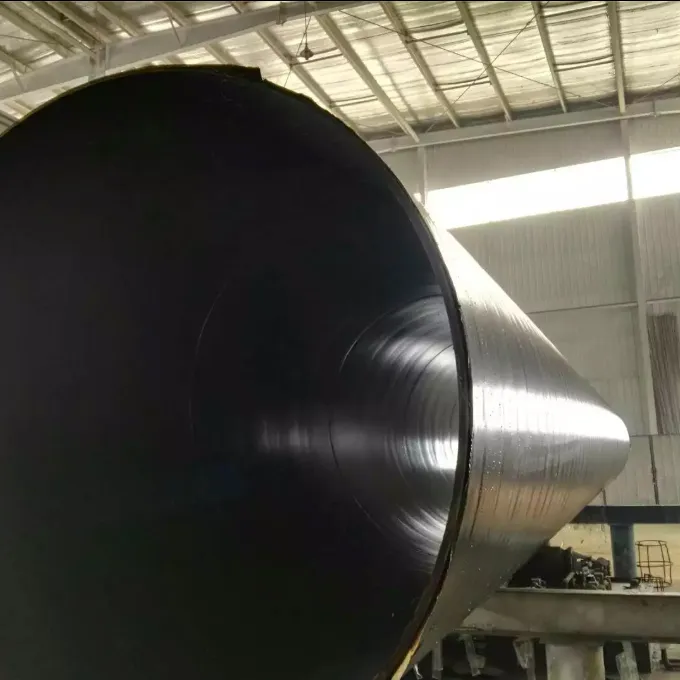
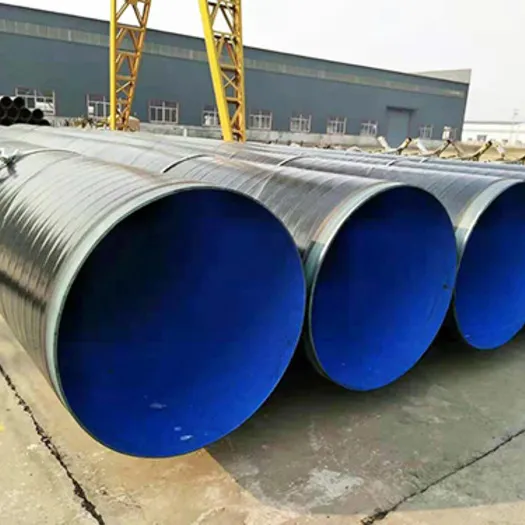
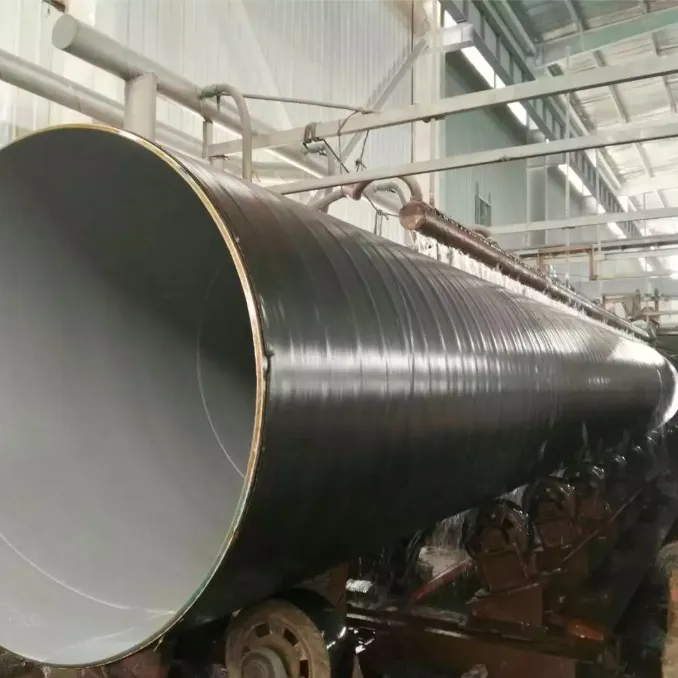
TPEP (Three-Layer Polyethylene + Epoxy Powder) Anti-Corrosion Steel Piperepresents the pinnacle of pipeline protection technology. It is a sophisticated composite pipe system designed to provide comprehensive defense against both external environmental stress and internal fluid corrosion. The "TPEP" designation signifies a dual-layer protection strategy: the exterior features a robust Three-Layer Polyethylene (3PE) coating, while the interior is lined with Fusion Bonded Epoxy (FBE) powder.
This combination addresses the two most common failure points in pipelines: external soil corrosion and internal scaling or rust. The outer 3PE layer acts as a tough, mechanical shield against physical damage, soil stress, and moisture ingress, while the inner FBE lining creates a chemically inert barrier that prevents the steel from reacting with the transported medium. This structure ensures a service life often exceeding 50 years, significantly reducing maintenance costs and downtime.
Key Applications:
• Water Transmission: It is the industry standard for large-scale water diversion projects (like the South-to-North Water Diversion), municipal water supply networks, and raw water intake lines. The smooth epoxy lining prevents tuberculation and maintains flow efficiency.
• Oil & Gas Industry: Used for long-distance transmission of crude oil, natural gas, and refined products. The high-grade防腐protects against harsh soil conditions and corrosive fluids.
• Sewage & Drainage: Ideal for sewage treatment plant discharge lines and industrial wastewater pipes due to its resistance to chemical attack and abrasion.
• Marine & Offshore: Suitable for seawater intake and discharge systems in power plants and offshore platforms, where resistance to saltwater corrosion is critical.
The specifications for TPEP pipes are rigorous, covering both the external 3PE structure and the internal FBE lining. The performance of the pipe depends on the precise thickness and bonding of these layers
|
Layer |
Material |
Function |
Typical Thickness |
|
Inner Layer |
Fusion Bonded Epoxy (FBE) |
Anti-corrosion, Sanitary, Smoothness |
250 - 400 µm (microns) |
|
Outer Layer 1 |
Fusion Bonded Epoxy (FBE) |
Adhesion to steel, Cathodic Disbondment |
> 80 µm |
|
Outer Layer 2 |
Copolymer Adhesive (AD) |
Bonds FBE to Polyethylene |
170 - 250 µm |
|
Outer Layer 3 |
High-Density Polyethylene (PE) |
Mechanical Protection, UV Resistance |
1.8mm - 3.7mm (varies by diameter) |
Base Pipe Specifications:
• Pipe Material: API 5L (Grade B, X42, X52, X60, X65, X70), ASTM A53, ASTM A106, Q235B, Q345B.
• Manufacturing Type: LSAW (Longitudinal Submerged Arc Welded), SSAW (Spiral Submerged Arc Welded), Seamless.
• Diameter Range: DN80 (3") to DN3000 (120") and above.
• Wall Thickness: SCH 20 to SCH XXS, depending on pressure requirements.
TPEP Anti-Corrosion Steel Pipes are manufactured in strict compliance with international and national standards to ensure safety and interoperability.
Primary Standards:
• External Coating: Follows GB/T 23257-2017 (Buried steel pipelines - Polyethylene coating) or DIN 30670 (Polyethylene coatings of steel pipes and fittings). These standards dictate the quality of the 3PE layers.
• Internal Coating: Follows CJ/T 120-2016 (Coating composite steel tubes for water supply) or SY/T 0447-2014 (Technical standard for epoxy coating of steel pipes). These ensure the inner lining is safe for drinking water and durable against corrosion.
• Pipe Base: Manufactured according to API 5L (Specification for Line Pipe) or ASTM A53/A106.
|
Parameter |
GB/T 23257-2017 (External) |
CJ/T 120-2016 (Internal) |
|
Surface Prep |
Sa 2.5 (ISO 8501-1) |
Sa 2.5 (ISO 8501-1) |
|
Adhesion |
Level 1 or 2 (Cross-cut test) |
No peeling under impact |
|
Voltage Test |
25kV (Holiday Detection) |
5kV (Spark Test) |
|
Soak Test |
Not applicable |
Passed (for potable water safety) |
The manufacturing ofTPEP pipesis a complex, multi-stage process that requires precision engineering. It essentially combines two distinct coating lines: one for the internal FBE and one for the external 3PE.
1. Surface Preparation (Shot Blasting): The steel pipe undergoes rigorous abrasive blasting to remove rust, oil, and mill scale. The surface is cleaned to Sa 2.5 grade, creating a rough anchor profile (50-90µm) essential for mechanical bonding.
2. Internal Coating (FBE): The pipe is heated, and electrostatic spray guns apply epoxy powder to the inner surface. The heat causes the powder to melt, flow, and cure into a hard, protective film.
3. External Heating: The pipe moves to the 3PE production line and is heated via medium-frequency induction coils to approximately 200°C - 230°C.
4. External Spraying & Extrusion:
5. Step A: Epoxy powder is sprayed onto the hot outer surface (forming the primer).
6. Step B: A copolymer adhesive is extruded over the epoxy.
7. Step C: High-Density Polyethylene (PE) is extruded as the outermost layer.
8. Cooling & Trimming: The pipe is water-quenched to solidify the coatings. Excess material is trimmed, and the pipe ends are machined to leave a "welding bevel" (bare steel) for field connection.
9. Inspection: The pipe undergoes spark testing (to detect pinholes), thickness measurement, and adhesion testing.
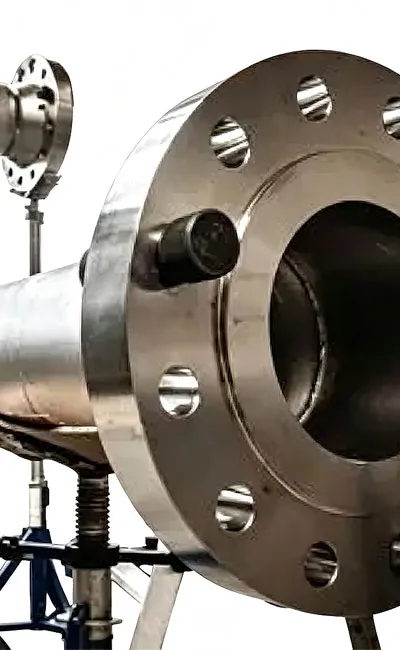
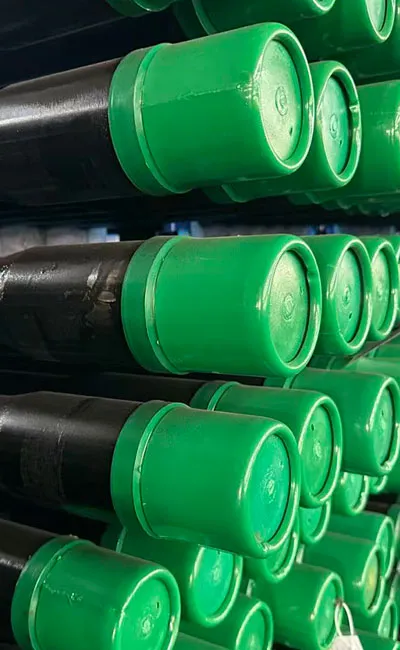
End Protection: Every pipe receives plastic protective caps (for diameters up to 6″) or reinforced plastic donut rings (for larger diameters) to protect beveled ends and prevent dirt ingress. For flanged pipes, flange sealing surfaces are covered with anti-rust film and rigid protective covers.
Surface Protection: For standard shipments, a thin removable rust-preventive oil is applied to bare steel ends. For export shipments to high-humidity destinations, pipes are wrapped with VCI (Volatile Corrosion Inhibitor) paper, and desiccant bags (silica gel, 500 g each) are placed inside the pipe bore. The external 3LPE coating itself provides excellent moisture barrier, but additional wrapping is recommended for extended storage.
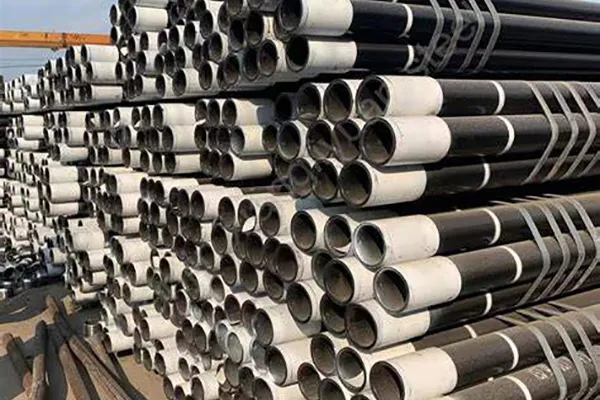
Bundling and Securing: Small-diameter pipes (≤4″) are formed into hexagonal bundles (19–61 pipes per bundle) and secured with heavy-duty steel strapping, with cardboard or plastic strips placed under each strap to prevent coating damage. Medium and large diameters are strapped individually or in pairs with wooden separators between layers. Dedicated lifting slings and soft cushioning are used to avoid direct contact between wire ropes and the coated surface.
Weatherproof Wrapping for Export: Bundles are wrapped in woven polypropylene fabric (220 g/m²) followed by LDPE film (0.15 mm), heat-sealed to create a waterproof envelope. For sea freight, wrapped bundles are loaded into dry, clean containers. When transporting TPEP pipes, the most important consideration is to avoid damage to the anti-corrosion layer during transit. Transport vehicles should be selected appropriately, and pipes should be securely placed within the carriage to prevent shaking and impact. Soft materials should be used to wrap the pipe surface to avoid direct contact with hard objects that could damage the coating.
Labeling: Each bundle carries a waterproof label showing customer PO number, grade (e.g.,“TPEP Coated Pipe”), size, coating grade (standard or reinforced), quantity, net weight, and handling symbols (“KEEP DRY”,“FRAGILE COATING”,“USE SOFT SLINGS”). A detailed packing list is enclosed in a waterproof sleeve attached to the bundle.
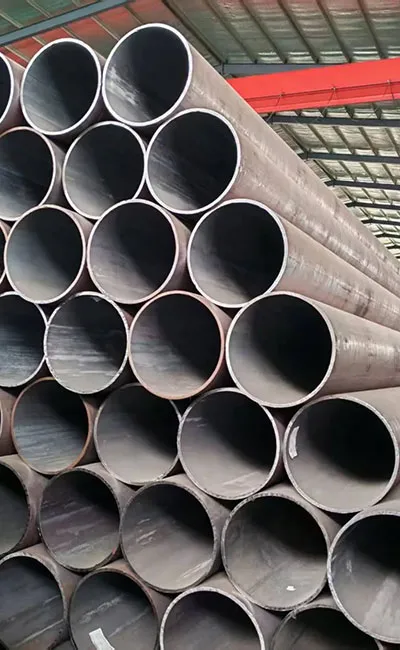
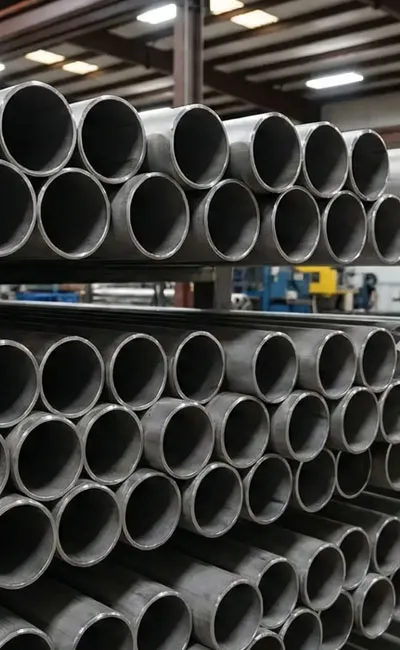
Storage Recommendations: TPEP pipes should be stored in dry, well-ventilated environments away from standing water and humidity. Storage areas should avoid proximity to corrosive substances. Pipes should be stacked with proper spacing, maintaining stability to ensure coating integrity. If conditions allow, waterproof tarpaulins can be used to further reduce moisture exposure.
A: 3PE (Three-Layer Polyethylene) refers only to external coating with three layers: epoxy primer, adhesive, and polyethylene. TPEP adds an internal fusion-bonded epoxy (FBE) coating to the external 3PE system, providing dual-side corrosion protection. TPEP offers both external mechanical protection and internal chemical resistance, making it superior for applications such as drinking water transmission (where internal coating is food-grade) and highly corrosive fluid transport.
A: Yes. The internal fusion-bonded epoxy coating used in TPEP pipes is certified to food-grade standards (GB/T 17219 in China, NSF/ANSI 61 in North America, EC 1935/2004 in Europe). The epoxy powder is formulated without heavy metals, toxic monomers, or migratory harmful substances. The smooth internal surface (roughness 0.0081–0.0091) also prevents scaling and biofilm formation, ensuring clean water delivery.
A: Standard TPEP pipes operate in the range of -40°C to +80°C. High-temperature grades can operate up to 120°C, with short-term tolerance up to 350°C for steam applications. Low-temperature performance has been verified down to -45°C in freeze-thaw cycle testing. For applications requiring higher temperature resistance (up to 140°C), 3PP (Three-Layer Polypropylene) coating is recommended.
A: TPEP pipes have a design service life of 50+ years. Laboratory accelerated aging tests validate this performance. The technology has been successfully applied in domestic oil and gas fields for over 20 years and internationally for more than 30 years without significant degradation. Compared to single-layer FBE pipes, TPEP offers 3–5 times higher corrosion resistance and 3 times higher impact strength.
The specifications for TPEP pipes are rigorous, covering both the external 3PE structure and the internal FBE lining. The performance of the pipe depends on the precise thickness and bonding of these layers
|
Layer |
Material |
Function |
Typical Thickness |
|
Inner Layer |
Fusion Bonded Epoxy (FBE) |
Anti-corrosion, Sanitary, Smoothness |
250 - 400 µm (microns) |
|
Outer Layer 1 |
Fusion Bonded Epoxy (FBE) |
Adhesion to steel, Cathodic Disbondment |
> 80 µm |
|
Outer Layer 2 |
Copolymer Adhesive (AD) |
Bonds FBE to Polyethylene |
170 - 250 µm |
|
Outer Layer 3 |
High-Density Polyethylene (PE) |
Mechanical Protection, UV Resistance |
1.8mm - 3.7mm (varies by diameter) |
Base Pipe Specifications:
• Pipe Material: API 5L (Grade B, X42, X52, X60, X65, X70), ASTM A53, ASTM A106, Q235B, Q345B.
• Manufacturing Type: LSAW (Longitudinal Submerged Arc Welded), SSAW (Spiral Submerged Arc Welded), Seamless.
• Diameter Range: DN80 (3") to DN3000 (120") and above.
• Wall Thickness: SCH 20 to SCH XXS, depending on pressure requirements.
TPEP Anti-Corrosion Steel Pipes are manufactured in strict compliance with international and national standards to ensure safety and interoperability.
Primary Standards:
• External Coating: Follows GB/T 23257-2017 (Buried steel pipelines - Polyethylene coating) or DIN 30670 (Polyethylene coatings of steel pipes and fittings). These standards dictate the quality of the 3PE layers.
• Internal Coating: Follows CJ/T 120-2016 (Coating composite steel tubes for water supply) or SY/T 0447-2014 (Technical standard for epoxy coating of steel pipes). These ensure the inner lining is safe for drinking water and durable against corrosion.
• Pipe Base: Manufactured according to API 5L (Specification for Line Pipe) or ASTM A53/A106.
|
Parameter |
GB/T 23257-2017 (External) |
CJ/T 120-2016 (Internal) |
|
Surface Prep |
Sa 2.5 (ISO 8501-1) |
Sa 2.5 (ISO 8501-1) |
|
Adhesion |
Level 1 or 2 (Cross-cut test) |
No peeling under impact |
|
Voltage Test |
25kV (Holiday Detection) |
5kV (Spark Test) |
|
Soak Test |
Not applicable |
Passed (for potable water safety) |
The manufacturing ofTPEP pipesis a complex, multi-stage process that requires precision engineering. It essentially combines two distinct coating lines: one for the internal FBE and one for the external 3PE.
1. Surface Preparation (Shot Blasting): The steel pipe undergoes rigorous abrasive blasting to remove rust, oil, and mill scale. The surface is cleaned to Sa 2.5 grade, creating a rough anchor profile (50-90µm) essential for mechanical bonding.
2. Internal Coating (FBE): The pipe is heated, and electrostatic spray guns apply epoxy powder to the inner surface. The heat causes the powder to melt, flow, and cure into a hard, protective film.
3. External Heating: The pipe moves to the 3PE production line and is heated via medium-frequency induction coils to approximately 200°C - 230°C.
4. External Spraying & Extrusion:
5. Step A: Epoxy powder is sprayed onto the hot outer surface (forming the primer).
6. Step B: A copolymer adhesive is extruded over the epoxy.
7. Step C: High-Density Polyethylene (PE) is extruded as the outermost layer.
8. Cooling & Trimming: The pipe is water-quenched to solidify the coatings. Excess material is trimmed, and the pipe ends are machined to leave a "welding bevel" (bare steel) for field connection.
9. Inspection: The pipe undergoes spark testing (to detect pinholes), thickness measurement, and adhesion testing.
End Protection: Every pipe receives plastic protective caps (for diameters up to 6″) or reinforced plastic donut rings (for larger diameters) to protect beveled ends and prevent dirt ingress. For flanged pipes, flange sealing surfaces are covered with anti-rust film and rigid protective covers.
Surface Protection: For standard shipments, a thin removable rust-preventive oil is applied to bare steel ends. For export shipments to high-humidity destinations, pipes are wrapped with VCI (Volatile Corrosion Inhibitor) paper, and desiccant bags (silica gel, 500 g each) are placed inside the pipe bore. The external 3LPE coating itself provides excellent moisture barrier, but additional wrapping is recommended for extended storage.
Bundling and Securing: Small-diameter pipes (≤4″) are formed into hexagonal bundles (19–61 pipes per bundle) and secured with heavy-duty steel strapping, with cardboard or plastic strips placed under each strap to prevent coating damage. Medium and large diameters are strapped individually or in pairs with wooden separators between layers. Dedicated lifting slings and soft cushioning are used to avoid direct contact between wire ropes and the coated surface.
Weatherproof Wrapping for Export: Bundles are wrapped in woven polypropylene fabric (220 g/m²) followed by LDPE film (0.15 mm), heat-sealed to create a waterproof envelope. For sea freight, wrapped bundles are loaded into dry, clean containers. When transporting TPEP pipes, the most important consideration is to avoid damage to the anti-corrosion layer during transit. Transport vehicles should be selected appropriately, and pipes should be securely placed within the carriage to prevent shaking and impact. Soft materials should be used to wrap the pipe surface to avoid direct contact with hard objects that could damage the coating.
Labeling: Each bundle carries a waterproof label showing customer PO number, grade (e.g.,“TPEP Coated Pipe”), size, coating grade (standard or reinforced), quantity, net weight, and handling symbols (“KEEP DRY”,“FRAGILE COATING”,“USE SOFT SLINGS”). A detailed packing list is enclosed in a waterproof sleeve attached to the bundle.
Storage Recommendations: TPEP pipes should be stored in dry, well-ventilated environments away from standing water and humidity. Storage areas should avoid proximity to corrosive substances. Pipes should be stacked with proper spacing, maintaining stability to ensure coating integrity. If conditions allow, waterproof tarpaulins can be used to further reduce moisture exposure.
A: 3PE (Three-Layer Polyethylene) refers only to external coating with three layers: epoxy primer, adhesive, and polyethylene. TPEP adds an internal fusion-bonded epoxy (FBE) coating to the external 3PE system, providing dual-side corrosion protection. TPEP offers both external mechanical protection and internal chemical resistance, making it superior for applications such as drinking water transmission (where internal coating is food-grade) and highly corrosive fluid transport.
A: Yes. The internal fusion-bonded epoxy coating used in TPEP pipes is certified to food-grade standards (GB/T 17219 in China, NSF/ANSI 61 in North America, EC 1935/2004 in Europe). The epoxy powder is formulated without heavy metals, toxic monomers, or migratory harmful substances. The smooth internal surface (roughness 0.0081–0.0091) also prevents scaling and biofilm formation, ensuring clean water delivery.
A: Standard TPEP pipes operate in the range of -40°C to +80°C. High-temperature grades can operate up to 120°C, with short-term tolerance up to 350°C for steam applications. Low-temperature performance has been verified down to -45°C in freeze-thaw cycle testing. For applications requiring higher temperature resistance (up to 140°C), 3PP (Three-Layer Polypropylene) coating is recommended.
A: TPEP pipes have a design service life of 50+ years. Laboratory accelerated aging tests validate this performance. The technology has been successfully applied in domestic oil and gas fields for over 20 years and internationally for more than 30 years without significant degradation. Compared to single-layer FBE pipes, TPEP offers 3–5 times higher corrosion resistance and 3 times higher impact strength.








 English
 Español
 русский язык
 Português