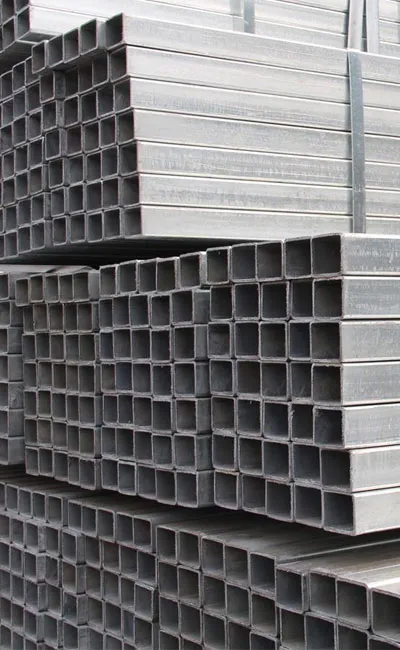
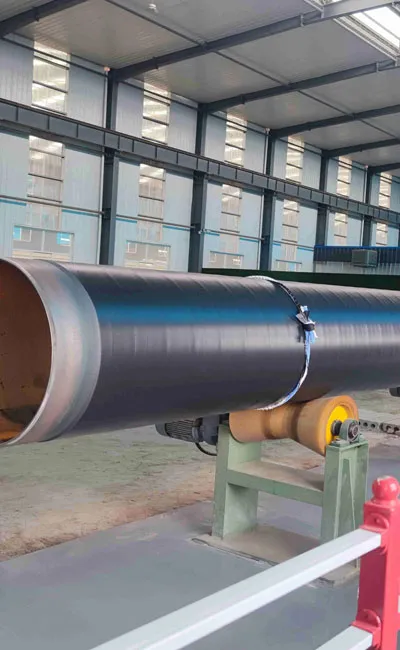
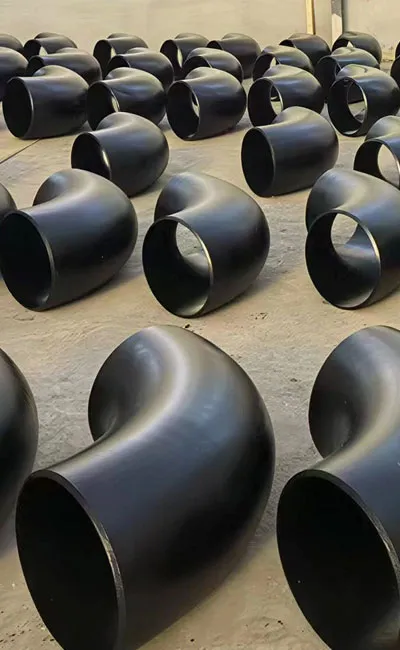
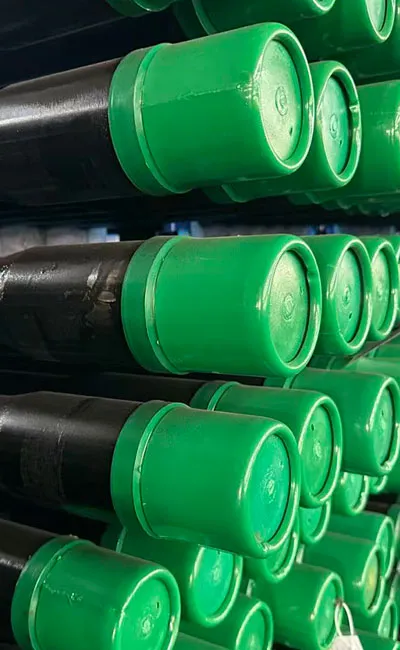
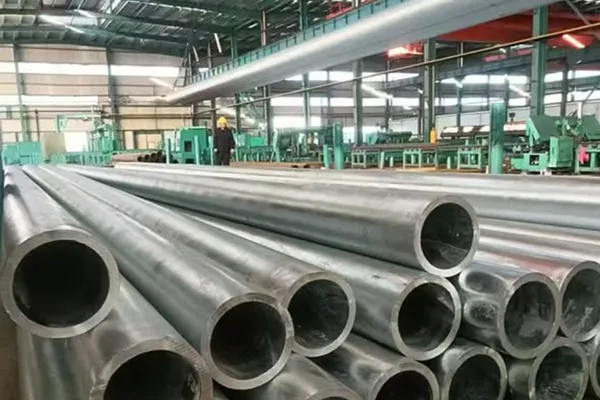
ASTM A213 Alloy Steel Pipe is a premier specification covering seamless ferritic and austenitic steel boiler, superheater, and heat-exchanger tubes. Designed specifically for high-temperature service, these pipes are essential in environments where resistance to heat, pressure, and corrosion is non-negotiable.
Manufactured using high-quality alloy steel, A213 tubes are widely used in power generation, petrochemical plants, and oil refineries. They are available in various grades, ranging from carbon-molybdenum steel to high-chromium ferritic and austenitic stainless steels, ensuring versatility for diverse industrial applications.
|
Item |
ASTM A213 T12 Alloy steel pipe/tube |
|
|
Standard |
ASTM A213, JIS G3462, JIS G3458, DIN17175, GB9948,GB 6479, etc. |
|
|
Material |
T12, STBA22, 15CrMo. |
|
|
Specifications |
Wall thickness |
1mm~120mm |
|
|
Outside diameter |
6mm~2500mm |
|
|
Length |
5.8m, 6m, 11.8m, 12m, or as required. |
|
Surface |
Black painted, PE coated. |
|
|
Chemical composition |
C:0.05~0.15, Si ≤ 0.5, Mn:0.30~0.61, P≤0.025, S≤0.025, Mo:0.44~0.65, Cr:0.80-1.25 |
|
|
Price Term |
Ex-work, FOB, CIF, CFR, etc. |
|
|
Payment Term |
TT, LC , OA , D/P |
|
|
Export to |
Singapore, Canada, Indonesia, Korea, USA, UK, Thailand, Peru, Saudi Arabia, Viet Nam, Iran, India, Ukraine, Brazil, South Africa, etc. |
|
|
Delivery Time |
Delivery Time: Within 30 days and Depends on your order quantity. |
|
|
Package |
Export standard package; bundled wooden box, suit for all kinds of transport, or be required |
|
|
Application |
1) boiler, heat exchanger;2) Petroleum;3) Aerospace;4) chemical;5) electric power;6) Military. |
|
Applications
Due to their excellent oxidation resistance and high-temperature strength, A213 Alloy Steel Pipes are utilized in critical sectors:
Power Generation: Superheater and reheater tubes in boilers, and main steam piping.
Petrochemical Industry: Heat exchangers and piping in refineries handling high-temperature fluids.
Oil & Gas: Downstream processing equipment requiring durable alloy piping.
High-Pressure Boilers: Essential for sub-critical and super-critical boiler operations.
he ASTM A213 Alloy Steel Pipe is manufactured in strict accordance with ASTM A213/A213M specifications, covering dimensional, chemical, and mechanical requirements for seamless ferritic and austenitic alloy tubes.
ASTM A213 Alloy Steel Chemical Composition(%, max)
|
Steel Grade |
Chemical Composition% |
||||||||||||
|
C |
Si |
Mn |
P, S Max |
Cr |
Mo |
Ni Max |
V |
Al Max |
W |
B |
Nb |
N |
|
|
T2 |
0.10~0.20 |
0.10~0.30 |
0.30~0.61 |
0.025 |
0.50~0.81 |
0.44~0.65 |
– |
– |
– |
– |
– |
– |
– |
|
T11 |
0.05~0.15 |
0.50~1.00 |
0.30~0.60 |
0.025 |
1.00~1.50 |
0.44~0.65 |
– |
– |
– |
– |
– |
– |
– |
|
T12 |
0.05~0.15 |
Max 0.5 |
0.30~0.61 |
0.025 |
0.80~1.25 |
0.44~0.65 |
– |
– |
– |
– |
– |
– |
– |
|
T22 |
0.05~0.15 |
Max 0.5 |
0.30~0.60 |
0.025 |
1.90~2.60 |
0.87~1.13 |
– |
– |
– |
– |
– |
– |
– |
|
T91 |
0.07~0.14 |
0.20~0.50 |
0.30~0.60 |
0.02 |
8.0~9.5 |
0.85~1.05 |
0.4 |
0.18~0.25 |
0.015 |
– |
– |
0.06~0.10 |
0.03~0.07 |
|
T92 |
0.07~0.13 |
Max 0.5 |
0.30~0.60 |
0.02 |
8.5~9.5 |
0.30~0.60 |
0.4 |
0.15~0.25 |
0.015 |
1.50~2.00 |
0.001~0.006 |
0.04~0.09 |
0.03~0.07 |
ASTM A213 Alloy Steel Mechanical properties:
|
Steel Grade |
Mechanical Properties |
|||
|
T. S |
Y. P |
Elongation |
Hardness |
|
|
T2 |
≥ 415MPa |
≥ 205MPa |
≥ 30% |
163HBW(85HRB) |
|
T11 |
≥ 415MPa |
≥ 205MPa |
≥ 30% |
163HBW(85HRB) |
|
T12 |
≥ 415MPa |
≥ 220MPa |
≥ 30% |
163HBW(85HRB) |
|
T22 |
≥ 415MPa |
≥ 205MPa |
≥ 30% |
163HBW(85HRB) |
|
T91 |
≥ 585MPa |
≥ 415MPa |
≥ 20% |
250HBW(25HRB) |
|
T92 |
≥ 620MPa |
≥ 440MPa |
≥ 20% |
250HBW(25HRB) |
ASTM A213 Steel Tubes Outside Diameter and Wall Thickness Tolerance
|
OD, mm |
OD Tolerance |
|
< 25.4 |
+/- 0.10 |
|
25.4 – <= 38.1 |
+/- 0.15 |
|
> 38.1 -< 50.8 |
+/- 0.20 |
|
50.8 -< 63.5 |
+/- 0.25 |
|
63.5 -< 76.2 |
+/- 0.30 |
|
76.2 – <= 101.6 |
+/- 0.38 |
|
> 101.6 – <= 190.5 |
+0.38/-0.64 |
|
> 190.5 – <= 228.6 |
+0.38/-1.14 |
|
OD, mm |
WT Tolerance |
|
<= 38.1 |
+20%/-0 |
|
> 38.1 |
+22%/-0 |
The ASTM A213 / ASME SA213 standard specification (full title: Standard Specification for Seamless Ferritic and Austenitic Alloy-Steel Boiler, Superheater, and Heat-Exchanger Tubes) covers seamless ferritic and austenitic steel tubes intended for high-temperature service in boilers, superheaters, and heat exchangers.
Key Standard Requirements
• Manufacturing: Tubes shall be made by the seamless process, either hot-finished or cold-drawn.
• Heat Treatment: All tubes must be furnished in the heat-treated condition. Ferritic grades require normalizing and tempering (or full annealing). Austenitic grades require solution annealing.
• Chemical Composition: Each grade must conform to the limits specified in Tables 1 and 2 of the standard, ensuring consistent alloy content for predictable high-temperature performance.
• Mechanical Properties: Minimum tensile and yield strengths, elongation percentages, and maximum hardness values are specified per grade.
• Dimensional Tolerances: Strict OD, WT, and ovality tolerances are defined to ensure proper fit in heat exchanger assemblies.
The production of A213 Alloy Steel Pipe is a sophisticated metallurgical process that transforms raw steel into high-performance tubing. We utilize a Seamless Manufacturing Process, which ensures the pipe has no welded seams, providing uniform strength around the circumference.
1. Raw Material Preparation: High-quality round steel billets (containing the precise alloy mix of Cr, Mo, etc.) are selected and inspected for surface defects.
2. Heating: The billets are heated to a high temperature (approx. 1200°C) in a rotary hearth furnace until they become plastic and malleable.
3. Piercing: The heated billet is fed into a piercing mill (such as a Mannesmann plug mill). Rotating rolls and a stationary plug pierce the center of the billet, creating a hollow "shell" or "bloom."
4. Elongation and Sizing: The hollow shell is then passed through a series of elongating mills and sizing mills (like a Mandrel Mill or Plug Mill) to achieve the required outer diameter and wall thickness.
5. Heat Treatment: This is a critical step for A213 alloys. The pipes undergo Normalizing and Tempering (for ferritic steels like T11/T22) or Solution Annealing (for austenitic steels). This process refines the grain structure, relieves internal stresses, and imparts the required mechanical properties (hardness and tensile strength).
6. Finishing and Testing: The pipes are cut to length, straightened, and subjected to Non-Destructive Testing (NDT) such as Ultrasonic Testing (UT) and Eddy Current Testing (ET) to detect any internal or surface imperfections.
Proper packing is essential to protect the high-quality finish of A213 alloy pipes during long-distance ocean or land transportation. We employ an export-standard packing procedure designed to prevent corrosion, physical damage, and mixing of grades.
• Bundling: Pipes of the same diameter and wall thickness are grouped into hexagonal or square bundles using high-tensile steel strips. This ensures stability during lifting and stacking.
• Protection: Each bundle is wrapped in waterproof plastic or canvas to protect against moisture and rain. For highly alloyed grades (like stainless steel), protective caps are placed on the pipe ends to prevent damage to the bevels.
• Identification: Every pipe is stenciled with the heat number, grade (e.g., A213 T11), size, and standard. A color code is often painted on the pipe ends for quick visual identification at the job site.
• Palletizing: For smaller diameter tubes, bundles can be placed on fumigated wooden pallets to facilitate forklift handling and prevent ground contact.
• Documentation: A detailed packing list is attached to each bundle, cross-referencing the Mill Test Certificate (MTC) to ensure full traceability.
A: Both standards cover similar alloy materials (like T11, T22, T91). However, ASTM A213 is specifically for seamless tubes used in boilers, superheaters, and heat exchangers (typically smaller diameters and thinner walls). ASTM A335 is for seamless ferritic alloy-steel pipes for high-temperature service (typically larger diameters and heavier walls used for main steam piping).
A: Yes, A213 T11 has good weldability. However, because it is an alloy steel, preheating (usually to 150°C - 200°C) and post-weld heat treatment (PWHT) are often required to prevent cracking in the heat-affected zone and to restore the material's mechanical properties.
A: Absolutely. We provide a full MTC EN 10204 3.1 with every shipment. This certificate details the chemical composition, mechanical properties, heat treatment results, and NDT test results, ensuring the pipes meet the ASTM A213 standard.
A: A213 T22 (2.25Cr-1Mo) is generally used for service temperatures up to 580°C (1076°F). Beyond this temperature, other high-alloy grades like T91 or austenitic stainless steels are recommended due to T22's graphitization limits.
A: EN 10204 Type 3.1 mill test certificates (MTC) with full traceability to heat number, chemical analysis, mechanical properties, NDE results, and PWHT records. Type 3.2 certificates with third-party verification (SGS, BV, TÜV) are also available.