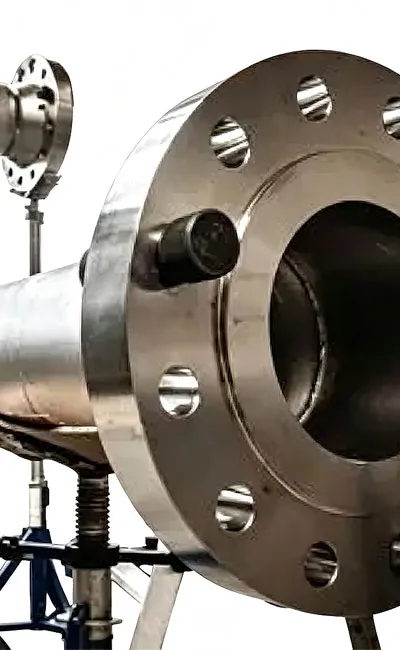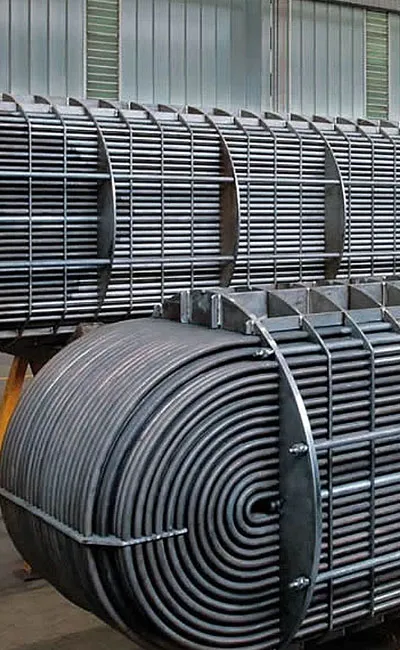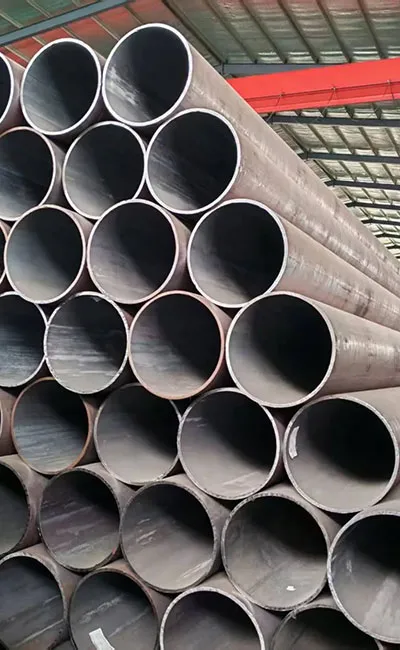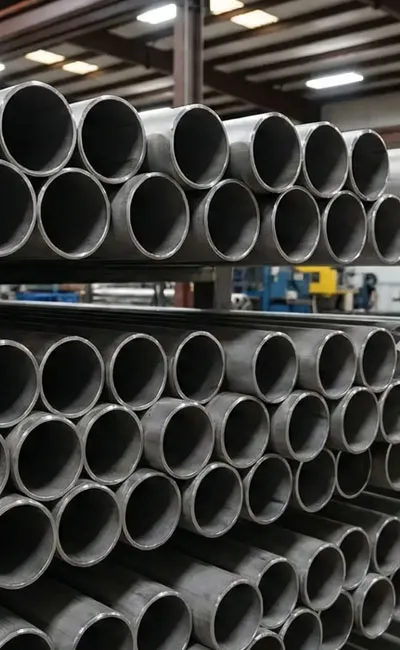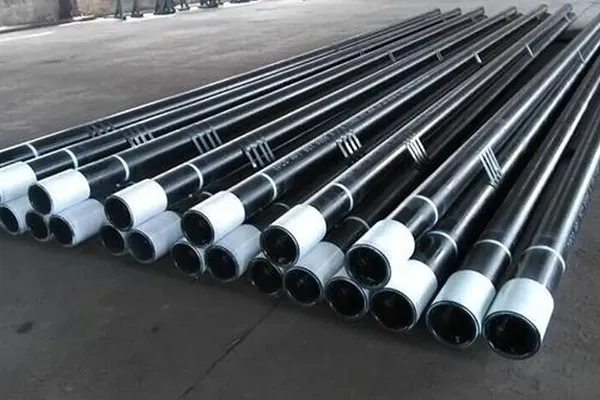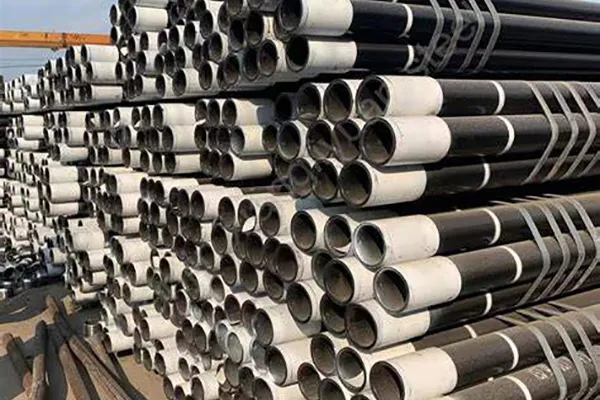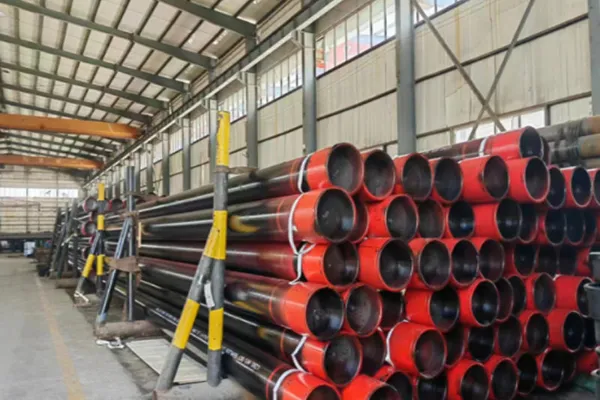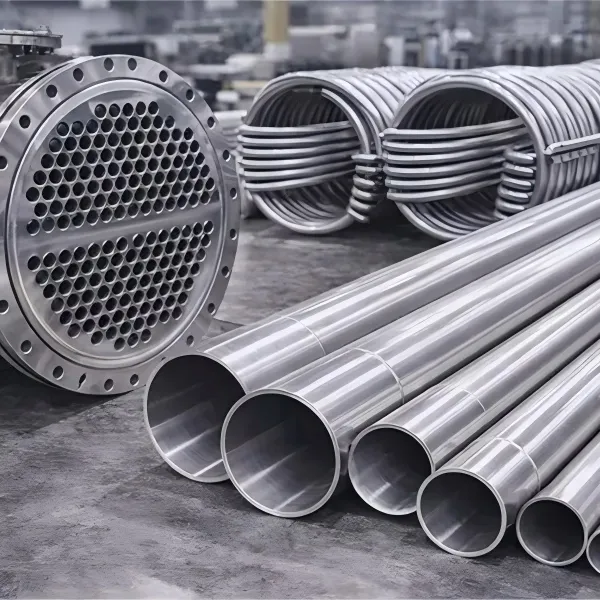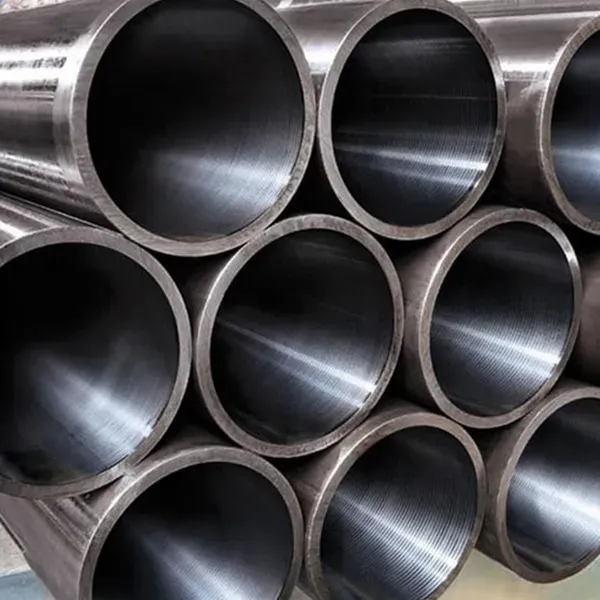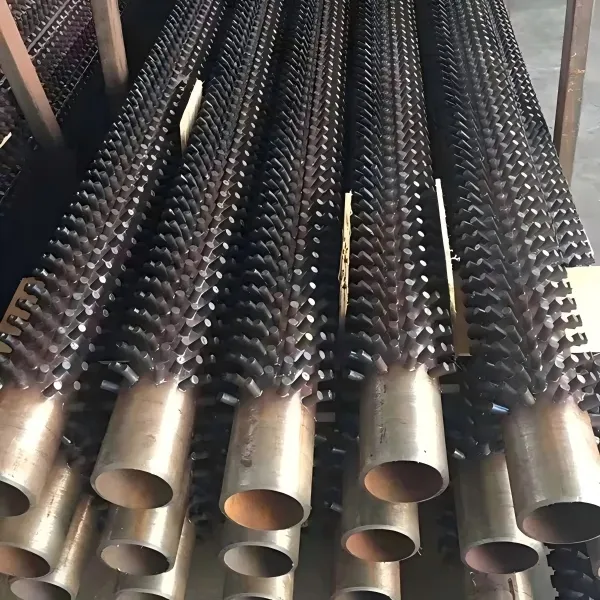

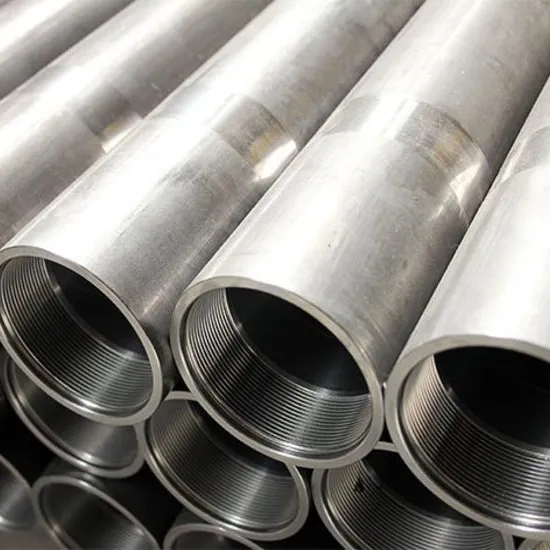
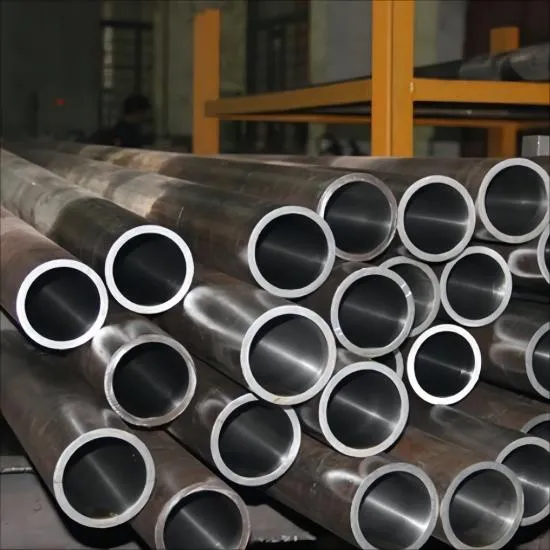
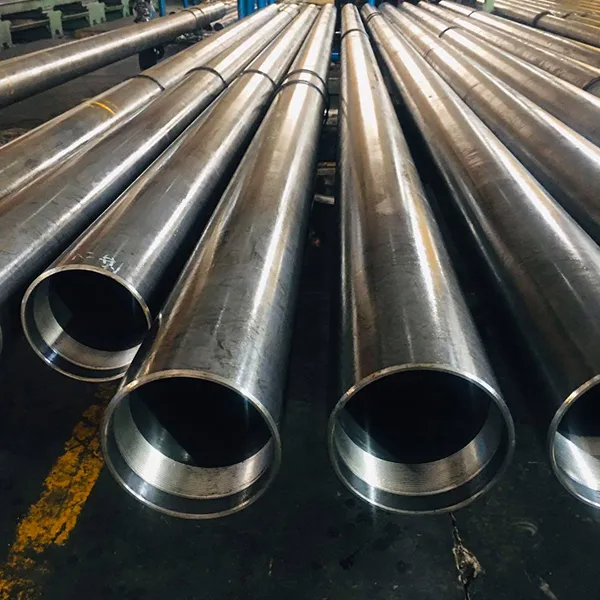
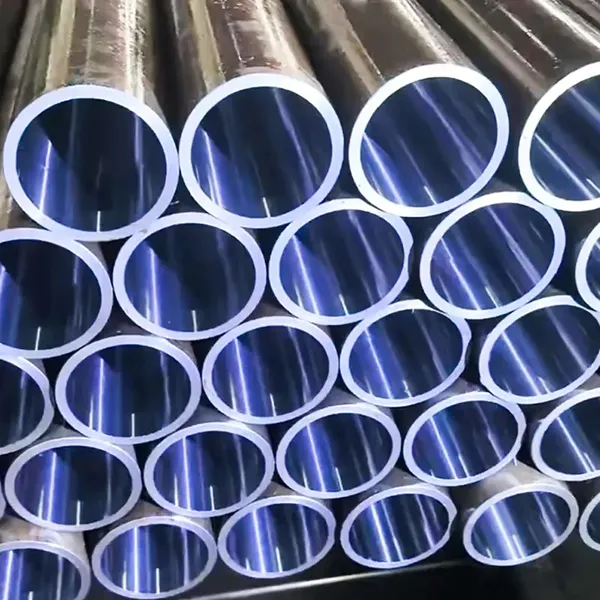
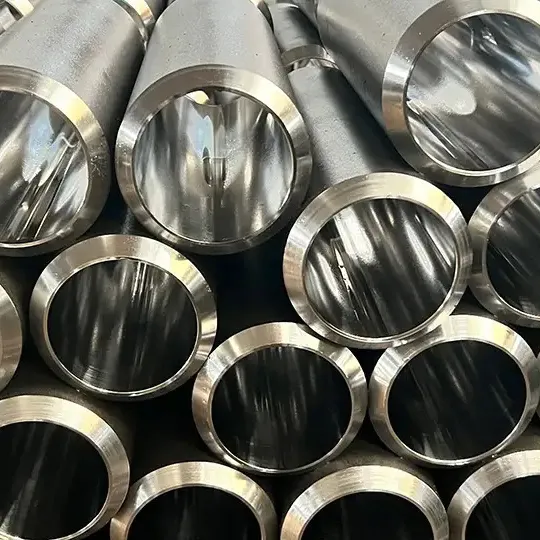
The Honed Tube (also known as a precision honed cylinder tube or hydraulic cylinder barrel) is a seamless cold-drawn steel tube that has undergone an internal surface finishing process called honing, where abrasive stones and paper remove microscopic layers of material from the inner diameter (ID) to achieve extremely tight dimensional tolerances and an exceptionally smooth, low-friction bore. This precision finishing process enables the tube to serve directly as the cylinder barrel in hydraulic and pneumatic systems, eliminating the need for costly secondary machining operations such as boring or reaming before assembly. For the most demanding hydraulic applications requiring maximum productivity and the highest surface quality, Skived & Roller Burnished (SRB) tubes are often specified as an advanced alternative. The SRB process is a single-pass operation that uses a skiving tool on the forward stroke to cut the ID to the required size, followed by roller bearings on the reverse stroke to burnish the surface to the required roughness at speeds up to 20 times faster than traditional honing. SRB processing also forms a cold-worked surface layer with residual compressive stress, improving surface hardness, wear resistance, and fatigue strength by approximately 30%.
Honed tubes are manufactured from high-quality seamless steel grades, most commonly ST52 (DIN 2391 / E355), ASTM A519 1026, ASTM A519 4140, C45E (CK45) , and 27SiMn, selected based on required strength, toughness, and operating pressure. Tubes are supplied in the normalized (+N) or stress-relieved (BK+S) condition, ensuring optimal machinability and structural integrity. ID tolerances as precise as H8, H9, or H7 are achievable, with surface roughness values as low as Ra≤0.2–0.4 µm. Typical length options extend up to 18 meters, with diameters ranging from 20 mm to over 1500 mm. Carbon steel tubes receive rust-preventive oil on internal and external surfaces, while alloy and stainless steel grades are available for specialized corrosion-resistant applications.
Applications:
• Honed tubes are indispensable components in hydraulic cylinder manufacturing across a vast spectrum of industries.
• In construction machinery, they form the cylinder barrels for excavators, bulldozers, loaders, cranes, and hydraulic breakers, operating in harsh, high-load environments.
• Agricultural equipment (tractors, harvesters, sprayers) relies on honed tubes for implement hydraulic circuits.
• Material handling (forklifts, aerial work platforms) uses them for lifting and tilting functions.
• Marine engineering (ship steering systems, deck machinery) uses corrosion-resistant grades.
• Offshore and petroleum machinery rely on honed tubes for blowout preventers, subsea control systems, and drilling equipment. Additionally, honed tubes are widely used in pneumatic cylinders, telescopic cylinders, servo cylinders, and precision automation systems, making them one of the most versatile and essential components in fluid power engineering.
The Honed Tube is manufactured to precise dimensional, material, and mechanical specifications to ensure reliable performance in high-pressure hydraulic systems.
Dimensional Specification Table
|
Parameter |
Range |
Tolerance / Notes |
|
Inside Diameter (ID) |
20 mm – 1500 mm (up to 1600 mm available) |
H8 / H9 / H7 standard; H8: IT8 per ISO 286-1 |
|
Outside Diameter (OD) |
25 mm – 1620 mm |
±0.5 mm (hot-rolled); ±0.2 mm (cold-drawn) |
|
Wall Thickness (WT) |
3 mm – 50 mm (standard); up to 80 mm (special) |
±5% – ±10% of nominal |
|
Length |
3 m – 12 m (standard); up to 18 m (custom) |
±1 mm (≤6 m); ±2 mm (>6 m) |
|
Straightness |
≤0.3 mm per meter (standard); ≤0.1 mm/m (precision) |
— |
|
ID Surface Roughness (Ra) |
Honed: Ra ≤ 0.4 – 0.8 µm; SRB: Ra ≤ 0.2 – 0.4 µm |
Cross-hatch pattern for oil retention |
|
Delivery Conditions |
BK (+C), BKW (+LC), BKS (+SR), GBK (+A), NBK (+N) |
Per DIN 2391 / EN 10305-1 |
Material Grade & Chemical Composition Table
|
Standard |
Grade |
C (%) |
Mn (%) |
Si (%) |
Cr (%) |
Mo (%) |
P (%) max |
S (%) max |
Equivalent |
|
DIN 2391 |
St52 (1.0580) |
≤0.22 |
≤1.60 |
≤0.55 |
— |
— |
0.025 |
0.025 |
E355 |
|
EN 10305-1 |
E355 (1.0580) |
≤0.22 |
≤1.60 |
≤0.55 |
— |
— |
0.025 |
0.025 |
St52 |
|
EN 10305-4 |
E235/E355 |
≤0.17/0.22 |
≤1.20/1.60 |
≤0.35/0.55 |
— |
— |
0.025 |
0.015 |
— |
|
ASTM A519 |
1026 |
0.22-0.28 |
0.60-0.90 |
— |
— |
— |
0.040 |
0.050 |
— |
|
ASTM A519 |
4140 |
0.38-0.43 |
0.75-1.00 |
0.15-0.35 |
0.80-1.10 |
0.15-0.25 |
0.040 |
0.040 |
42CrMo4 |
|
GB/T 8713 |
20# |
0.17-0.23 |
0.35-0.65 |
0.17-0.37 |
— |
— |
0.035 |
0.035 |
C22 |
|
GB/T 8713 |
45# |
0.42-0.50 |
0.50-0.80 |
0.17-0.37 |
— |
— |
0.035 |
0.035 |
C45E |
|
GB/T 8713 |
27SiMn |
0.24-0.32 |
1.10-1.40 |
1.10-1.40 |
— |
— |
0.035 |
0.035 |
— |
We manufacture our honed tubes in compliance with major international standards, ensuring they are compatible with global hydraulic systems and machinery. We also support custom manufacturing based on specific customer drawings.
|
Standard |
Grade / Material |
Description |
|
ASTM A519 |
1018, 1020, 1026, 4130, 4140 |
Seamless Carbon and Alloy Steel Mechanical Tubing. |
|
DIN 2391 / EN 10305 |
ST35, ST45, ST52 (E355) |
Cold Drawn Seamless Precision Steel Tubes. |
|
GB/T 8713 |
20#, 45#, 27SiMn |
Cold Drawn or Cold Rolled Seamless Precision Tubes. |
|
ISO 3304 |
- |
Seamless precision steel tubes for hydraulic applications. |
|
JIS G3445 |
STKM11A, STKM13A, STKM14A |
Carbon Steel Tubes for Machine Structure. |
Chemical Composition (ASTM A519 Grade 1026):
|
Element |
Content (%) |
|
Carbon (C) |
0.22 - 0.28 |
|
Manganese (Mn) |
0.30 - 0.60 |
|
Phosphorus (P) |
≤0.040 |
|
Sulfur (S) |
≤0.050 |
|
Silicon (Si) |
- |
Mechanical Properties (DIN 2391 ST52 / E355):
|
Property |
Value |
|
Tensile Strength (Rm) |
≥640 MPa |
|
Yield Strength (Re) |
≥520 MPa |
|
Elongation (A5) |
≥12% |
|
Hardness |
≤230 HB |
The production of honed tubes involves a multi-stage manufacturing process designed to enhance the physical and surface properties of the steel.
1. Seamless Tube Preparation: The process begins with a hot-rolled seamless tube, which is pickled and phosphated to clean the surface.
2. Cold Drawing: The tube is cold-drawn to achieve the approximate final dimensions and improve the material's strength.
3. Skiving and Roller Burnishing (SRB): For many applications, we use the SRB process. Skiving cuts a thin layer of metal to correct geometry, while roller burnishing compresses the surface peaks into the valleys, creating a smooth, work-hardened surface.
4. Honing: For the highest precision, we use honing stones. This abrasive process removes a minute amount of material to create the final "cross-hatch" pattern. This pattern is crucial for oil retention in hydraulic cylinders.
5. Heat Treatment: If required, the tubes undergo stress-relief annealing to ensure stability during subsequent machining by the customer.
6. Quality Control: Every tube is inspected for surface defects, dimensional accuracy, and straightness.
To preserve the high-quality surface finish of the honed tube, specialized packing methods are employed. The internal surface is delicate and must be protected from dust, moisture, and physical impact during transit.
Packing Procedures:
1. Cleaning: The tubes are thoroughly cleaned to remove metal chips and dust.
2. Oil Coating: A layer of anti-rust oil is applied to the inner and outer surfaces to prevent corrosion during storage and shipping.
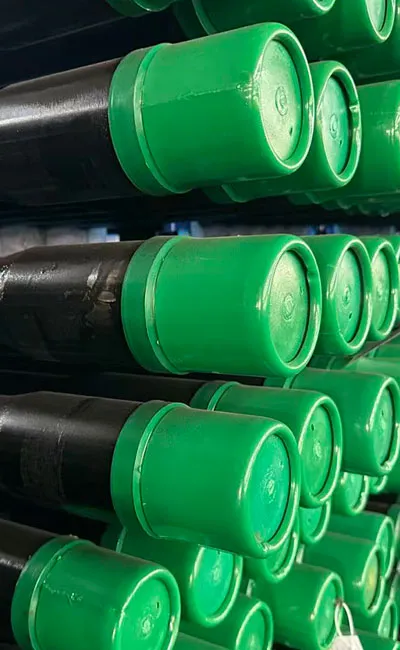
3. End Capping: Plastic caps are securely fitted on both ends of the tube. This prevents foreign objects from entering the tube and protects the precise inner diameter edges.
4. Wrapping: Each tube is individually wrapped in heavy-duty waterproof paper or plastic film.
5. Outer Packaging: The wrapped tubes are packed in wooden crates, plywood boxes, or bundled with steel strips and woven bags, depending on the size and customer preference. For long-distance sea freight, fumigated wooden boxes are recommended for maximum protection.
A: Both are precision-finished tubes for hydraulic cylinders. Honing is a traditional abrasive process that removes material using stones; it is suitable for smaller volumes and achieves Ra≤0.4–0.8 µm. SRB is a single-pass cutting + burnishing process that is up to 20 times faster, achieves tighter tolerances (H7/H8), and smoother surfaces (Ra≤0.2–0.4 µm). SRB also creates a cold-worked surface layer with residual compressive stress, improving hardness, wear resistance, and fatigue strength. However, honing is sometimes preferred for very hard materials or when an existing bore requires correction.
A: For standard honed tubes, surface roughness (Ra) is typically 0.4–0.8 µm. For SRB (Skived & Roller Burnished) tubes, roughness can be as low as 0.2–0.4 µm, and in some cases below 0.2 µm. The characteristic cross-hatch pattern left by honing is important for oil retention and lubrication. The inner surface is also tested for hardness, with readings often taken from multiple points across the ID circumference.
A: Honed tubes are typically manufactured to ISO tolerance grades H8 or H9, with H7 available for precision applications. For example, an H8 tolerance on a 100 mm ID bore means a variation of approximately±0.054 mm, ensuring consistent and reliable piston seal fit, preventing internal leakage, and optimizing cylinder performance.
A: Most common is ST52 (DIN 2391 / E355) high-strength carbon steel for general hydraulic applications. For higher strength, ASTM A519 4140 alloy steel (yield≥785 MPa, tensile≥930 MPa) is used for high-pressure cylinders, mining, and offshore equipment. 45# (C45E) and 27SiMn (yield≥835 MPa, tensile≥1000 MPa) are also widely used per Chinese standards. Stainless steel grades (304, 316L) are available for corrosive environments or food/pharmaceutical applications.
The Honed Tube is manufactured to precise dimensional, material, and mechanical specifications to ensure reliable performance in high-pressure hydraulic systems.
Dimensional Specification Table
|
Parameter |
Range |
Tolerance / Notes |
|
Inside Diameter (ID) |
20 mm – 1500 mm (up to 1600 mm available) |
H8 / H9 / H7 standard; H8: IT8 per ISO 286-1 |
|
Outside Diameter (OD) |
25 mm – 1620 mm |
±0.5 mm (hot-rolled); ±0.2 mm (cold-drawn) |
|
Wall Thickness (WT) |
3 mm – 50 mm (standard); up to 80 mm (special) |
±5% – ±10% of nominal |
|
Length |
3 m – 12 m (standard); up to 18 m (custom) |
±1 mm (≤6 m); ±2 mm (>6 m) |
|
Straightness |
≤0.3 mm per meter (standard); ≤0.1 mm/m (precision) |
— |
|
ID Surface Roughness (Ra) |
Honed: Ra ≤ 0.4 – 0.8 µm; SRB: Ra ≤ 0.2 – 0.4 µm |
Cross-hatch pattern for oil retention |
|
Delivery Conditions |
BK (+C), BKW (+LC), BKS (+SR), GBK (+A), NBK (+N) |
Per DIN 2391 / EN 10305-1 |
Material Grade & Chemical Composition Table
|
Standard |
Grade |
C (%) |
Mn (%) |
Si (%) |
Cr (%) |
Mo (%) |
P (%) max |
S (%) max |
Equivalent |
|
DIN 2391 |
St52 (1.0580) |
≤0.22 |
≤1.60 |
≤0.55 |
— |
— |
0.025 |
0.025 |
E355 |
|
EN 10305-1 |
E355 (1.0580) |
≤0.22 |
≤1.60 |
≤0.55 |
— |
— |
0.025 |
0.025 |
St52 |
|
EN 10305-4 |
E235/E355 |
≤0.17/0.22 |
≤1.20/1.60 |
≤0.35/0.55 |
— |
— |
0.025 |
0.015 |
— |
|
ASTM A519 |
1026 |
0.22-0.28 |
0.60-0.90 |
— |
— |
— |
0.040 |
0.050 |
— |
|
ASTM A519 |
4140 |
0.38-0.43 |
0.75-1.00 |
0.15-0.35 |
0.80-1.10 |
0.15-0.25 |
0.040 |
0.040 |
42CrMo4 |
|
GB/T 8713 |
20# |
0.17-0.23 |
0.35-0.65 |
0.17-0.37 |
— |
— |
0.035 |
0.035 |
C22 |
|
GB/T 8713 |
45# |
0.42-0.50 |
0.50-0.80 |
0.17-0.37 |
— |
— |
0.035 |
0.035 |
C45E |
|
GB/T 8713 |
27SiMn |
0.24-0.32 |
1.10-1.40 |
1.10-1.40 |
— |
— |
0.035 |
0.035 |
— |
We manufacture our honed tubes in compliance with major international standards, ensuring they are compatible with global hydraulic systems and machinery. We also support custom manufacturing based on specific customer drawings.
|
Standard |
Grade / Material |
Description |
|
ASTM A519 |
1018, 1020, 1026, 4130, 4140 |
Seamless Carbon and Alloy Steel Mechanical Tubing. |
|
DIN 2391 / EN 10305 |
ST35, ST45, ST52 (E355) |
Cold Drawn Seamless Precision Steel Tubes. |
|
GB/T 8713 |
20#, 45#, 27SiMn |
Cold Drawn or Cold Rolled Seamless Precision Tubes. |
|
ISO 3304 |
- |
Seamless precision steel tubes for hydraulic applications. |
|
JIS G3445 |
STKM11A, STKM13A, STKM14A |
Carbon Steel Tubes for Machine Structure. |
Chemical Composition (ASTM A519 Grade 1026):
|
Element |
Content (%) |
|
Carbon (C) |
0.22 - 0.28 |
|
Manganese (Mn) |
0.30 - 0.60 |
|
Phosphorus (P) |
≤0.040 |
|
Sulfur (S) |
≤0.050 |
|
Silicon (Si) |
- |
Mechanical Properties (DIN 2391 ST52 / E355):
|
Property |
Value |
|
Tensile Strength (Rm) |
≥640 MPa |
|
Yield Strength (Re) |
≥520 MPa |
|
Elongation (A5) |
≥12% |
|
Hardness |
≤230 HB |
The production of honed tubes involves a multi-stage manufacturing process designed to enhance the physical and surface properties of the steel.
1. Seamless Tube Preparation: The process begins with a hot-rolled seamless tube, which is pickled and phosphated to clean the surface.
2. Cold Drawing: The tube is cold-drawn to achieve the approximate final dimensions and improve the material's strength.
3. Skiving and Roller Burnishing (SRB): For many applications, we use the SRB process. Skiving cuts a thin layer of metal to correct geometry, while roller burnishing compresses the surface peaks into the valleys, creating a smooth, work-hardened surface.
4. Honing: For the highest precision, we use honing stones. This abrasive process removes a minute amount of material to create the final "cross-hatch" pattern. This pattern is crucial for oil retention in hydraulic cylinders.
5. Heat Treatment: If required, the tubes undergo stress-relief annealing to ensure stability during subsequent machining by the customer.
6. Quality Control: Every tube is inspected for surface defects, dimensional accuracy, and straightness.
To preserve the high-quality surface finish of the honed tube, specialized packing methods are employed. The internal surface is delicate and must be protected from dust, moisture, and physical impact during transit.
Packing Procedures:
1. Cleaning: The tubes are thoroughly cleaned to remove metal chips and dust.
2. Oil Coating: A layer of anti-rust oil is applied to the inner and outer surfaces to prevent corrosion during storage and shipping.
3. End Capping: Plastic caps are securely fitted on both ends of the tube. This prevents foreign objects from entering the tube and protects the precise inner diameter edges.
4. Wrapping: Each tube is individually wrapped in heavy-duty waterproof paper or plastic film.
5. Outer Packaging: The wrapped tubes are packed in wooden crates, plywood boxes, or bundled with steel strips and woven bags, depending on the size and customer preference. For long-distance sea freight, fumigated wooden boxes are recommended for maximum protection.
A: Both are precision-finished tubes for hydraulic cylinders. Honing is a traditional abrasive process that removes material using stones; it is suitable for smaller volumes and achieves Ra≤0.4–0.8 µm. SRB is a single-pass cutting + burnishing process that is up to 20 times faster, achieves tighter tolerances (H7/H8), and smoother surfaces (Ra≤0.2–0.4 µm). SRB also creates a cold-worked surface layer with residual compressive stress, improving hardness, wear resistance, and fatigue strength. However, honing is sometimes preferred for very hard materials or when an existing bore requires correction.
A: For standard honed tubes, surface roughness (Ra) is typically 0.4–0.8 µm. For SRB (Skived & Roller Burnished) tubes, roughness can be as low as 0.2–0.4 µm, and in some cases below 0.2 µm. The characteristic cross-hatch pattern left by honing is important for oil retention and lubrication. The inner surface is also tested for hardness, with readings often taken from multiple points across the ID circumference.
A: Honed tubes are typically manufactured to ISO tolerance grades H8 or H9, with H7 available for precision applications. For example, an H8 tolerance on a 100 mm ID bore means a variation of approximately±0.054 mm, ensuring consistent and reliable piston seal fit, preventing internal leakage, and optimizing cylinder performance.
A: Most common is ST52 (DIN 2391 / E355) high-strength carbon steel for general hydraulic applications. For higher strength, ASTM A519 4140 alloy steel (yield≥785 MPa, tensile≥930 MPa) is used for high-pressure cylinders, mining, and offshore equipment. 45# (C45E) and 27SiMn (yield≥835 MPa, tensile≥1000 MPa) are also widely used per Chinese standards. Stainless steel grades (304, 316L) are available for corrosive environments or food/pharmaceutical applications.








 English
 Español
 русский язык
 Português