Industry News

Hunan Great Steel Pipe Co., Ltd
LSAW steel pipe for water transmission,LSAW water pipe,large diameter LSAW steel pipe,LSAW steel pipe coating

LSAW Steel Pipe for Water Transmission: Design, Coating and Maintenance Guide

Date: 2026-09-02
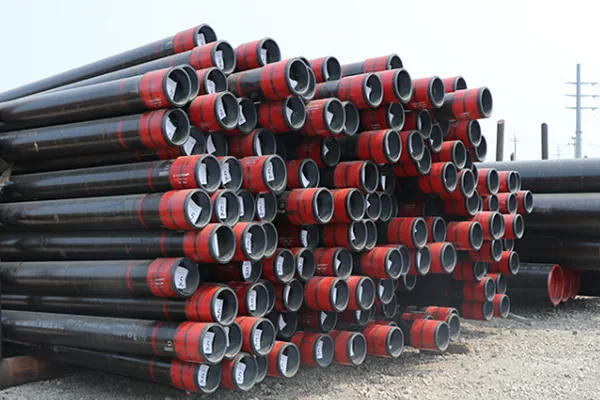
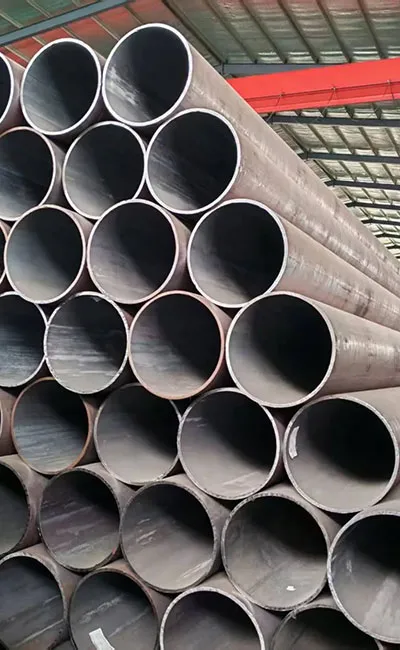
Large-diameter LSAW steel pipe is widely used for water transmission projects where high flow capacity, large diameters and project-specific wall thicknesses are required. Its longitudinal welded construction also allows manufacturers to produce pipe to defined dimensions and mechanical requirements. But selecting the right LSAW steel pipe is only one part of pipeline reliability. Hydraulic conditions, pressure transients, internal water quality, corrosion protection, field welding and installation all affect long-term performance. For water projects, the applicable standard should be established before procurement. AWWA C200-23, for example, covers steel water pipe 6 in. (150 mm) and larger for the transmission and distribution of potable, raw and reclaimed water, wastewater and other water-system applications. The applicable standard depends on the project location, service and engineering requirements.

1. Start With the Hydraulic Design

Pipe diameter should not be selected from flow rate alone. The design team should consider required flow, velocity, operating pressure, elevation changes, pumping conditions and allowable pressure loss. These factors determine the hydraulic requirements that the steel pipe must satisfy. Pressure transients also deserve attention. Rapid valve closure, pump trips and sudden changes in flow can generate pressure surges, commonly known as water hammer. The pipeline should therefore be evaluated for both normal operating pressure and applicable transient conditions. The final pipe specification should follow the responsible engineer's hydraulic and structural calculations rather than relying on a nominal diameter or operating pressure alone.

2. Match Wall Thickness to the Actual Service Conditions

LSAW steel pipe wall thickness needs to provide adequate resistance to the loads defined by the project. Besides internal pressure, the design may need to consider external loads, installation conditions, temperature effects, handling and other project-specific factors. For large-diameter water pipelines, wall thickness should therefore be established from the governing design standard and project calculations. Choosing a thicker pipe simply because it appears safer can increase material, welding and transportation costs without addressing the actual design requirement.

3. Consider Internal Water Quality and Lining

The water inside the pipeline can create different corrosion environments. Factors such as pH, dissolved oxygen, temperature, chlorides and water chemistry may influence internal corrosion. Potable water, raw water, reclaimed water and wastewater can therefore require different protection considerations. Internal lining may be used to provide additional corrosion protection and maintain the intended service condition. AWWA's steel water pipe standards include systems for cement-mortar lining, liquid epoxy and other protective technologies. For potable water applications, the selected lining system should also satisfy the applicable health and regulatory requirements.

4. Specify External Corrosion Protection Before Production

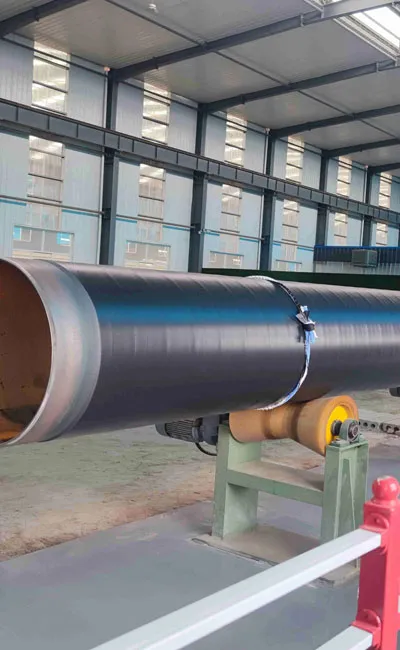
Buried LSAW steel pipe is exposed to soil, moisture and potentially aggressive environmental conditions. External corrosion protection should therefore be included in the pipe specification before manufacturing begins. Depending on the project, the protection system may involve different coating technologies. AWWA's current steel water pipe standards include liquid epoxy, fusion-bonded epoxy, polyolefin, polyurethane, tape and other coating systems. A coating specification should clearly define:
  • Surface preparation
  • Coating system
  • Required thickness
  • Application conditions
  • Inspection and testing
  • Repair procedures
  • Field joint protection
The correct coating should be selected according to the soil, installation environment, service conditions and project specification—not simply because it is commonly used.

5. Treat Field Welding as Part of the Quality Chain

Factory inspection does not guarantee field joint quality. During installation, LSAW steel pipe sections may require field butt welding. Joint fit-up, alignment, welding procedures, inspection and joint coating all need to be controlled. AWWA C206-23 specifically addresses field welding of steel water pipe manufactured under AWWA C200. Its scope includes manual, semiautomatic and automatic metal-arc welding processes. After welding and inspection, the field joint coating should restore the intended corrosion protection.

6. Protect the Pipe During Installation

Handling damage can reduce the effectiveness of an otherwise suitable coating system. Important installation controls include:
  • Proper lifting equipment
  • Pipe alignment
  • Trench and bedding preparation
  • Joint fit-up
  • Field welding
  • Coating repair
  • Backfilling
  • Settlement control
The pipe should not be dragged across rough ground or handled in a way that damages the coating or pipe ends. Backfilling also deserves attention. Uneven support, excessive localized loading or uncontrolled settlement can introduce additional stresses into the pipeline.

7. Monitor the Pipeline After Commissioning

Maintenance should focus on identifying changes before they become major failures. Depending on the pipeline, operators may monitor:
  • Operating pressure
  • Flow rate
  • Pressure fluctuations
  • Leakage
  • Corrosion condition
  • Coating condition
  • Joint condition
  • Ground movement or settlement
Unexpected changes in pressure, flow or leakage should be investigated against operating records and inspection data. If wall loss, deformation or cracking is identified, the appropriate response should be based on the actual defect and an engineering assessment. Not every defect requires immediate replacement, but significant deterioration should not be ignored.

What Should Buyers Confirm Before Ordering LSAW Water Pipe?

Before issuing an RFQ, procurement and engineering teams should confirm:

Area Key Information
Design Diameter, wall thickness and pressure conditions
Material Grade and mechanical requirements
Internal Protection Lining system and service requirements
External Protection Coating system and field joint protection
Inspection Weld, dimensional and coating inspection
Installation Field welding and backfilling requirements
Documentation MTC, inspection records and coating records
Defining these items early gives the manufacturer a clear production and inspection basis and reduces specification changes later in the project.

Conclusion

The long-term performance of an LSAW steel water transmission pipeline depends on more than the pipe itself. Hydraulic design + pipe specification + corrosion protection + field welding + installation + maintenance form the complete reliability chain. For large water transmission projects, buyers should define these requirements before production begins. When material, dimensions, pressure conditions, coating, inspection and documentation are aligned from the start, the LSAW pipe can be manufactured and delivered against a clear engineering target. The goal is not simply to purchase a large-diameter steel pipe. It is to specify a pipe system that can perform reliably under the actual conditions of the water transmission project.

Latest news list

  • LSAW steel pipe buying guide,LSAW steel pipe procurement,buy LSAW steel pipe,LSAW pipe supplier,LSAW pipe inspection
    Buying large-diameter LSAW steel pipe for an international project involves more than comparing supplier quotations,A pipe can meet the required dimensions and still create project risk if the material specification,inspection scope,documentation,coating or delivery plan is not properly defined,For EPC contractors,project owners,distributors and engineering companies,a better approach is to compare suppliers against the same technical and commercial requirements,
  • LSAW steel pipe problems,LSAW steel pipe troubleshooting,LSAW pipe maintenance,LSAW pipe inspection
    When an LSAW steel pipeline develops a problem,replacing the pipe immediately is rarely the best first step,The priority is to determine what changed,where the damage occurred and why it happened,LSAW (Longitudinal Submerged Arc Welding) pipe is widely used in large-diameter pipeline systems,During service,however,pipeline problems can result from corrosion,coating failure,external loading,operating conditions,connection problems or weld-related issues,A structured troubleshooting process helps maintenance teams distinguish between a local defect and a broader integrity problem,
  • how to choose LSAW steel pipe,LSAW pipe buying guide,LSAW pipe selection,LSAW steel pipe procurement
    Choosing LSAW steel pipe should start with the pipeline's engineering requirements,not with the lowest price per ton,The right pipe needs to match the operating conditions,applicable standard,steel grade,dimensions,welding requirements,inspection scope and delivery conditions of the project,LSAW (Longitudinal Submerged Arc Welding) pipe is widely used for large-diameter pipeline applications,including oil and gas transmission,water infrastructure and other industrial systems,However,selecting the correct product requires more than specifying “LSAW pipe” on an RFQ,
  • LSAW steel pipe quality control,LSAW pipe inspection,LSAW NDT,LSAW hydrostatic test,LSAW pipe quality
    For large-diameter LSAW steel pipe,quality control is more than checking the appearance of the finished pipe,A reliable inspection system must verify material identity,weld integrity,mechanical performance,dimensional accuracy and pressure resistance,For project buyers,this matters because a pipe can look acceptable externally while still failing to meet a required technical specification,
  • LSAW steel pipe manufacturing process,LSAW production process,UOE steel pipe,JCOE steel pipe
    Large-diameter LSAW steel pipe is manufactured from steel plate rather than continuously formed from coil,The plate is prepared,shaped into a pipe,longitudinally welded,and then inspected to meet the required dimensional and performance standards,From a manufacturer's perspective,each stage matters because a problem introduced during plate preparation or forming can affect welding,dimensional accuracy,and final pipe performance,For project buyers,understanding this sequence makes it easier to evaluate both the product and the supplier behind it,

Find what you need ?

close
We use cookies and other tracking technologies to improve your browsing experience on our website, to show you personalized content and targeted ads, to analyze our website traffic, and to understand where our visitors are coming from.