Product News

Hunan Great Steel Pipe Co., Ltd
LSAW steel pipe manufacturing process,LSAW production process,UOE steel pipe,JCOE steel pipe

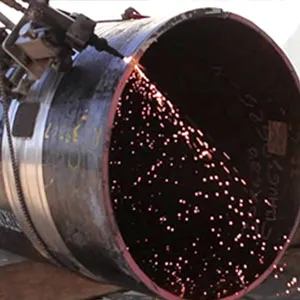
How Is LSAW Steel Pipe Manufactured? A Factory View of the Production Process

Date: 2026-08-31
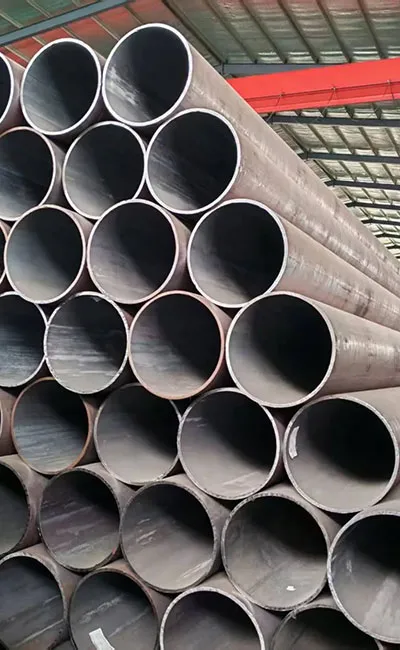
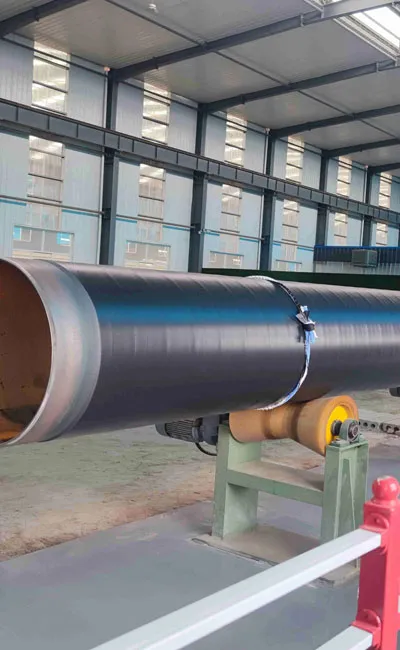
Large-diameter LSAW steel pipe is manufactured from steel plate rather than continuously formed from coil. The plate is prepared, shaped into a steel pipe, longitudinally welded, and then inspected to meet the required dimensional and performance standards. From a manufacturer's perspective, each stage matters because a problem introduced during plate preparation or forming can affect welding, dimensional accuracy, and final steel pipe performance. For project buyers, understanding this sequence makes it easier to evaluate both the product and the supplier behind it.

1. Steel Plate Selection and Preparation

Production starts with a steel plate that matches the specified grade and standard. Before forming, the plate is checked for dimensions, surface condition, and material identification. Heat number traceability is particularly important for project orders because it connects the finished steel pipe with the original steel material and its test documentation. The plate edges are then prepared for longitudinal welding. Edge milling controls the plate width, edge geometry, and groove shape required by the welding procedure. This is not simply a preparation step: consistent edge geometry helps the welding system maintain stable penetration and joint quality. For demanding projects, full-plate inspection may also be specified before forming.

2. UOE and JCOE Forming

The prepared plate must be formed into a steel pipe before the longitudinal seam can be welded. Two established LSAW production routes are UOE and JCOE. In UOE forming, the plate is pressed into a U shape and then formed into an O shape. The process provides controlled forming for large-diameter steel pipe within the mill's production range. JCOE uses progressive bending. Sections of the plate are gradually pressed to form the required curvature. This approach provides flexibility across different diameters and wall thicknesses. The important point from a factory perspective is not simply whether the steel pipe is UOE or JCOE. Forming must achieve the required geometry without creating excessive deformation or uneven forming stress. Final dimensional control depends on what happens during this stage as much as on the inspection performed afterward.

3. Longitudinal Submerged Arc Welding

After forming, the longitudinal seam is welded. LSAW steel pipe normally uses internal and external submerged arc welding. The welding arc is protected by granular flux, which helps maintain a stable welding environment and protects the molten weld pool. Welding parameters are controlled according to the qualified welding procedure and the steel pipe's material, wall thickness and project requirements. Current, voltage, travel speed and heat input all influence weld formation. For critical steel pipeline applications, the objective is not simply to produce a visually acceptable weld. The completed seam must satisfy the specified mechanical and non-destructive testing requirements.

4. Expansion and Dimensional Correction

Welding and forming can leave residual stresses or small dimensional deviations in a large-diameter steel pipe. Where required, the finished steel pipe is expanded mechanically or hydraulically after welding. This operation can improve dimensional accuracy and help reduce residual forming stress. For field projects, dimensional control has practical importance. Outside diameter, wall thickness, straightness and steel pipe-end geometry can affect alignment, field welding and connection with fittings or other pipeline components. This is why dimensional inspection is treated as part of manufacturing quality rather than as a final cosmetic check.

5. Inspection: What Manufacturers Check and Why

Quality control runs throughout production, not only after the steel pipe is completed. Depending on the applicable standard and purchase specification, inspection may include:
  • Chemical composition verification
  • Tensile strength, yield strength and elongation
  • Impact testing where specified
  • Ultrasonic testing
  • Radiographic testing where required
  • Hydrostatic testing
  • Dimensional inspection
  • Visual and surface inspection
Each test serves a different purpose. Material testing confirms that the steel meets the specified grade. NDT focuses on weld and material integrity, while hydrostatic testing verifies pressure resistance under the specified test conditions. The inspection scope should always be determined by the governing standard and project specification. API 5L line steel pipe, for example, may have requirements that differ from those for structural or water-transmission applications.

What Should Buyers Ask an LSAW Manufacturer?

A useful technical inquiry should go beyond diameter and price. Before placing an order, buyers should confirm:
  • Manufacturing route: UOE or JCOE
  • Steel grade and applicable standard
  • Outside diameter and wall thickness
  • Welding and NDT requirements
  • Hydrostatic testing
  • Pipe-end preparation
  • Coating requirements
  • Inspection documentation
  • MTC and heat-number traceability


At Hunan Great Steel Pipe, LSAW production covers UOE and JCOE routes for large-diameter applications, with manufacturing and inspection requirements matched to the applicable project specification. The company's LSAW capabilities include API, DNV, ISO, EN, ASTM, DIN, BS, JIS, GB and CSA standards, subject to the specific order requirements. For an engineering project, the best LSAW pipe is not simply the pipe with the lowest quoted price. Material, forming, welding, inspection and dimensional control all need to work together to meet the service conditions of the finished pipeline. If you are planning an LSAW steel pipe project, provide the required standard, grade, OD, wall thickness, quantity, end preparation and inspection requirements. These details allow the manufacturer to evaluate the order against the actual project specification rather than quoting from a generic product description.

Latest news list

  • carbon seamless steel pipe service life,extend carbon steel pipe life,carbon seamless pipe maintenance
    Carbon seamless steel pipe can provide reliable service for many years,but its actual service life depends on how well the pipe matches the operating conditions and how consistently it is inspected and maintained,In industrial service,extending pipe life is not simply about using a thicker pipe or applying a protective coating,A practical approach is to control the factors that cause deterioration: material selection,operating conditions,corrosion,installation,inspection,and maintenance,For in-service piping,inspection programs such as API 570 focus on maintaining the integrity of metallic piping through inspection,rating,repair,and alteration,
  • carbon seamless steel pipe shipment,ASTM A106 Gr,B pipe,carbon seamless steel pipe export,carbon seamless steel pipe
    Exporting carbon seamless steel pipe requires more than completing production,Before an order leaves the factory,the pipe must pass through specification review,raw material preparation,manufacturing,inspection,marking,packing,and logistics coordination,We recently prepared a 593-ton carbon seamless steel pipe order for an overseas customer,The order was supplied to ASTM A106,A106M,with a pipe size of 219,1 mm × 8 mm,This shipment provides a practical example of how a large seamless pipe order is prepared for international delivery,
  • carbon seamless steel pipe for high temperature service,high temperature carbon steel pipe,ASTM A106 Grade B pipe
    Selecting carbon seamless steel pipe for high-temperature service is not simply a matter of choosing a pipe with a high tensile strength,As temperature increases,the material's allowable stress,dimensional stability,oxidation behavior,and long-term performance can change,A more reliable selection process is: Design Temperature → Pressure → Material Grade → Wall Thickness → Heat Treatment → Standard → Inspection,ASTM A106,A106M-26 specifically covers seamless carbon steel pipe for high-temperature service,while ASTM A335,A335M-26 covers seamless ferritic alloy-steel pipe intended for high-temperature applications,
  • carbon seamless steel pipe,carbon seamless steel pipe buying guide,buy carbon seamless steel pipe
    Buying carbon seamless steel pipe should start with the project specification,not the supplier's price list,A pipe may look competitive but still create problems if the steel grade,dimensions,testing,traceability,or documentation do not match the actual requirement,For international buyers,procurement also involves production lead time,export packing,transportation,and stock availability,A practical pre-purchase check should therefore cover the pipe itself,the supplier,and the complete delivery process,
  • carbon seamless steel pipe failure,seamless steel pipe failure prevention,carbon steel pipe failure
    Carbon seamless steel pipe is widely used in industrial,energy,process,and infrastructure systems,Its seamless construction removes longitudinal weld-related defects as one potential failure mechanism,but it does not eliminate corrosion,cracking,fatigue,overpressure,or service-related deterioration,In practice,preventing pipe failure requires more than checking the pipe itself,A useful engineering approach is: Problem → Possible Cause → Inspection → Corrective Action,This approach helps maintenance teams identify the mechanism behind deterioration instead of simply replacing damaged pipe,For in-service metallic piping within its scope,API 570 covers inspection,rating,repair,and alteration practices,

Find what you need ?

close
We use cookies and other tracking technologies to improve your browsing experience on our website, to show you personalized content and targeted ads, to analyze our website traffic, and to understand where our visitors are coming from.