What the Introduction and Applications of High-Pressure Boiler Steel Tubes
Date: 2026-02-02
What the Introduction and Applications of High-Pressure Boiler Steel Tubes
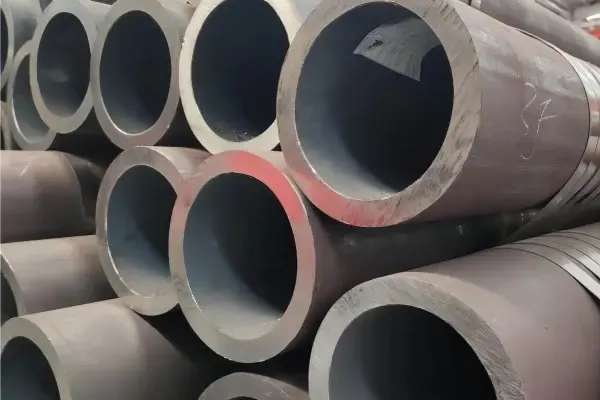
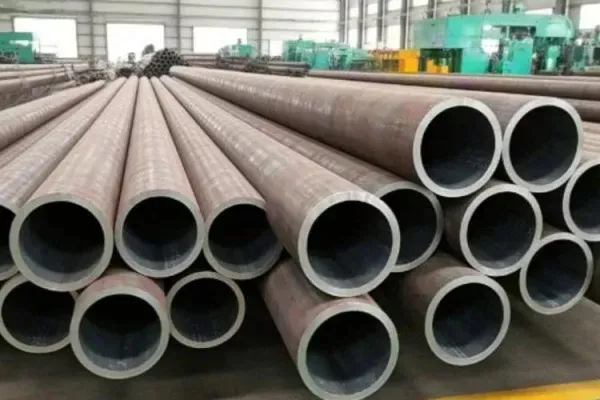
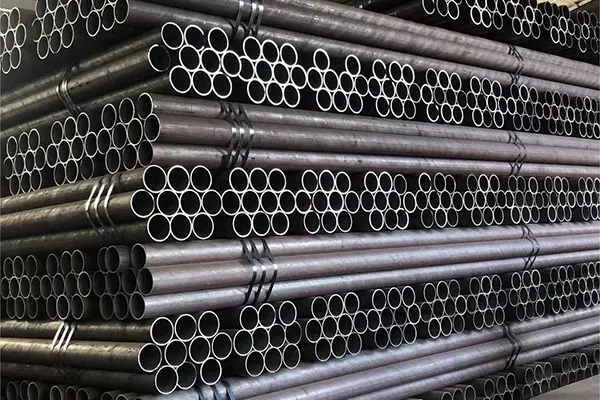
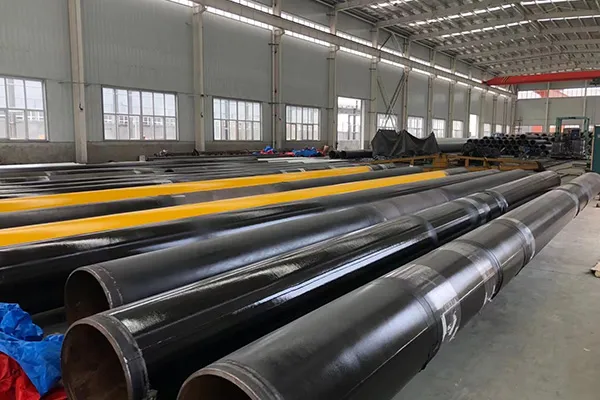
High-pressure boiler steel tubes are a type of boiler steel tube, belonging to the seamless steel tube category. The manufacturing method is the same as that of seamless tubes, but there are strict requirements on the steel grade used. High-pressure boiler steel tubes are frequently used under high temperature and high pressure conditions. Under the influence of high-temperature flue gas and steam, the steel tubes will undergo oxidation and corrosion. Therefore, the steel tubes are required to have high creep strength, high resistance to oxidation and corrosion, and good structural stability. High-pressure boiler steel tubes are mainly used to manufacture superheater tubes, reheater tubes, steam pipes, and main steam pipes for high-pressure and ultra-high-pressure boilers.
First, Introduction to High-Pressure Boiler Steel Tubes.
High-Pressure Boiler Steel Tube Specifications: 6mm-1240mm × 1mm-200mm
High-Pressure Boiler Steel Tube Manufacturing Process: Precision drawing, bright finishing, hot rolling, cold drawing, and hot expansion.
High-pressure boiler steel tubes are a type of boiler steel tube, belonging to the seamless steel tube category. The manufacturing method is the same as seamless high-pressure boiler steel tubes, but there are strict requirements on the steel grade used. High-pressure boiler steel tubes are frequently used under high temperature and high pressure conditions. High-pressure boiler steel pipes are mainly used to manufacture superheater tubes, reheater tubes, steam pipes, and main steam pipes for high-pressure and ultra-high-pressure boilers.
Second, Classification of High-Pressure Boiler Steel Pipe Applications.
Used for heating surface steel pipes in low and medium-pressure boilers (working pressure generally not exceeding 5.88 MPa, working temperature below 450℃); used for heating surface steel pipes, economizers, superheaters, reheaters, and petrochemical industry pipes in high-pressure boilers (working pressure generally above 9.8 MPa, working temperature between 450℃ and 650℃).
Third, Manufacturing and Applications of High-Pressure Boiler Steel Pipes:
(1) Manufacturing Methods of High-Pressure Boiler Steel Pipes:
① Generally, boiler steel pipes are used at temperatures below 450℃. Domestically produced pipes are mainly manufactured using No. 10 and No. 20 carbon structural steel hot-rolled or cold-drawn pipes.
② High-pressure boiler steel pipes are frequently used under high temperature and high pressure conditions. Under the action of high-temperature flue gas and steam, the steel pipes will undergo oxidation and corrosion. The steel pipes are required to have high creep strength, high resistance to oxidation and corrosion, and good structural stability.
(2) Applications of high-pressure boiler steel pipes:
① General boiler steel pipes are mainly used to manufacture water-cooled wall tubes, boiling water tubes, superheated steam tubes, superheated steam tubes for locomotive boilers, large and small smoke tubes, and arch brick tubes, etc.
② High-pressure boiler steel pipes are mainly used to manufacture superheater tubes, reheater tubes, steam pipes, and main steam pipes for high-pressure and ultra-high-pressure boilers, etc. Fourth, Hot Working Process of High-Pressure Boiler Steel Tubes
Heat Treatment of High-Pressure Boiler Steel Tubes:
1. Normalizing: Normalizing temperature 880℃-940℃ (20G, 20MNG, 25MNG); Normalizing temperature 890℃-950℃ (15MOG, 20MOG)
2. Normalizing and Tempering: Normalizing temperature: 900℃-960℃; Tempering temperature: 680℃-730℃ (15CRMOG, 12CR1MOVG)
Heat Treatment – is a method of altering the physical properties of high-pressure boiler steel tubes by heating and cooling. Heat treatment can improve the microstructure of high-pressure boiler steel tubes to achieve the required physical requirements. Toughness, hardness, and wear resistance are some of the properties obtained through heat treatment. To obtain these properties, operations such as hardening (also known as quenching), tempering, annealing (also known as hardening), and surface hardening are required in heat treatment.
Hardening (also known as quenching) – This involves uniformly heating the high-pressure boiler steel tubes to a suitable temperature, then rapidly immersing them in water or oil for quenching, or cooling them in air or a freezing area, to achieve the desired hardness.
Tempering – After hardening, high-pressure boiler steel tubes become brittle. The stress caused by the rapid cooling during quenching can cause the tubes to fracture even with a light impact. Tempering is used to eliminate brittleness. Tempering involves reheating the high-pressure boiler steel tubes to a suitable temperature or color, followed by rapid cooling. Although tempering slightly reduces the hardness of the high-pressure boiler steel tubes, it increases their toughness and reduces their brittleness.
Annealing – Annealing is a method to eliminate internal stresses and harden the steel in high-pressure boiler steel tubes. Annealing involves heating the steel to above the critical temperature, then placing it in dry ash, lime, asbestos, or sealing it in a furnace for slow cooling.
Hardness – Hardness is a material’s resistance to penetration by a foreign object. A common method for testing the hardness of high-pressure boiler steel pipes is to file the edge of the workpiece and determine its hardness by the depth of the resulting scratch. This method is called the file test, but it is not very scientific. Using a hardness tester is far more accurate and is the most commonly used method in modern hardness testing. A commonly used test method is the Rockwell hardness test. The Rockwell hardness tester uses the depth to which a diamond penetrates the metal to determine the hardness of the high-pressure boiler steel pipe; the greater the penetration depth, the lower the hardness. The depth of the diamond penetration can be indicated by a pointer, which is called the Rockwell hardness number.
Forging – Forging is a method of shaping metal by hammering. When high-pressure boiler steel pipes are heated to forging temperature, they can be forged, bent, drawn, and formed. Most high-pressure boiler steel pipes are easy to forge when heated to a bright cherry red color.
Brittleness – This refers to the tendency of high-pressure boiler steel pipes to break easily. Cast iron is highly brittle and can even break when dropped. Brittleness is closely related to hardness; high-hardness 20# precision steel pipes are generally also highly brittle.
Ductility (also known as flexibility) is the property of a metal to deform under external force without breaking. Ductile high-pressure boiler steel pipes can be drawn into thin wires.
Elasticity – This is the property of high-pressure boiler steel pipes to return to their original shape after being deformed by external force. Spring steel is a highly elastic material.
Hardness – This is the resistance of a metal to penetration or cutting by foreign objects. Quenching is a common method to increase the hardness of high-pressure boiler steel pipes.
Malleability – Also known as forgeability, this is another way of expressing the ductility or flexibility of a metal. Malleability is the property of a metal to deform under hammering or rolling without breaking.
Toughness – This is the ability of high-pressure boiler steel pipes to withstand vibration or impact. Toughness is the opposite of brittleness.
Post time: Feb-02-2026










 English
 Español
 русский язык
 Português