Costura reta aço conhecimento tubulação
Data: 2024-01-19
Straight seam steel pipe knowledge
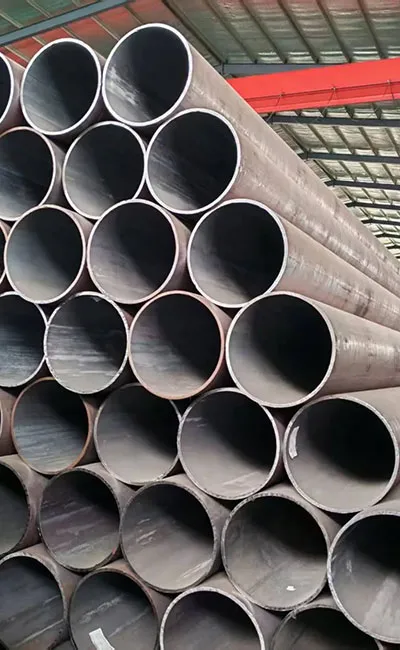
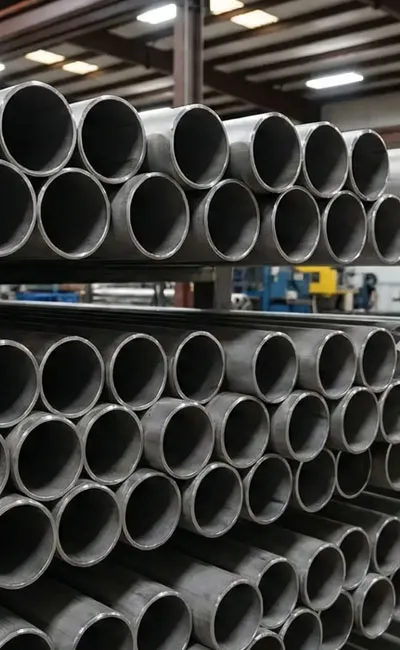
Straight seam steel pipe is a steel pipe with a welded seam that is parallel to the longitudinal direction of the steel pipe. Usually divided into metric electric welded steel pipes, electric welded thin-walled pipes, transformer cooling oil pipes, etc. Production process Straight seam high-frequency welded steel pipes have the characteristics of a relatively simple process and rapid continuous production. They are widely used in civil construction, petrochemical, light industry, and other departments. It is mostly used to transport low-pressure fluid or be made into various engineering components and light industrial products.
1. Production process flow of straight seam high frequency welded steel pipe
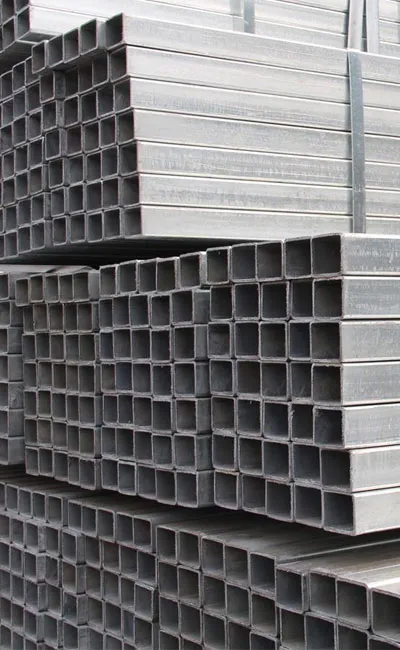
Straight seam welded steel pipe is made by rolling a long strip of steel strip of a certain specification into a round tube shape through a high-frequency welding unit and then welding the straight seam to form a steel pipe. The shape of the steel pipe can be round, square, or special-shaped, which depends on the sizing and rolling after welding. The main materials of welded steel pipes are low carbon steel and low alloy steel or other steel materials with σs≤300N/mm2, and σs≤500N/mm2.
2. High-frequency welding
High-frequency welding is based on the principle of electromagnetic induction and the skin effect, proximity effect, and eddy current thermal effect of AC charges in the conductor so that the steel at the edge of the weld is locally heated to a molten state. After being extruded by the roller, the butt weld is inter-crystalline. Combined to achieve the purpose of welding. High-frequency welding is a kind of induction welding (or pressure contact welding). It does not require weld fillers, has no welding spatter, has narrow welding heat-affected zones, beautiful welding shapes, and good welding mechanical properties. Therefore, it is favored in the production of steel pipes. Wide range of applications.
High-frequency welding of steel pipes utilizes the skin effect and proximity effect of alternating current. After the steel (strip) is rolled and formed, a circular tube blank with a broken section is formed, which is rotated within the tube near the center of the induction coil. Or a set of resistors (magnetic rods). The resistor and the opening of the tube blank form an electromagnetic induction loop. Under the action of the skin effect and proximity effect, the edge of the tube blank opening produces a strong and concentrated thermal effect, making the edge of the weld After being rapidly heated to the temperature required for welding and extruded by a pressure roller, the molten metal achieves inter-granular bonding and forms a strong butt weld after cooling.
3. High-frequency welded pipe unit
The high-frequency welding process of straight seam steel pipes is completed in high-frequency welded pipe units. High-frequency welded pipe units usually consist of roll forming, high-frequency welding, extrusion, cooling, sizing, flying saw cutting, and other components. The front end of the unit is equipped with a storage loop, and the rear end of the unit is equipped with a steel pipe turning frame; The electrical part mainly consists of a high-frequency generator, DC excitation generator, and instrument automatic control device.
4. High-frequency excitation circuit
The high-frequency excitation circuit (also known as the high-frequency oscillation circuit) is composed of a large electron tube and an oscillation tank installed in a high-frequency generator. It uses the amplification effect of the electron tube. When the electron tube is connected to the filament and anode, the anode is output signal is positively fed back to the gate, forming a self-excited oscillation loop. The size of the excitation frequency depends on the electrical parameters (voltage, current, capacitance, and inductance) of the oscillation tank.
5. Straight seam steel pipe high-frequency welding process
5.1 Control of weld gap
The strip steel is fed into the welded pipe unit. After being rolled by multiple rollers, the strip steel is gradually rolled up to form a circular tube blank with an opening gap. Adjust the reduction amount of the extrusion roller to control the weld gap between 1 and 3 mm. And make both ends of the welding port flush. If the gap is too large, the proximity effect will be reduced, the eddy current heat will be insufficient, and the inter-crystal bonding of the weld will be poor, resulting in a lack of fusion or cracking. If the gap is too small, the proximity effect will increase and the welding heat will be too high, causing the weld to burn out; or the weld will form a deep pit after being extruded and rolled, affecting the surface quality of the weld.
5.2 Welding temperature control
The welding temperature is mainly affected by the high-frequency eddy current thermal power. According to formula (2), it can be seen that the high-frequency eddy current thermal power is mainly affected by the current frequency. The eddy current thermal power is proportional to the square of the current excitation frequency, and the current excitation frequency is in turn affected by the excitation frequency. The effects of voltage, current, capacitance, and inductance. The excitation frequency formula is f=1/[2π(CL)1/2]…(1) Where: f-excitation frequency (Hz); C-capacitance (F) in the excitation loop, capacitance = power/ Voltage; L-inductance in the excitation loop, inductance = magnetic flux/current. It can be seen from the above formula that the excitation frequency is inversely proportional to the square root of the capacitance and inductance in the excitation loop, or directly proportional to the square root of the voltage and current. As long as the capacitance and inductance in the loop are changed, the inductive voltage or current can change the excitation frequency, thereby achieving the purpose of controlling the welding temperature. For low carbon steel, the welding temperature is controlled at 1250~1460℃, which can meet the welding penetration requirement of 3~5mm pipe wall thickness. In addition, the welding temperature can also be achieved by adjusting the welding speed. When the input heat is insufficient, the heated weld edge cannot reach the welding temperature, and the metal structure remains solid, resulting in incomplete fusion or incomplete welding; when the input heat is insufficient, the heated weld edge exceeds the welding temperature, resulting in Over-burning or molten droplets will cause the weld to form a molten hole.
5.3 Control of extrusion force
After the two edges of the tube blank are heated to the welding temperature, they are squeezed by the squeeze roller to form common metal grains that penetrate and crystallize with each other, eventually forming a strong weld. If the extrusion force is too small, the number of common crystals formed will be small, the strength of the weld metal will decrease, and cracking will occur after stress; if the extrusion force is too large, the molten metal will be squeezed out of the weld, which will not only reduce The strength of the weld is reduced, and a large number of internal and external burrs will be produced, even causing defects such as welding lap seams.
5.4 Control of high-frequency induction coil position
The high-frequency induction coil should be as close as possible to the position of the squeeze roller. If the induction coil is far away from the extrusion roller, the effective heating time will be longer, the heat-affected zone will be wider, and the strength of the weld will decrease; on the contrary, the edge of the weld will not be heated enough and the shape will be poor after extrusion.
5.5 The resistor is one or a group of special magnetic rods for welded pipes. The cross-sectional area of the resistor should usually not be less than 70% of the cross-sectional area of the inner diameter of the steel pipe. Its function is to form an electromagnetic induction loop with the induction coil, the edge of the pipe blank weld seam, and the magnetic rod. , producing a proximity effect, the eddy current heat is concentrated near the edge of the tube blank weld, causing the edge of the tube blank to be heated to the welding temperature. The resistor is dragged inside the tube blank with a steel wire, and its center position should be relatively fixed close to the center of the extrusion roller. When the machine is turned on, due to the rapid movement of the tube blank, the resistor suffers a large loss from the friction of the inner wall of the tube blank and needs to be replaced frequently.
5.6 After welding and extrusion, weld scars will be produced and need to be removed. The cleaning method is to fix the tool on the frame and rely on the rapid movement of the welded pipe to smooth the weld scar. Burrs inside welded pipes are generally not removed.
6. Technical requirements and quality inspection of high-frequency welded pipes
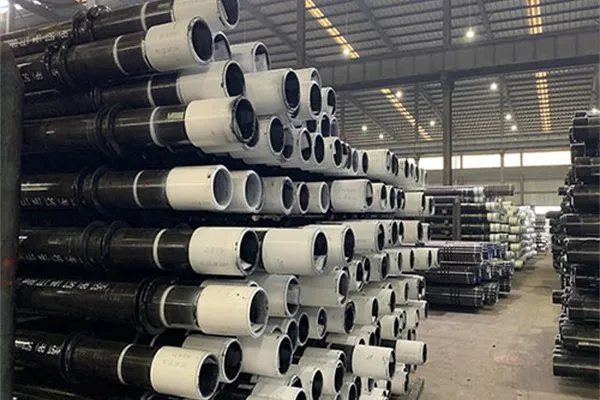
According to the GB3092 “Welded Steel Pipe for Low-Pressure Fluid Transport” standard, the nominal diameter of the welded pipe is 6~150mm, the nominal wall thickness is 2.0~6.0mm, the length of the welded pipe is usually 4~10 meters and can be specified in fixed length or multiple lengths Factory. The surface quality of steel pipes should be smooth, and defects such as folding, cracks, delamination, and lap welding are not allowed. The surface of the steel pipe is allowed to have minor defects such as scratches, scratches, weld dislocations, burns, and scars that do not exceed the negative deviation of the wall thickness. Thickening of the wall thickness at the weld and the presence of internal weld bars are allowed. Welded steel pipes should undergo mechanical performance tests, flattening tests, and expansion tests, and must meet the requirements stipulated in the standard. The steel pipe should be able to withstand a certain internal pressure. If necessary, a 2.5Mpa pressure test should be carried out to maintain no leakage for one minute. It is allowed to use the eddy current flaw detection method instead of the hydrostatic test. Eddy current flaw detection is carried out by the standard GB7735 “Eddy Current Flaw Detection Inspection Method for Steel Pipes”. The eddy current flaw detection method is to fix the probe on the frame, keep a distance of 3~5mm between the flaw detection and the weld, and rely on the rapid movement of the steel pipe to conduct a comprehensive scan of the weld. The flaw detection signal is automatically processed and automatically sorted by the eddy current flaw detector. To achieve the purpose of flaw detection. It is a steel pipe made of steel plates or steel strips that are curled and then welded. The production process of welded steel pipes is simple, the production efficiency is high, there are many varieties and specifications, and the equipment investment is small, but the general strength is lower than that of seamless steel pipes. Since the 1930s, with the rapid development of continuous rolling production of high-quality strip steel and the advancement of welding and inspection technology, the quality of welds has continued to improve, and the varieties and specifications of welded steel pipes have increased day by day, replacing unfinished steel pipes in more and more fields. Sewing steel pipe. Welded steel pipes are divided into straight seam welded pipes and spiral welded pipes according to the form of the weld. The production process of straight seam welded pipe is simple, the production efficiency is high, the cost is low, and the development is rapid. The strength of spiral welded pipes is generally higher than that of straight seam welded pipes. Welded pipes with larger diameters can be produced from narrower billets, and welded pipes with different diameters can also be produced from billets of the same width. However, compared with straight seam pipes of the same length, the weld length is increased by 30~100%, and the production speed is lower. After flaw detection, the welded pipe is cut to the specified length with a flying saw and is rolled off the production line via a flip frame. Both ends of the steel pipe should be flat-chamfered and marked, and the finished pipes should be packed in hexagonal bundles before leaving the factory.
Post time: Jan-19-2024









 English
 Español
 русский язык
 Português