Industry News

Hunan Great Steel Pipe Co., Ltd
seamless steel pipe,alloy pipe,drill pipe

Repair of S355 LSAW Steel Pipe Transverse Cracks

Date: 2019-07-19
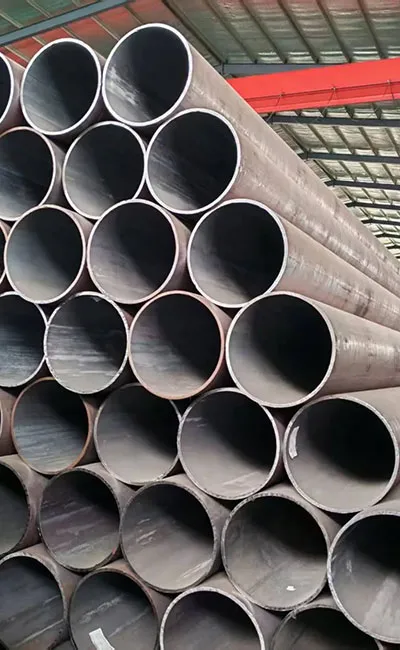
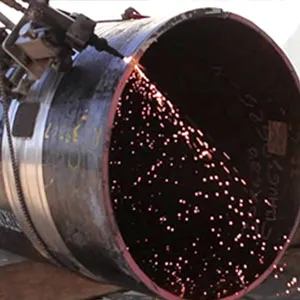
Repair of S355 LSAW Steel Pipe Transverse Cracks With the development of national economy, thick wall LSAW steel pipe in the offshore platform, such as high temperature and high pressure of the pressure vessel, wind pipe pile has been widely applied. Manufacturing this kind of steel pipe generally use D36 steel, S355 steel and is Z to the performance of the steel plate structure, plate thickness, larger carbon content is higher, and the high carbon equivalent, poor weldability, hardening tendency, lower the welding performance of welding joint, easy to produce cold crack, especially in the transverse cracks appear probability is larger. After welding cracking, in addition to the necessary control measures, but also pay attention to the workpiece to repair in time. S355 steel, for example that appear after welding transverse crack repair measures. Concrete is: 1, confirm the defect 100% of all weld on UT inspection, mark the location of the crack, length, depth and direction. If the welding line are flawed, and suggest tearing up the whole article submerged arc welding seam, recommended local repair welding rod arc welding. 2, before the plane preheating Preheat temperature is 110-170 ℃, preheat temperature detecting position of weld on both sides of not less than 150 mm, heating within range for distance defects around 500 mm. 3, air gouging Scope of air gouging crack defects both ends to the outside, good weld outgoing air gouging between not less than 50 mm, planer slot at both ends for smooth transition, smooth transition surface and vertical line at least more than 45 °. Air gouging carbon rod should be under 60 ° Angle, will arrive in crack, especially in Angle as small as possible. 4, grinding To have no black, polishing after surface should be smooth transition, should not have sharp deep pit. 5, PT After cooled to a suitable temperature for penetrant testing (PT). 6, grinding On the basis of PT testing results, grinding, polishing until no red line. 7, MT Do after grind magnetic particle testing (MT), make sure no residual crack, otherwise should continue to be polished, until (MT) to detect the crack. 8, preheating before welding Recommended preheating temperature is 110-170 ℃, preheat temperature detecting position of weld on both sides of not less than 150 mm, weld heating range for distance less than 500 mm. 9, welding Carried out in accordance with the operation instruction of repair welding, the weld width is no more than 15 mm, can wend their opposites. Or can be used, welding automatic submerged arc welding process. 10, heat preservation, slow cooling after welding 11, heat treatment after welding Heat treatment after welding is mainly diffusion hydrogen, to reduce the residual stress after welding, for larger stiffness weldment have special “hydrogen elimination processing”, “eliminating stress of heat treatment. System of heat treatment is recommended: immediately after completion of welding with ceramic electric blanket is heated to 200 ℃, the heat preservation shut electric slow cooling after 2 h. 12, after welding test 48 h after welding is complete, NDT test, in accordance with requirements to confirm qualified repair. Post time: Jul-19-2019

Latest news list

  • global steel sourcing,steel procurement strategy,global supply chain solutions,steel sourcing services,international steel trade,steel procurement risk management
    The global steel market is becoming increasingly complex,Rising freight costs,changing tariff policies,regional trade restrictions,and geopolitical uncertainties have created new challenges for international buyers,For many importers,distributors,EPC contractors,and industrial manufacturers,maintaining a stable and cost-effective steel supply chain is no longer as straightforward as it was a decade ago,In today's business environment,relying on a single sourcing region can expose projects to unexpected risks,including supply disruptions,longer lead times,fluctuating costs,and changing trade regulations,As a result,global sourcing has become an important strategy for companies seeking greater supply-chain resilience and procurement flexibility
  • stainless steel heat exchanger tubes,heat exchanger tube maintenance,extend heat exchanger tube life,heat exchanger tube corrosion prevention,heat exchanger tube fouling control
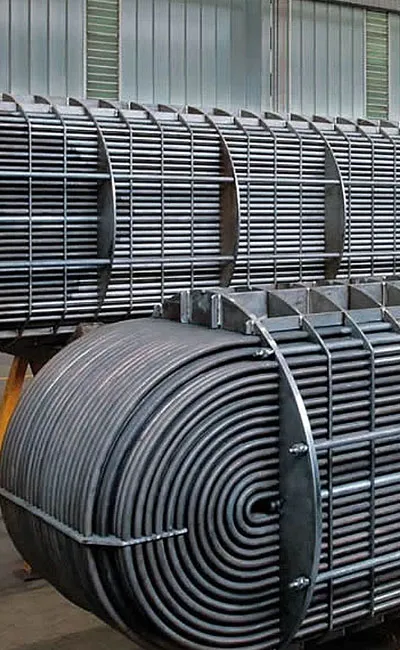
    Stainless steel heat exchanger tubes are widely used in power generation,petrochemical processing,desalination,marine engineering,and industrial heat-transfer systems,Under proper operating conditions,these tubes can often provide 15–25 years or more of reliable service,However,premature tube failure caused by fouling,corrosion,erosion,or inadequate maintenance can significantly increase operating costs and reduce system efficiency,The good news is that most tube failures are preventable,By implementing proper maintenance strategies and selecting suitable materials,operators can extend service life,improve heat-transfer performance,and reduce unexpected downtime,
  • stainless steel heat exchanger tube,heat exchanger tube corrosion,heat exchanger tube inspection,heat exchanger tube reliability,high temperature heat exchanger tube
    Heat exchanger tubes operating in petrochemical plants,refineries,LNG facilities,and desalination systems are exposed to some of the most demanding service conditions in industrial applications,Heat exchanger tubes in industrial process systems routinely encounter conditions that push material performance to its limits,Chloride-bearing cooling water,cyclic thermal loading,high-velocity particulate erosion,and sustained elevated temperatures create compound degradation mechanisms that standard specifications rarely address in isolation,Stainless steel heat exchanger tubes—while inherently corrosion-resistant—require deliberate engineering measures when deployed in severe service environments,Material selection alone cannot compensate for inadequate design,improper fabrication,or insufficient operational monitoring,A systems-level approach integrating material science,manufacturing precision,and lifecycle management determines whether tubing delivers its design service life or fails prematurely under field stress,
  • stainless steel heat exchanger tube,heat exchanger tube manufacturer,TP316L heat exchanger tube,seamless stainless steel tube,custom heat exchanger tube
    Why Are Stainless Steel Heat Exchanger Tubes Critical in Petrochemical Projects? Stainless steel heat exchanger tubes are designed to transfer heat efficiently while resisting corrosion,pressure,and elevated operating temperatures,In petrochemical facilities,tube reliability directly influences equipment uptime,maintenance costs,process efficiency,and plant safety,The following project highlights how customized manufacturing,stringent quality control,and coordinated logistics supported the successful delivery of stainless steel heat exchanger tubes for a petrochemical heat exchanger system in Southeast Asia,This project illustrates how technical expertise,disciplined quality assurance,and coordinated logistics converge to deliver results that matter on the ground,
  • steel pipe supplier Central Asia,API line pipe,OCTG casing tubing,seamless steel pipe,structural hollow section,galvanized steel pipe,alloy steel pipe,industrial steel procurement
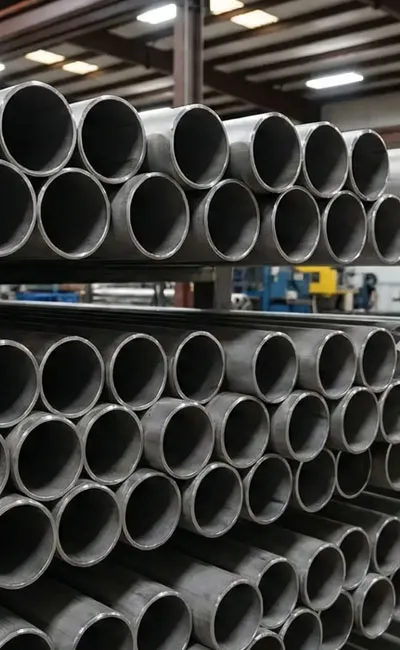
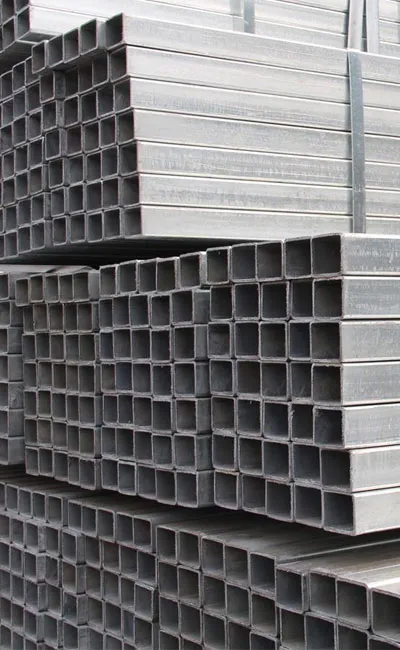
    Central Asia continues to be one of the most active regions for infrastructure development,energy investment,and industrial expansion,Countries such as Kazakhstan,Uzbekistan,Turkmenistan,Kyrgyzstan,and Tajikistan are investing heavily in oil and gas transportation,power generation,mining operations,water transmission systems,and urban construction projects,

Find what you need ?

close
We use cookies and other tracking technologies to improve your browsing experience on our website, to show you personalized content and targeted ads, to analyze our website traffic, and to understand where our visitors are coming from.