Classification of the process and use of continuous rolling of straight seam steel pipes
Date: 2025-04-22
Classification of the process and use of continuous rolling of straight seam steel pipes
The continuous rolling process of straight seam steel pipes: The continuous rolling process of straight seam steel pipes is used for the continuous rolling and fixed diameter reduction of steel pipes. Continuous rolling of steel pipes is a process in which steel pipes and mandrels move together in multiple racks. The deformation and movement of steel pipes are simultaneously affected by the rollers and mandrels. The mandrel can be free-floating, that is, it moves forward entirely driven by metal, or it can be limited, that is, the mandrel is given a movement speed to limit its free movement. During the movement process, the mandrel, roller, and steel pipe are connected as a whole. Any change in any link will cause a change in the state of the entire system. The continuous rolling theory is a theory that studies the relationship between them.
Kinematic phenomena of continuous rolling of steel pipes
1. Kinematic phenomena;
2. Slip phenomenon;
3. Tension coefficient.
Analysis of the movement state of continuous rolling pipes
1. Displacement relationship between rolled pieces and mandrels;
2. Racks and their determination;
3. Intermittent rolling analysis;
4. Movement characteristics of mandrels for single-machine rolling.
Deformation and stress in continuous rolling of steel pipes
1. Analysis of stress inside continuous rolling pipes;
2. Analysis of deformation and stress of side walls.
Classification of welded pipes by use:
According to the use, they are divided into general welded pipes, galvanized welded pipes, oxygen-blown welded pipes, wire casings, metric welded pipes, roller pipes, deep well pump pipes, automobile pipes, transformer pipes, electric welded thin-walled pipes, electric welded special-shaped pipes and spiral welded pipes.
General welded pipes: General welded pipes are used to transport low-pressure fluids. Made of Q195A, Q215A, and Q235A steel. Other mild steels that are easy to weld can also be used. Steel pipes must undergo water pressure, bending, flattening, and other tests, and have requirements for the surface. The delivery length is usually 4-10m, and fixed-length (or multiple-length) delivery is often required. The specifications of welded pipes are expressed in nominal diameter (mm or inches). The nominal diameter is different from the actual diameter. According to the specified wall thickness, welded pipes are divided into ordinary steel pipes and thickened steel pipes. According to the form of the pipe end, steel pipes are divided into threaded and non-threaded types.
1) Galvanized steel pipes: In order to improve the performance of steel pipes, general steel pipes (black pipes) are galvanized. Galvanized steel pipes are divided into hot-dip galvanizing and electric galvanizing. Hot-dip galvanizing has a thick galvanized layer and electric galvanizing has a low cost.
2) Oxygen blowing welded pipes: used as pipes for steelmaking oxygen blowing, generally small-diameter welded steel pipes are used, and the specifications range from 3/8 inches to 2 inches. Made of 08, 10, 15, 20, or Q195-Q235 steel strips. For corrosion protection, some are treated with aluminum.
3) Wire casing: It is also an ordinary carbon steel electric welded steel pipe, used in concrete and various structural power distribution projects, with a commonly used nominal diameter from 13-76mm. The wall of the wire sleeve is thin, and most of them are used after coating or galvanizing, and cold bending test is required.
4) Metric welded pipe: The specification is in the form of seamless pipe, and the welded steel pipe is expressed by outer diameter * wall thickness in millimeters. It is made by hot strip welding, cold strip welding of ordinary carbon steel, carbon steel, or ordinary low-alloy steel, or by hot strip welding and then cold drawing. Metric welded pipes are divided into ordinary and thin-walled. Commonly used as structural parts, such as transmission shafts, or conveying fluids, thin-walled are used to produce furniture, lamps, etc., and the strength and bending test of steel pipes must be guaranteed.
5) Roller pipe: Used for belt conveyor roller welded steel pipe, generally made of Q215, Q235A, B steel, and 20 steel, with a diameter of 63.5-219.0mm. There are requirements for the curvature of the pipe, the end face must be perpendicular to the center line, and the ovality, and generally water pressure and flattening tests are carried out.
6) Transformer tube: used to manufacture transformer heat dissipation tubes and other heat exchangers, made of ordinary carbon steel, requiring flattening, flaring, bending, and hydraulic tests. Steel pipes are delivered in fixed length or multiple lengths, and there are requirements for the bending degree of steel pipes.
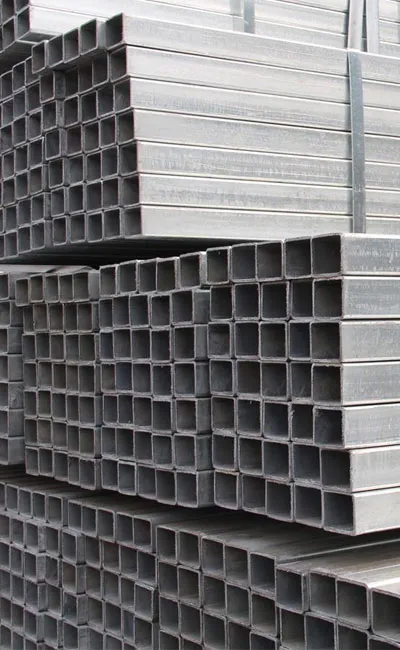
7) Special-shaped pipes: square pipes, rectangular pipes, cap-shaped pipes, and hollow rubber steel door and window steel pipes welded from ordinary carbon structural steel and 16Mn steel strips, mainly used as agricultural machinery components, steel windows and doors, etc.
8) Electric welded thin-walled pipes: mainly used to make furniture, toys, lamps, etc. In recent years, thin-walled pipes made of stainless steel strips have been widely used in furniture, decoration, fences, etc.
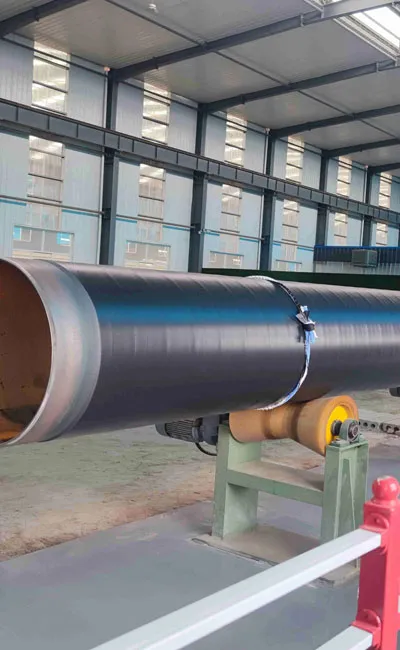
9) Spiral welded pipe: It is made by rolling low-carbon carbon structural steel or low-alloy structural steel strips into pipe blanks according to the angle of the spiral line (called forming angle), and then welding the pipe seams. It can produce large-diameter steel pipes with narrower strips. Spiral welded pipes are mainly used for oil and gas pipelines, and their specifications are expressed by outer diameter * wall thickness. Spiral welded pipes are either single-sided welded or double-sided welded. The welded pipes should ensure that the water pressure test, weld tensile strength, and cold bending performance meet the requirements.
Post time: Apr-22-2025










 English
 Español
 русский язык
 Português