Product News

Hunan Great Steel Pipe Co., Ltd
erw steel pipe,carbon steel pipe provider,plastic coated steel pipe

Coefficient of expansion of precision steel pipe

Date: 2020-12-07
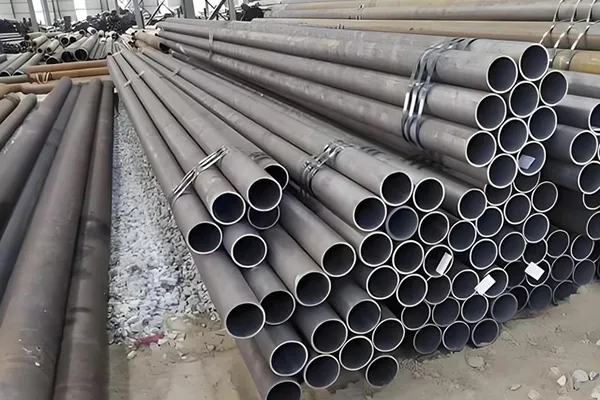
Coefficient of expansion of precision steel pipe Coefficient of expansion of precision steel pipe Check the method can be used in the annealing furnace soapy water to wipe each joint crevice, to see whether to run gas; places where gas is most likely to run into the annealing furnace tube and place the tube in place, this place seals are particularly vulnerable to wear and tear, Always check often change. Presented before the roll forming of precision steel pretreatment process scheme; analysis of the normalizing temperature, holding time and cooling influence of the raw material tube microstructure and mechanical properties; determining the conventional normalizing process precision steel tubes: heating temperature (890 ± 10) ℃, air cooling after holding 6min interspersed. Conventional normalizing process can be completely eliminated precision steel Widmanstaten to match the yield strength and tensile strength is more reasonable yield ratio σS / bσ≤0.78, elongation 5δ≥30%, and greatly improved cold formability avoid cold-formed crack. Expansion coefficient can be expressed by volume or length is usually expressed in terms of length. Density is the mass density of the material per unit volume of the substance, the unit is kg / m3 or 1b / in3. Tensile residual stress mainly from tensile residual stress generated in the device during the welding process. At present, widely used in engineering annealing treatment to eliminate residual stress after welding cooling, and cooling after welding residual stress is an important process, this approach is a waste of energy and easy to have a greater welding residual stress. Post weld heat treatment is a new technology to eliminate the residual stress. Before welding precision steel pipe is preheated to a temperature of heat treatment and welding process weldment continued heating to maintain this temperature, the use of welding is completed cotton insulation insulation be allowed to cool slowly. Quenching the steel pipe to increase the strength and hardness, but to reduce their plasticity. Quench hardening agent commonly used in water, oil, salt and alkali solution and the like. Will have tempered precision steel hardened precision steel re-heated to a certain temperature, and then some method of cooling known as tempering. Its purpose is to eliminate the internal stress generated by quenching to reduce the hardness and brittleness, in order to obtain the desired mechanical properties. Tempering points high-temperature tempering, tempering and low temperature tempering three categories. Multi-quenching and tempering, normalizing used in conjunction. After quenching and tempering quenching method is called quenching. Post time: Dec-07-2020

Latest news list

  • hollow section corrosion protection,square steel pipe corrosion,rectangular steel pipe corrosion,hollow section protection,steel hollow section maintenance
    Square and rectangular hollow sections are widely used in structural frames,equipment supports,industrial platforms and fabricated steel structures,Their closed profiles provide an efficient combination of strength,stiffness and clean geometry,but carbon steel hollow sections can corrode when they are exposed to moisture,salts,chemicals or other aggressive conditions,
  • hollow section manufacturing,square steel pipe,rectangular steel pipe,hollow section production,hollow section quality control
    Square and rectangular hollow sections are widely used in structural frames,industrial equipment,construction projects and fabricated steel structures,Their appearance is simple,but producing a section with consistent dimensions,wall thickness,straightness and material performance requires control at several stages,
  • alloy steel pipe buying guide,buy alloy steel pipe,alloy steel pipe supplier,alloy steel pipe export
    Buying alloy steel pipe for an international project involves more than comparing prices per tonne,For EPC contractors,distributors and industrial buyers,procurement needs to connect technical specifications,quality control,inspection,documentation and logistics,A well-defined purchasing process helps reduce specification gaps,inspection delays and delivery problems before the pipe reaches the project site,
  • how to select alloy steel pipe,alloy steel pipe selection,alloy steel pipe buying guide,high temperature alloy steel pipe
    Selecting alloy steel pipe should start with the actual service conditions,not simply with a supplier's product catalog,In boiler,power generation and refinery applications,temperature,pressure,process medium and material properties all affect pipe selection,For example,ASTM A335,A335M-26 covers seamless ferritic alloy-steel pipe for high-temperature service,The standard states that selection depends on design,service conditions,mechanical properties and high-temperature characteristics,For buyers,a structured selection process helps prevent specification gaps before production begins,
  • alloy steel pipe maintenance,alloy steel pipe boiler usage,alloy steel pipe refinery,high temperature pipe maintenance
    Alloy steel pipe is widely used in boiler,power generation and refinery systems where piping is exposed to elevated temperatures,pressure and demanding process conditions,Selecting the correct alloy grade is important,but material selection alone does not determine service life,Long-term performance also depends on operating conditions,thermal exposure,wall thickness,fabrication quality,inspection and maintenance,For example,ASTM A335,A335M-26 covers seamless ferritic alloy-steel pipe for high-temperature service and states that material selection depends on design,service conditions,mechanical properties and high-temperature characteristics,

Find what you need ?

close
We use cookies and other tracking technologies to improve your browsing experience on our website, to show you personalized content and targeted ads, to analyze our website traffic, and to understand where our visitors are coming from.