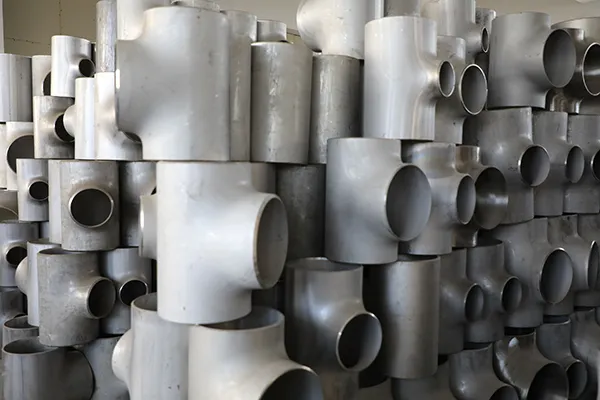
Selecting a steel tee for an industrial piping project involves more than matching pipe sizes. The steel pipe fitting must meet the piping layout, material specification, connection requirements and operating conditions. An incorrect specification can lead to installation delays, additional inspection or costly changes after procurement. For project buyers and engineers, the best starting point is a complete technical inquiry that defines what the piping system requires.
1. Choose Between an Equal Steel Tee and a Reducing Steel Tee
A steel tee connects a branch line to a main pipe run. The two common configurations are:
- Equal
steel tee: The main-run and branch connections have the same nominal size.
- Reducing steel tee: The branch connection has a smaller nominal size than the main run.
The correct type should follow the approved piping drawings and branch connection requirements. Confirm both the main-run and branch sizes rather than relying on a product description such as “6-inch steel tee.” Also check the required wall thickness, end preparation and dimensional requirements.
A steel pipe fitting with the correct nominal size may still be unsuitable if its specification does not match the connected pipework.
Material selection depends on the design conditions and project specification. Important factors include operating pressure, temperature, fluid composition, corrosion risk and any special service requirements. Carbon steel is used in many industrial piping applications, while stainless steel and alloy steel may be specified where corrosion resistance, temperature performance or other material properties are required. No material should be selected solely from the fluid name or general application. For demanding services, such as sour environments, elevated temperatures or corrosive process lines, confirm the applicable material requirements with the responsible engineering team. The material grade, heat treatment and supplementary testing requirements should be clearly defined where applicable.
3. Confirm the Product Standard and Inspection Requirements
The purchase inquiry should identify the applicable product standard and edition, material grade, nominal sizes, wall thickness or schedule, and connection type. ASME B16.9 covers dimensions, tolerances, ratings, testing and marking for factory-made wrought butt-welding
steel pipe fittings within its scope. EN 10253-2 specifies technical delivery requirements for relevant seamless and welded butt-welding
steel pipe fittings made from non-alloy and ferritic alloy steels, including equal and reducing steel tees. These standards have different scopes and should not be treated as interchangeable. Before ordering, clarify whether the project requires material test certificates, dimensional inspection, mechanical or non-destructive testing, third-party inspection, special marking or additional documentation. Requirements should be agreed before order confirmation rather than assumed to be included in every quotation.
4. Compare Steel Tee Quotations on the Same Basis
The lowest quoted price does not necessarily represent the lowest overall procurement cost. Offers may differ in material grade, standard, inspection scope, documentation, packing or delivery terms.
Use a consistent comparison checklist:
-
Technical compliance: Steel Tee type, dimensions, material grade and applicable standard.
-
Inspection and documentation: Required tests, certificates, inspection records and traceability.
-
Quantity and scope: Sizes, quantities and any special requirements shown on the item schedule.
-
Packaging and delivery: Packing method, destination, shipping terms and required delivery date.
-
Commercial conditions: Lead time, quotation validity, exclusions and any stated deviations.
Ask suppliers to identify deviations from the inquiry in writing. An offer that excludes a required inspection or certificate should not be compared directly with one that includes it.















 English
 Español
 русский язык
 Português