General regulations for carbon steel pipe installation
Date: 2023-09-11
General regulations for carbon steel pipe installation
The installation of carbon steel pipes should generally meet the following conditions:
1. The pipeline-related civil engineering experience is qualified and meets the installation requirements;
2. Use mechanical alignment to connect with the pipeline and fix it;
3. Relevant processes that must be completed before pipeline installation, such as cleaning, degreasing, internal anti-corrosion, lining, etc.
4. Pipe components and pipe supports have qualified experience and have relevant technical documents;
5. Check whether the pipe fittings, pipes, valves, etc. are correct according to the design documents, and clean up the internal debris; when the design documents have special cleaning requirements for the interior of the pipeline, its quality meets the requirements of the design documents.
The slope and direction of the pipeline shall meet the design requirements. The pipe slope can be adjusted by the installation height of the bracket or the metal backing plate under the bracket, and the boom bolt can be used to adjust. The backing plate shall be welded with the embedded parts or steel structure, and shall not be sandwiched between the pipe and the support.
When the straight drain pipe is connected to the main pipe, it should be slightly inclined with the flow direction of the medium.
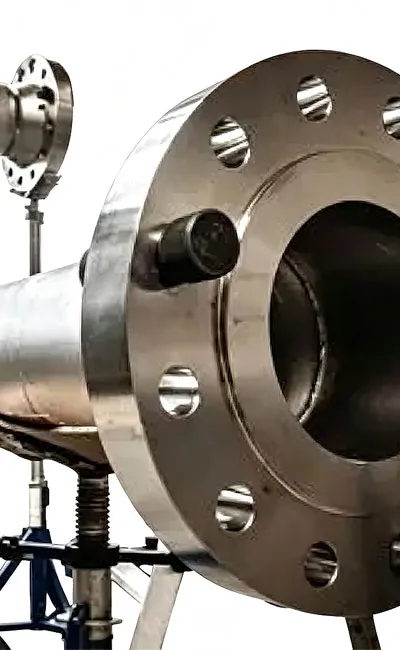
Flanges and other connecting parts should be set in places where maintenance is easy, and cannot be connected to walls, floors or pipe supports.
The degreased pipes, pipe fittings and valves should be strictly inspected before installation, and there should be no sundries on the inner and outer surfaces.
If debris is found, it should be degreased again, and put it into installation after passing the inspection. The tools and measuring instruments used in the installation of the degreasing pipeline must be degreased according to the requirements of the degreasing parts. Gloves, overalls and other protective equipment used by operators must also be free of oil.
When installing buried pipelines, drainage measures should be taken when groundwater or pipe trenches accumulate water. After the pressure test and anti-corrosion of the underground pipeline, the acceptance of concealed works should be carried out as soon as possible, the records of concealed works should be filled in, backfilled in time, and compacted in layers.
Casing or culvert protection must be added when piping passes through floors, walls, ducts or other structures. The pipe must not be welded inside the casing. The length of the wall bushing shall not be less than the thickness of the wall. The floor casing must be 50mm higher than the floor. Piping through the roof requires waterproof shoulders and rain caps. Pipe and casing gaps may be filled with non-combustible material.
Meters, pressure conduits, flowmeters, regulating chambers, flow orifice plates, thermometer casings and other instrument components connected to the pipeline should be installed at the same time as the pipeline, and should comply with the relevant regulations for instrument installation.
Install pipeline expansion indicators, creep expansion measuring points and monitoring pipe sections according to the design documents and construction acceptance specifications.
Anti-corrosion treatment should be carried out on buried steel pipes before installation, and anti-corrosion treatment should be paid attention to during installation and transportation. After the pipeline pressure test is qualified, anti-corrosion treatment should be carried out on the weld seam.
The coordinates, height, spacing and other installation dimensions of the pipeline must comply with the design specifications, and the deviation must not exceed the regulations.
Post time: Sep-11-2023










 English
 Español
 русский язык
 Português