How are industrial seamless steel pipes produced
Date: 2024-05-16
How are industrial seamless steel pipes produced
1. The production and manufacturing methods of seamless steel pipes can be divided into hot-rolled pipes, cold-rolled pipes, cold-drawn pipes, extruded pipes, etc. according to different production methods.
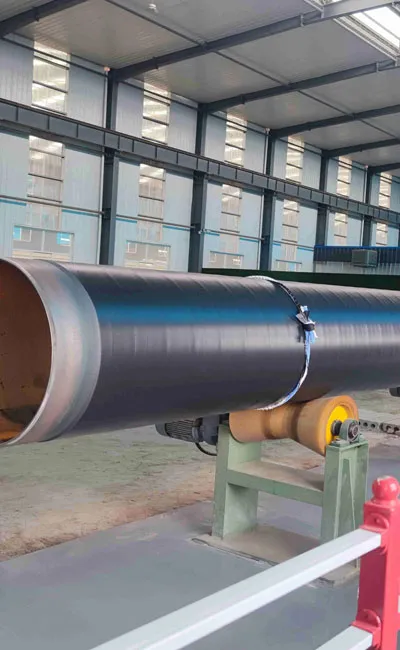
1.1. Hot-rolled seamless pipes are generally produced on automatic pipe rolling units. The solid tube blank is inspected and surface defects are removed, cut into the required length, centered on the perforated end of the tube blank, and then sent to the heating furnace for heating and piercing on the punching machine. It continues to rotate and advance during piercing holes. Under the influence of the rollers and the end, the tube blank is hollow gradually, which is called a gross pipe. Then it is sent to the automatic pipe-rolling machine to continue rolling. Finally, the wall thickness is evened by the leveling machine, and the diameter is determined by the sizing machine to meet the specification requirements. The use of continuous pipe rolling units to produce hot-rolled seamless steel pipes is a more advanced method.
1.2. If you want to obtain seamless pipes with smaller sizes and better quality, you must use cold rolling, cold drawing, or a combination of the two. Cold rolling is usually carried out on a two-roll mill, and the steel pipe is rolled in an annular pass composed of a variable cross-section circular groove and a fixed conical head. Cold drawing is usually performed on a 0.5 to 100T single-chain or double-chain cold drawing machine.
1.3. The extrusion method is to place the heated tube blank in a closed extrusion cylinder, and the perforation rod and the extrusion rod move together to make the extrusion part extruded from the smaller die hole. This method can produce steel pipes with smaller diameters.
2. Uses of seamless steel pipes
2.1. Seamless pipes are widely used. General-purpose seamless pipes are rolled from ordinary carbon structural steel, low alloy structural steel, or alloy structural steel, with the largest output, and are mainly used as pipes or structural parts for transporting fluids.
2.2. It is supplied in three categories according to different uses:
a. Supplied according to chemical composition and mechanical properties;
b. Supplied according to mechanical properties;
c. Supplied according to hydraulic pressure test. If the steel pipes supplied according to categories a and b are used to withstand liquid pressure, they must also undergo a hydrostatic test.
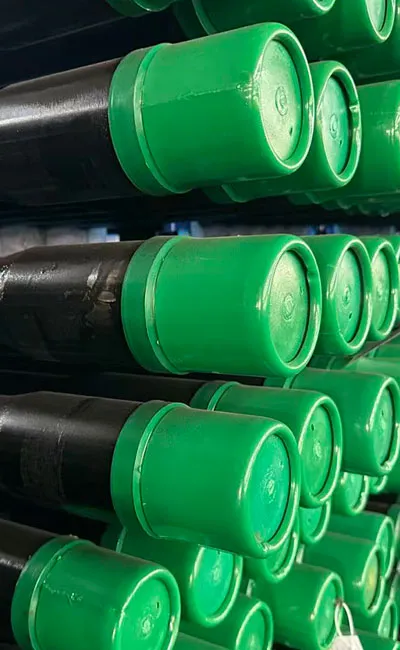
2.3. Special-purpose seamless pipes include seamless pipes for boilers, seamless pipes for geology, and seamless pipes for petroleum.
3. Types of seamless steel pipes
3.1. Seamless steel pipes can be divided into hot-rolled pipes, cold-rolled pipes, cold-drawn pipes, extruded pipes, etc. according to different production methods.
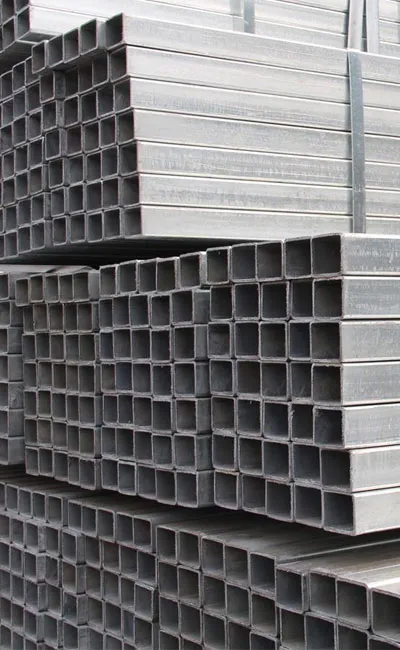
3.2. According to the shape, there are round tubes and special-shaped tubes. In addition to square tubes and rectangular tubes, special-shaped tubes also include oval tubes, semi-circular tubes, triangular tubes, hexagonal tubes, convex-shaped tubes, plum-shaped tubes, etc.
3.3. According to different materials, they are divided into ordinary carbon structural pipes, low alloy structural pipes, high-quality carbon structural pipes, alloy structural pipes, stainless steel pipes, etc.
3.4. According to special purposes, there are boiler pipes, geological pipes, oil pipes, etc.
4. The specifications and appearance quality of seamless steel pipes are by GB/T8162-87.
4.1. Specifications: The outer diameter of the hot-rolled pipe is 32~630mm. Wall thickness 2.5~75mm. The outer diameter of cold rolled (cold drawn) pipe is 5~200mm. Wall thickness 2.5~12mm.
4.2. Appearance quality: The inner and outer surfaces of the steel pipe must not have cracks, folds, roll folds, separation layers, hair lines, or scarring defects. These defects should be completely removed, and the wall thickness and outer diameter should not exceed negative deviations after removal.
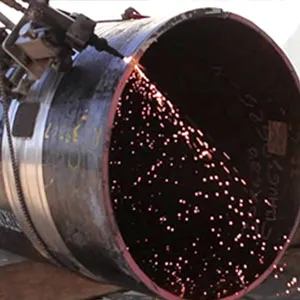
4.3. Both ends of the steel pipe should be cut at right angles and burrs should be removed. Steel pipes with wall thickness greater than 20mm are allowed to be cut by gas cutting and hot sawing. It is also possible not to cut the head after agreement between the supply and demand parties.
4.4. The “surface quality” of cold-drawn or cold-rolled precision seamless steel pipes refers to GB3639-83.
5. Chemical composition inspection of seamless steel pipes
5.1. The chemical composition of domestic seamless pipes supplied according to chemical composition and mechanical properties, such as No. 10, 15, 20, 25, 30, 35, 40, 45, and 50 steel, shall comply with the provisions of GB/T699-88. Imported seamless pipes are inspected according to relevant standards stipulated in the contract. The chemical composition of 09MnV, 16Mn, and 15MnV steel should comply with the regulations of GB1591-79.
5.2. For specific analysis methods, please refer to the relevant parts of GB223-84 “Chemical Analysis Methods for Steel and Alloys”.
5.3. For analysis deviations, refer to GB222-84 ”Permissible deviations of chemical composition of samples and finished products for chemical analysis of steel”.
Post time: May-16-2024










 English
 Español
 русский язык
 Português