How to check the quality of galvanized seamless steel pipe
Date: 2023-03-03
How to check the quality of galvanized seamless steel pipe?
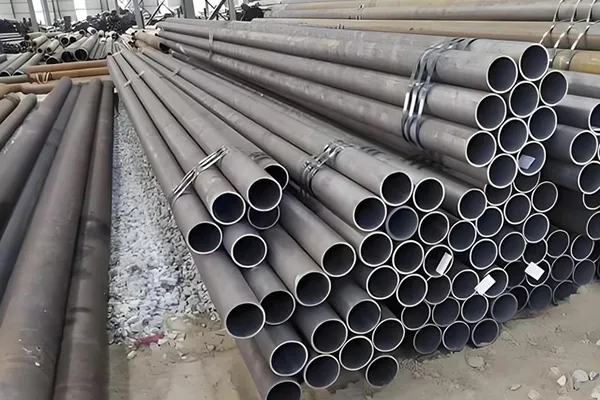
There are two types of galvanized seamless steel pipes, hot-dip galvanizing (hot-dip galvanizing) and cold-dip galvanizing (electro-galvanizing). Hot-dip galvanizing has a thick galvanized layer, which has the advantages of uniform coating, strong adhesion, and long service life. However, the cost of electro-galvanizing is low, the surface is not very smooth, and its corrosion resistance is much worse than that of hot-dip galvanized pipes. How to check the quality of galvanized seamless steel pipe?
According to the requirements of the standard, the galvanized pipe manufacturer pointed out that the inspection content of the geometric dimensions of the galvanized seamless pipe mainly includes the wall thickness, outer diameter, length, curvature, ovality and end shape of the galvanized seamless pipe.
1. Wall thickness inspection
The tool used for wall thickness inspection is mainly a micrometer. When checking, measure the wall thickness of the galvanized pipe one by one with a micrometer. Before the inspection, first verify whether the certificate of the micrometer is within the validity period, and check whether the micrometer is aligned with the zero position and whether the rotation is flexible. The measuring surface should be free of scratches and rust spots, and it can be used only after passing the test. When checking, hold the micrometer bracket with the left hand and rotate the excitation wheel with the right hand. The screw rod should coincide with the diameter of the measuring point, and the end surface measurement should be no less than 6 points. If the wall thickness is found to be unqualified, it should be marked.
2. Outer diameter and ovality inspection
The tools used for outer diameter and ovality inspection are mainly calipers and vernier calipers. During the inspection, measure the outer diameter of the galvanized pipe one by one with a qualified caliper. Before the inspection, first verify whether the certificate of the caliper is within the validity period, and check the used caliper with a vernier caliper to see if there is any scratch or rust on the measuring surface, and it can be used only after passing the test. During the inspection, the caliper should be perpendicular to the axis of the galvanized pipe, and the galvanized pipe rotates slowly. If the outer diameter of the section where the measurement is made is found to be too large or too small, it should be marked.
3. Length check
The tool used to check the length of the galvanized seamless pipe is mainly a steel tape. When measuring the length, the “O” point of the tape is aligned with one end of the galvanized pipe, and then the tape is tightened so that the scale side of the tape is close to the surface of the galvanized pipe. The length of the tape at the other end of the galvanized pipe is the length of the galvanized pipe.
4. Bending inspection of galvanized pipe
The inspection of bending degree of galvanized pipe is mainly to inspect the bending degree of the total length of galvanized pipe and the degree of bending per meter. The tools used are mainly level ruler, feeler gauge and fishing line. When measuring the total bending degree of the galvanized pipe, use the fishing line to align one end of the galvanized square pipe, then tighten the fishing line so that one side of the fishing line is close to the surface of the galvanized pipe, and then use a feeler gauge to measure the surface of the galvanized pipe and the fish. The line gap spacing, that is, the total length of the galvanized seamless pipe.
Tips: Galvanized means that the surface of the steel pipe has been galvanized, and it may be a welded pipe or a seamless pipe. Some are welded steel pipes made by direct rolling of galvanized sheets, and some are made of seamless steel pipes and then galvanized.
Post time: Mar-03-2023










 English
 Español
 русский язык
 Português












