How to check the thickness of stainless steel pipes
Date: 2025-04-02
How to check the thickness of stainless steel pipes
Stainless steel pipes are a common pipeline material, widely used in construction, engineering, chemical industry, medical and other fields. For stainless steel pipes, its thickness is a very important parameter, which is directly related to its bearing capacity and service life. So, how to accurately check the thickness of stainless steel pipes?
1. Use measuring tools
First, we can use measuring tools to check the thickness of stainless steel pipes. Common measuring tools are micrometers, vernier calipers, and ultrasonic thickness gauges. Among them, micrometers and vernier calipers are suitable for stainless steel pipes with smaller diameters, while ultrasonic thickness gauges are suitable for stainless steel pipes of various diameters. The method of using the measuring tool is to first place the two legs of the measuring tool on both sides of the stainless steel pipe, making sure they are perpendicular to the surface of the pipe. Then, read the scale value on the measuring tool to get the thickness of the stainless steel pipe. It should be noted that when using the measuring tool, the accuracy and precision of the tool must be ensured to obtain accurate measurement results.
2. Cutting method measurement
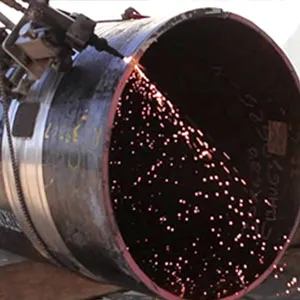
In addition to using measuring tools, we can also use the cutting method to measure the thickness of stainless steel pipes. This method is suitable for situations where more accurate thickness values need to be obtained. The steps of the cutting method are to first select a section of stainless steel pipe and use a cutting tool to cut it into two sections. Then, use a microscope or magnifying glass to observe the cross section at the cut and measure the thickness of the cross section. Finally, take the average thickness of the two sections of stainless steel pipe as the thickness of the entire stainless steel pipe. It should be noted that the cutting method measurement will cause certain damage to the stainless steel pipe, so it is suitable for testing or situations where precise values are required, and is not suitable for routine inspection.
3. Ultrasonic thickness measurement method
Ultrasonic thickness measurement is a non-destructive measurement method that is suitable for stainless steel pipes of various diameters and wall thicknesses. It calculates the thickness of stainless steel pipes by sending ultrasonic pulses and using the difference in the propagation speed of ultrasonic waves in different materials. In specific operations, an ultrasonic thickness gauge is used to place the sensor on the surface of the stainless steel pipe and send ultrasonic pulses. After the pulse passes through the stainless steel pipe, it will return and be received by the ultrasonic thickness gauge. By calculating the propagation time and speed of the pulse, the ultrasonic thickness gauge can accurately calculate the thickness of the stainless steel pipe.
4. Other precautions
When inspecting the thickness of stainless steel pipes, the following points should also be noted:
- The surface of the stainless steel pipe should be cleaned before inspection to ensure the accuracy of the measurement.
- The thickness of stainless steel pipes may have a certain tolerance range, which needs to be judged and selected according to specific needs.
- The thickness inspection methods of different types of stainless steel pipes (such as 304 stainless steel pipes, 316 stainless steel pipes) may be different, and they need to be selected according to the specific material characteristics.
In summary, the thickness of stainless steel pipes can be inspected using measuring tools, cutting methods, or ultrasonic thickness measurement methods. Different methods are suitable for different situations and requirements. Choosing the right method can ensure the accuracy of the measurement results. When conducting inspections, you also need to pay attention to operating specifications and precautions to obtain reliable stainless steel pipe thickness data.
Post time: Apr-02-2025










 English
 Español
 русский язык
 Português