Performance, Characteristics, and Applications of 316Ti Seamless Stainless Steel Pipe
Date: 2025-11-27
Performance, Characteristics, and Applications of 316Ti Seamless Stainless Steel Pipe
316Ti seamless stainless steel pipe, as a high-performance alloy material, plays a crucial role in industrial applications. Especially in applications requiring high strength, corrosion resistance, and high-temperature resistance, 316Ti seamless stainless steel pipe has become the preferred choice. Details of 316Ti Seamless Stainless Steel Pipe
Common standards for 316Ti seamless stainless steel pipe: ASME SA-312/SA-312M, ASME SA-213/SA213M, ASTM A312, ASTM A213, GB/T14976
Chemical composition of 316Ti seamless stainless steel pipe: Carbon ≤0.08%, Silicon ≤1.00%, Manganese ≤2.00%, Phosphorus ≤0.035%, Sulfur ≤0.030%, Chromium 16.00~18.00%, Nickel 10.0~14.0%, Molybdenum 2.0~2.5%, Titanium: 5×(C+N)~0.7.
First, the performance characteristics of 316Ti seamless stainless steel pipe.
316Ti stainless steel belongs to the austenitic stainless steel family. Its chemical composition contains a certain amount of titanium, which, while maintaining the excellent properties of 316 stainless steel, further improves its high-temperature resistance and resistance to intergranular corrosion.
1. Excellent corrosion resistance: 316Ti seamless stainless steel pipe performs excellently in various corrosive media, especially in chloride-containing environments, where its corrosion resistance far exceeds that of 304 stainless steel. This is due to its molybdenum content, which effectively resists chloride corrosion.
2. Good high-temperature resistance: Due to the addition of titanium, 316Ti seamless stainless steel pipe has higher stability in high-temperature environments and is less prone to intergranular corrosion, thus extending the material’s service life.
3. High strength and toughness: 316Ti seamless stainless steel pipe has high yield strength and tensile strength while maintaining good toughness, allowing it to maintain structural integrity even under heavy loads.
4. Excellent Machining Performance: 316Ti seamless stainless steel pipes are easy to process and form, achieving satisfactory results in both cold and hot working, which facilitates their application in complex structural components.
Second, Application Areas of 316Ti Seamless Stainless Steel Pipes.
Due to their superior performance, 316Ti seamless stainless steel pipes are widely used in multiple fields, including but not limited to:
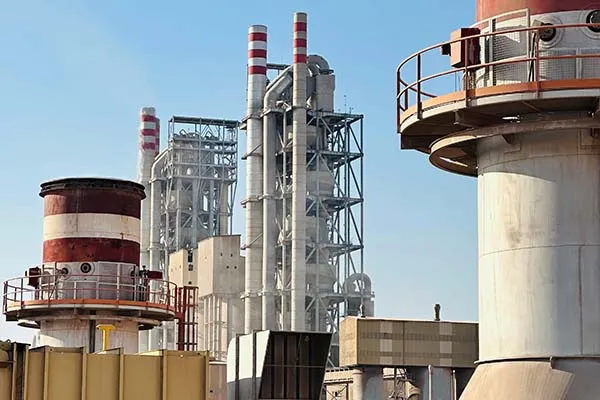
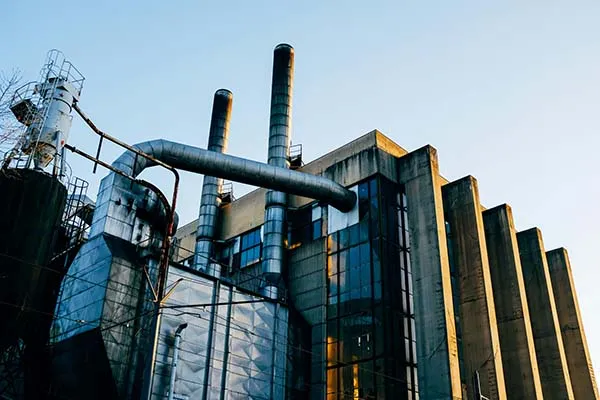
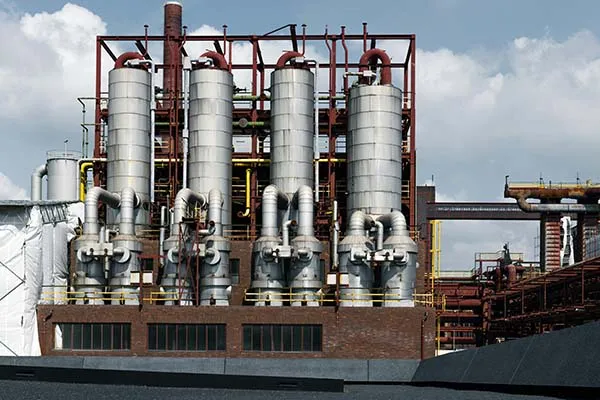
1. Petrochemical Industry: In oil refining, chemical, and fertilizer production processes, 316Ti seamless stainless steel pipes, due to their corrosion resistance and high-temperature resistance, are ideal for conveying corrosive fluids and high-temperature steam.
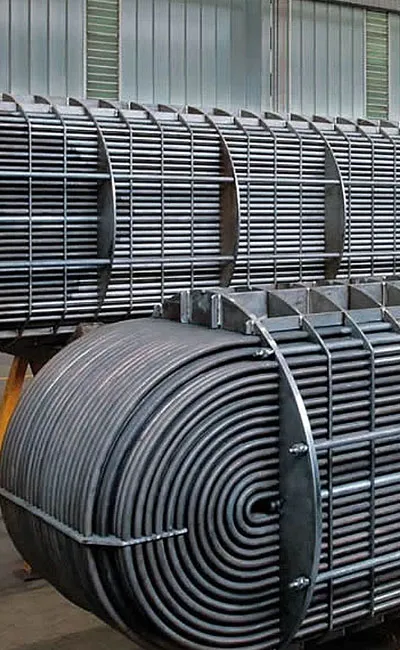
2. Power Industry: In nuclear power plants, thermal power plants, and other locations, 316Ti seamless stainless steel pipes are used to manufacture key equipment such as steam generators and heat exchangers, ensuring safe and stable operation under high-temperature and high-pressure environments.
3. Food Processing Industry: Because 316Ti stainless steel meets food-grade standards and is easy to clean, 316Ti seamless stainless steel pipes are widely used in food processing and beverage manufacturing, such as in pipelines and storage tanks.
4. Marine Engineering: In marine environments, 316Ti stainless steel, due to its excellent resistance to seawater corrosion, is the preferred material for equipment such as offshore platforms and subsea pipelines.
Third, Manufacturing Process of 316Ti Seamless Stainless Steel Pipes.
The manufacturing process of 316Ti seamless stainless steel pipes includes multiple stages such as raw material preparation, smelting and casting, hot extrusion or piercing, cold drawing or cold rolling, heat treatment, and testing and inspection.
1. Raw Material Preparation: High-quality 316Ti stainless steel raw materials are selected to ensure that the chemical composition and physical properties of the material meet the standard requirements.
2. Smelting and Casting: The raw materials are smelted under vacuum or inert gas protection to obtain a pure alloy melt. This is then cast to form a preliminary tube blank.
3. Hot Extrusion or Piercing: After heating the tube blank to an appropriate temperature, it is extruded or pierced to form a seamless steel pipe with a certain wall thickness and inner diameter.
4. Cold Drawing or Cold Rolling: Seamless steel pipes after hot extrusion or piercing are cold-drawn or cold-rolled to further reduce wall thickness, improve dimensional accuracy, and enhance surface finish.
5. Heat Treatment: Seamless steel pipes after cold drawing or cold rolling undergo solution treatment and aging treatment to eliminate internal stress and improve the overall performance of the material.
6. Testing and Inspection: Finished seamless steel pipes undergo rigorous testing and inspection, including visual inspection, dimensional measurement, mechanical property testing, and chemical composition analysis, to ensure product quality meets standard requirements.
Fourth, Future Development Trends of 316Ti Seamless Stainless Steel Pipes.
With technological advancements and accelerated industrialization, the application fields of 316Ti seamless stainless steel pipes will continue to expand, and the performance requirements will become increasingly stringent. In the future, the development trend of 316Ti seamless stainless steel pipes will mainly focus on the following aspects:
High Performance: Through alloying, heat treatment, and other means, the high-temperature resistance, corrosion resistance, and mechanical properties of 316Ti seamless stainless steel pipes will be further improved to meet more demanding operating environments.
Lightweighting: While meeting strength requirements, lightweighting of 316Ti seamless stainless steel pipes is achieved through optimized material structure and manufacturing processes, reducing equipment costs and improving energy efficiency.
Intelligentization: Integrating 316Ti seamless stainless steel pipes with technologies such as smart sensors and the Internet of Things (IoT) enables remote monitoring of materials, fault diagnosis, and preventative maintenance, improving equipment safety and reliability.
Customization: Customized 316Ti seamless stainless steel pipe products and services are provided based on specific customer needs, including material composition, size specifications, and surface treatment, to meet the requirements of different application scenarios.
In conclusion, 316Ti seamless stainless steel pipes play an irreplaceable role in the industrial field due to their superior performance and wide range of applications. With continuous technological advancements and evolving market demands, the performance of 316Ti seamless stainless steel pipes will continue to improve, and their application areas will continue to expand, injecting new vitality into industrial development.
Post time: Nov-27-2025










 English
 Español
 русский язык
 Português