Schedule 10 Pipe Properties, Uses and Composition
Date: 2023-09-22
Schedule 10 Pipe Properties, Uses and Composition
Schedule10 pipes possess unique properties that make them widely used in diverse industries. If you require improved familiarity with Schedule 10 pipe characteristics, uses, and composition, you have come to the right place. This post will comprehensively outline all the essential information regarding Schedule 10 pipes, enabling you to better comprehend their diverse applications.
So, what exactly is Schedule 10 pipe?
Schedule 10 Pipe is a form of light-wall pipework that usually describes a thin-walled pipe measuring between 1/8″ to 4″ in nominal diameter and wall thickness. This category of pipework is primarily utilised for low-pressure tasks like drainage, water supply lines, irrigation systems, and some non-critical engineering purposes. It is also referred to as Class 150 or Standard Weight Pipe on occasions. As Schedule 10 Pipes are thinner than other pipe types, including Schedule 20, 40 and 80 Pipes, they can be easily bent into shapes without the need for additional fittings or accessories. Furthermore, their smooth inner walls aid in reducing pressure losses when fluids are transported from point A to B. Finally, due to their lightweight design in comparison to heavier steel pipes like Schedule 40 Pipes, installation costs for Schedule 10 Pipes are typically much lower.
Please refer to the Schedule 10 Pipe Properties for further details.
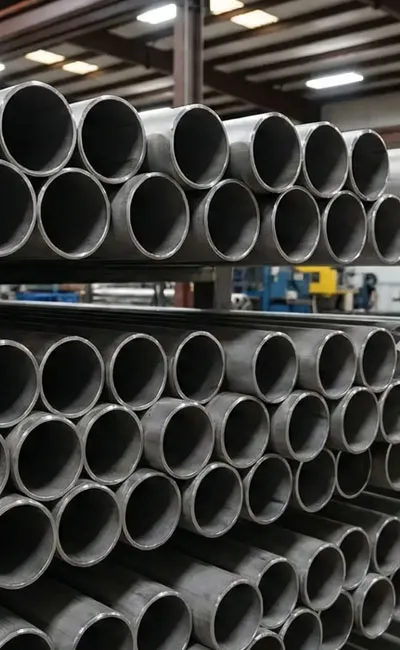
Schedule 10 pipes have a thinner wall compared to standard pipes, making them lightweight and flexible. These pipes are typically manufactured from stainless steel, providing resistance against corrosion and oxidation. The reduced wall thickness of Schedule 10 pipes also makes them more vibration-resistant, making them ideal for use in high-pressure applications.
Consider the various Schedule 10 Pipe applications.
Schedule 10 pipes find wide usage in diverse industries such as chemical, marine, and petrochemical. These are employed for transporting water, gases, and chemicals, as well as for dispensing petroleum products. Besides, they serve as a crucial component in various construction ventures like HVAC systems, electrical conduits, and railings.
Speaking of material, Schedule 10 pipes are typically composed of stainless steel, an alloy of iron and chromium. The composition of the steel used to produce Schedule 10 pipes depends on the grade and intended use. Defining the majority of Schedule 10 pipes, 304 or 316 stainless steel is preferred, owing to their exceptional corrosion resistance and durability.
When compared to other schedules, Schedule 10 pipes stand out.
Specifically, Schedule 10 pipes are preferred for their lightweight and flexible properties, making them ideal for certain applications. However, alternative pipes, such as Schedule 40 or 80, may be more appropriate for different purposes. Schedule 40 pipes, for instance, possess thicker walls and can endure greater pressure than Schedule 10 pipes, whereas Schedule 80 pipes have even thicker walls and can withstand higher pressure.
Regular upkeep essential to maintain Schedule 10 pipes
Regular maintenance
is vital to ensure Schedule 10 pipes stay in good condition and function correctly. This involves inspecting them regularly for cracks, leaks, or signs of corrosion. Any necessary repairs should be carried out promptly to prevent further harm to the pipes.
In conclusion,Schedule 10 pipes are a prevalent option due to their lightweight and flexible properties, making them suitable for various applications. The pipes are constructed from stainless steel, which is resistant to corrosion and oxidation. However, it’s crucial to note that Schedule 10 pipes may not be appropriate for all applications. It’s essential to consider the intended use and pressure when selecting a pipe. Regular maintenance is also important to guarantee that the pipes remain in good condition and perform as expected. Understanding the properties, uses and composition of Schedule 10 pipes is crucial for those intending to utilise these pipes in various applications.
Post time: Sep-22-2023










 English
 Español
 русский язык
 Português