Simple grinding method for stainless steel pipes
Date: 2024-07-04
Simple grinding method for stainless steel pipes
With the continuous development of the industrial and construction industries, the application of stainless steel materials is becoming more and more extensive. As an important structural material, stainless steel pipes have been widely used in various fields. However, the surface of stainless steel pipes often needs to be polished to improve their appearance quality and corrosion resistance.
First, mechanical polishing method
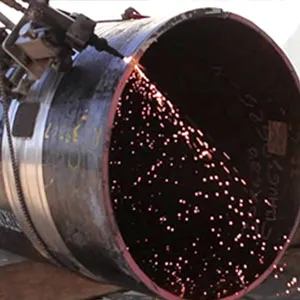
The mechanical polishing method is a common and effective surface treatment method for stainless steel pipes. This method uses mechanical equipment such as grinders, grinding wheels, etc. to grind the surface of stainless steel pipes to remove stains, oxides, and roughness on the surface. The specific steps are as follows:
1. Preparation: Clean the surface of the stainless steel pipe to ensure that it is clean and dust-free.
2. Choose the right grinding tool: Choose the right grinding wheel or grinding head according to different needs and requirements. Generally, coarser grinding wheels are suitable for removing deeper scratches and dents, while finer grinding wheels are suitable for the final polishing work.
3. Grinding process: Fix the grinding wheel or grinding head on the mechanical equipment and grind it step by step according to the length and width of the stainless steel pipe. Pay attention to keeping the grinding force uniform to avoid excessive grinding and surface deformation.
4. Polishing: After grinding, the surface of the stainless steel pipe can be further polished with a polishing machine to make it smoother.
The second, chemical polishing method
Chemical polishing is a relatively simple surface treatment method for stainless steel pipes. It uses the action of chemical solutions to remove stains and oxides on the surface of stainless steel. The following is a commonly used chemical polishing method:
1. Preparation: Clean the surface of the stainless steel pipe to ensure that it is clean and dust-free.
2. Select a suitable chemical solution: Select a suitable chemical solution according to different stains and oxidation levels. Commonly used chemical solutions include acidic solutions, alkaline solutions, and oxidants.
3. Apply solution: Apply the selected chemical solution evenly on the surface of the stainless steel pipe. You can use a brush or sprayer to apply it.
4. Reaction treatment: According to the reaction time of the solution, wait for a certain treatment time to allow the solution to react chemically with the stainless steel surface.
5. Cleaning and polishing: Use clean water to thoroughly clean the chemical solution, and then polish it to make the surface of the stainless steel pipe smoother.
The third, electrolytic polishing method
Electrolytic polishing is an efficient and precise surface treatment method for stainless steel pipes. It uses the principle of electrolysis to remove stains and oxides on the surface of stainless steel, and can also adjust the brightness of the stainless steel surface. The following are the basic steps of electrolytic polishing:
1. Preparation: Clean the surface of the stainless steel tube to ensure that it is clean and dust-free.
2. Prepare the electrolyte: Select the appropriate electrolyte according to different requirements. Commonly used electrolytes are sulfuric acid, nitric acid, phosphoric acid, etc.
3. Set the electrolytic conditions: Set the appropriate current density, temperature, time, and other parameters according to the material and requirements of the stainless steel tube.
4. Perform electrolytic polishing: Use the stainless steel tube as the anode and put it into the electrolytic cell together with the electrolyte. Apply current to make the stainless steel surface undergo an electrochemical reaction to remove stains and oxides.
5. Cleaning and polishing: Use clean water to thoroughly clean the stainless steel tube and polish it to make its surface smoother.
Through the above simple stainless steel tube polishing method, we can easily improve the quality and appearance of the stainless steel tube surface. However, it should be noted that care should be taken during polishing to avoid damage to the stainless steel tube. In addition, it is very important to choose the appropriate grinding method and process according to the different materials and requirements of stainless steel pipes.
Post time: Jul-04-2024










 English
 Español
 русский язык
 Português