What are slip on flanges
Date: 2022-01-02
What are slip on flanges
Slip on Flanges
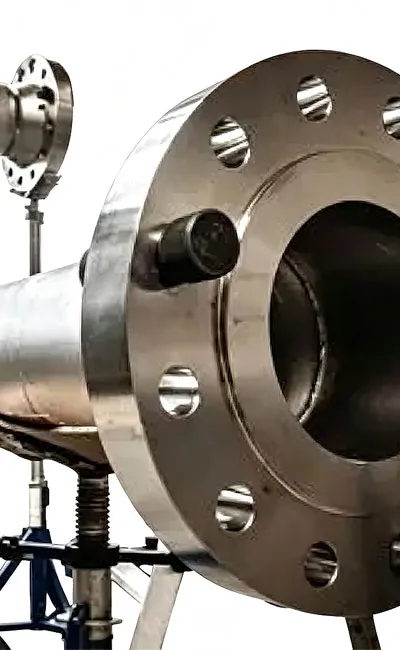
Slip On flanges or SO flanges are designed to slip over the outside of pipe, long-tangent elbows, reducers, and swages. The flange has poor resistance to shock and vibration. It is easier to align than a weld neck flange. This flange is ideal for low pressure applications since the strength when under internal pressure is about one third that of a weld neck flange. This flange has a raised face. Slip On flanges or SO flanges are commonly lower in price than weld-neck flanges, and to this effect are a popular choice for our customers. However, customers should bear in mind that this initial cost saving may be diminished by the additional cost of the two fillet welds required for proper installation. Moreover, weld-neck flanges have a higher life expentancy than slip-on flanges under duress.
The slip on flange is positioned so the inserted end of the pipe or fitting is set short of the flange face by the thickness of the pipe wall plus 1/8 of an inch, which thus allows for a fillet weld inside the SO flange equal without doing any damage to the flange face. The back or outside of the slip-on flange or SO flange is also welded with a fillet weld.
Materials used:
Common materials used are as follows:
Stainless steel
Brass
Steel
Alloy Steel
Aluminum
Plastics
Titanium
Monels
Carbon steel
Alloy titanium etc.
Why slip on flanges are preferred to welding neck flanges?
For many users, slip on flanges continue to be preferred to welding neck flanges because of the following reasons:
On account of their initially lower cost.
The reduced accuracy needed in cutting the pipe to length.
The greater ease of alignment of the assembly.
The calculated strength of slip-on flanges under internal pressure is approximately two-thirds that of welding neck flanges.
How to measure slip-on flanges?
Take the measurements of:
OD: Outside Diameter
ID: Inside Diameter
BC: Bolt Circle
HD: Hole diameter
Key Features:
Some important features are as follows:
One size fits all pipe schedules.
Fabricators can more easily cut pipe to length for slip-on flanges.
The smaller thickness of this flange allows for easier alignment of bolting holes.
They are generally not preferred for high pressure temperature environments.
Advantages of slip on flanges:
Low cost installation
Less time needed to spent on ensuring the accuracy of the cut pipe
They are somewhat easier to align
The slip-on flanges have low hub because the pipe slips into the flange before welding
The flange is welded both inside and outside to provide sufficient strength
They prevent leakage
Related News
What are the factors affect flanges price?Let’s look
Post time: Jun-02-2022
Materials Used
Key Features
Advantages
Buying Tips
Factors to consider before buying slip-on flanges are as follows:
Size
Design Standard
Material
Normal Pressure
Face Type
Flange Diameter
Flange Thickness
Durability
Corrosion resistant










 English
 Español
 русский язык
 Português