Price List

Hunan Great Steel Pipe Co., Ltd
304 stainless steel pipe,galvanized steel water pipes,api tubing pipe

Why are hot-rolled steel and cold-rolled steel divided

Date: 2024-04-09
Why are hot-rolled steel and cold-rolled steel divided Hot-rolled steel and cold-rolled steel are common metal materials, and there are obvious differences in their production processes and performance characteristics. The following will introduce in detail why hot-rolled steel and cold-rolled steel need to be distinguished, and explain the differences between them. 1. Production process: Hot-rolled steel is made by heating the billet to a high-temperature state and then rolling it continuously. This process changes the shape and size of the steel and relieves internal stresses. In contrast, cold-rolled steel is made by rolling hot-rolled steel at room temperature, deforming it through pressure without changing its temperature. The manufacturing process of cold-rolled steel requires more processes and equipment, so the cost is relatively high. 2. Organizational structure and performance: Due to different production processes, there are also differences in the organizational structure and properties of hot-rolled steel and cold-rolled steel. The grains of hot-rolled steel are larger and loosely arranged. It has high plasticity and toughness and is suitable for occasions that require higher strength and wear resistance. The grains of cold-rolled steel are finer and more closely arranged, with higher strength and hardness, and are suitable for applications that require higher precision and surface smoothness. 3. Surface quality: Hot-rolled steel is prone to oxide scale and rust during the production process, so its surface quality is relatively poor. Since cold-rolled steel is produced at room temperature, it can avoid the generation of oxide scale and rust and has better surface quality. This makes cold-rolled steel widely used in industries that require excellent surface quality, such as automobile manufacturing and home appliance manufacturing. 4. Application fields: Due to the differences in properties and surface quality of hot-rolled steel and cold-rolled steel, they have their advantages in different application fields. Hot-rolled steel is often used in building structures, pipelines, large machinery manufacturing, and other fields. Its high plasticity and toughness can meet the needs of complex stress environments. Cold-rolled steel is widely used in automobile manufacturing, electronic equipment, home appliances, aerospace, and other fields. Its high strength and surface quality can meet precision processing and high-demand product manufacturing. Summarize: There are obvious differences between hot-rolled steel and cold-rolled steel in the production process, organizational structure, performance characteristics, and application fields. Hot-rolled steel has higher plasticity and toughness and is suitable for situations that require higher strength and wear resistance; while cold-rolled steel has higher strength and hardness and is suitable for situations that require higher precision and surface smoothness. Understanding their differences helps to correctly select and apply these two materials to meet the needs of different fields. Post time: Apr-09-2024

Latest news list

  • stainless welded steel pipe corrosion,stainless welded pipe maintenance,stainless steel pipe industrial applications
    Stainless welded steel pipe is widely used in industrial systems because stainless steel provides good corrosion resistance in many service environments,However,stainless steel is not corrosion-proof,Chlorides,deposits,contamination,unsuitable material selection,poor fabrication practices and aggressive operating conditions can all create corrosion risks,For this reason,preventing stainless welded steel pipe corrosion starts before installation and continues throughout the service life of the system,
  • stainless welded steel pipe,stainless welded pipe manufacturing,welded stainless steel pipe
    Stainless welded steel pipe is produced by forming stainless steel strip or plate into a tubular shape and joining the longitudinal edges by welding,While the basic process is straightforward,consistent pipe quality depends on controlling the material,forming,weld,dimensions,surface condition and inspection requirements from start to finish,For industrial orders,the manufacturing process must also maintain material traceability and match the pipe with the specified grade,dimensions,standard,surface finish and testing requirements,
  • 3PE anti corrosion steel pipe stock,3PE steel pipe availability,3PE pipe in stock,3PE steel pipe supplier,3PE coated pipe
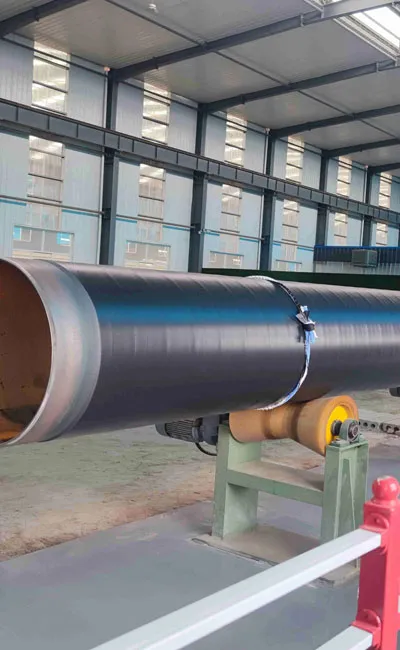
    Pipeline projects do not always follow the original procurement schedule,A maintenance replacement may become urgent,A construction team may need additional pipe after the main order has been delivered,A distributor may also receive a short-notice customer request,In these situations,3PE anti corrosion steel pipe available from stock can provide an alternative to starting a new production cycle,However,faster availability does not remove the need for technical verification,The pipe must still match the project specification,coating requirements,inspection scope,and delivery conditions,
  • 3PE anti corrosion steel pipe,3PE coated steel pipe,3PE pipe shipment,3PE steel pipe transportation
    For a 3PE anti corrosion steel pipe order,manufacturing is only one part of successful project delivery,The pipe must also be inspected,protected,identified,loaded,transported,and delivered in a condition suitable for the next stage of the project,For overseas pipeline projects,shipment preparation therefore connects technical compliance with logistics execution,Good preparation helps reduce coating damage,identification problems,documentation gaps,and delays at the destination,
  • 3PE anti corrosion steel pipe,3PE coated steel pipe,3PE coating problems,3PE pipe corrosion protection
    3PE anti corrosion steel pipe is widely used to reduce external corrosion risk in buried and submerged pipeline applications,The system combines a fusion-bonded epoxy layer,adhesive layer,and polyethylene outer layer to protect the steel pipe from its surrounding environment,ISO 21809-1:2018 specifies requirements for plant-applied three-layer polyethylene and polypropylene coatings for relevant pipeline transportation systems,although project specifications may define additional requirements,However,3PE coating performance depends on more than the coating material itself,Problems can occur during surface preparation,coating application,transportation,installation,field joint coating,or pipeline operation,Identifying these risks early helps project teams prevent coating failure and unnecessary repair,

Find what you need ?

close
We use cookies and other tracking technologies to improve your browsing experience on our website, to show you personalized content and targeted ads, to analyze our website traffic, and to understand where our visitors are coming from.