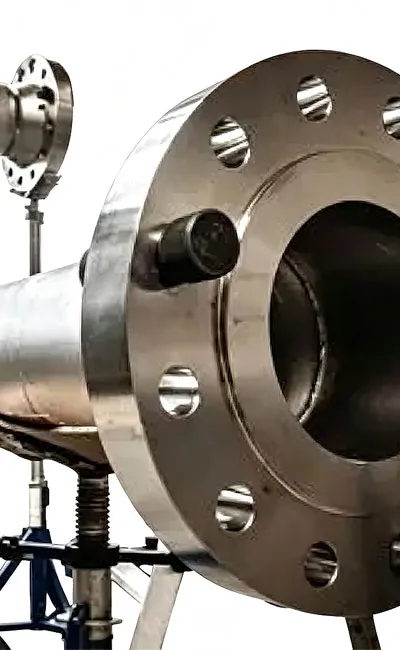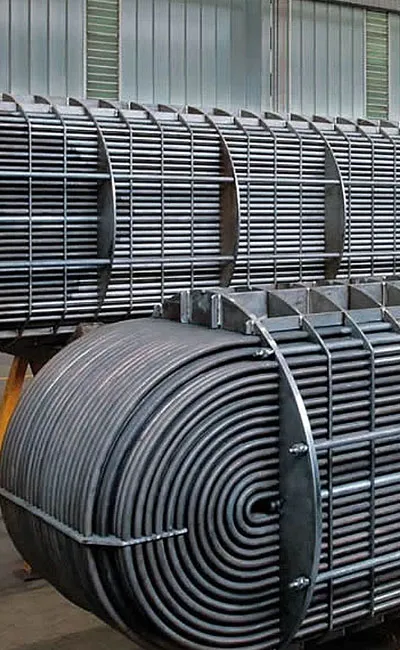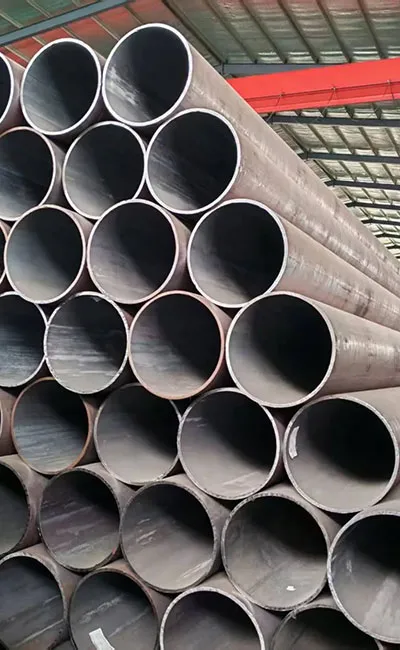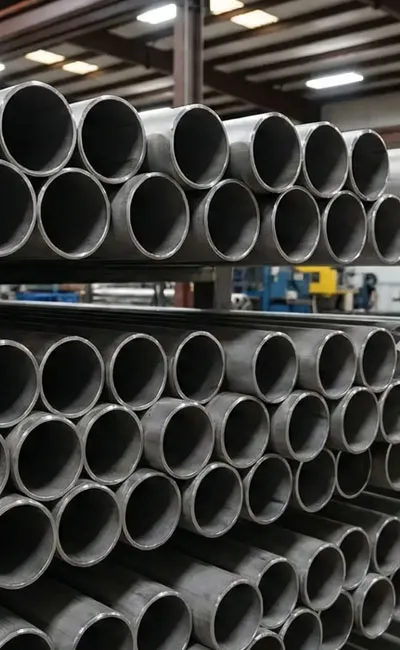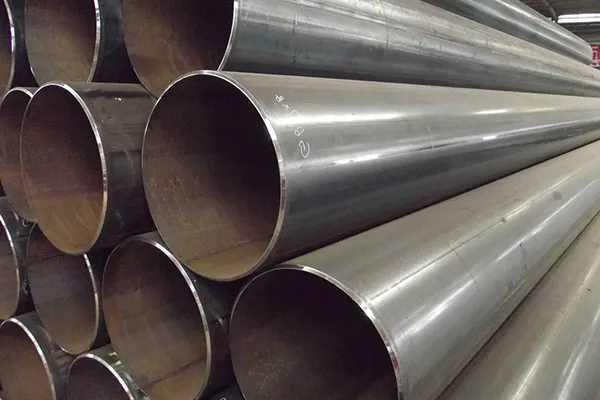

Stainless welded steel pipe is produced by forming stainless steel strip or plate into a tubular shape and joining the longitudinal edges by welding. While the basic process is straightforward, consistent pipe quality depends on controlling the material, forming, weld, dimensions, surface condition and inspection requirements from start to finish. For industrial orders, the manufacturing process must also maintain material traceability and match the pipe with the specified grade, dimensions, standard, surface finish and testing requirements.
Production starts with stainless steel material selected according to the required grade, standard and service conditions. Common grades include 304, 304L, 316 and 316L, while other austenitic, ferritic or duplex stainless steels may be supplied when specified for the application. Before production, the incoming material is checked against the purchase specification and available material documentation. Heat number traceability is particularly important for project orders because it provides a link between the finished pipe and its original material. Proper material identification at this stage helps prevent grade mix-ups and supports accurate documentation throughout the order.
The stainless steel strip is progressively formed into the required tubular shape. During forming, the material must be controlled carefully to maintain stable geometry and consistent edge alignment. Poor forming control can result in excessive deformation, ovality or uneven alignment at the longitudinal joint. These issues may affect subsequent welding and dimensional accuracy. The objective is to produce a stable tube shape in which the edges meet consistently before welding.
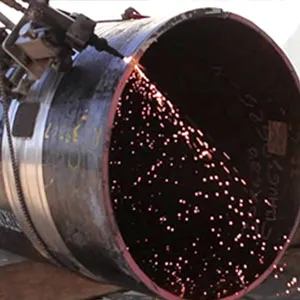
The prepared edges are joined along the pipe length using a suitable welding process selected according to the material, dimensions and applicable production requirements. Weld quality is a critical part of stainless welded pipe manufacturing because the longitudinal seam becomes an integral part of the pipe wall. Welding alignment, heat input, weld appearance and process stability therefore require controlled production conditions. Where specified, the weld area may receive additional treatment or finishing after welding. The exact requirements depend on the pipe grade, standard, application and purchase specification.
Consistent dimensional control is important not only for appearance but also for fabrication, connection and installation at the project site.
Surface requirements should be confirmed before production because stainless welded pipe can be supplied with different finishing conditions depending on its intended use. Depending on the specification, finishing may include cleaning, pickling or other surface treatment. More controlled surface conditions may also be required for particular applications. Surface inspection focuses on visible defects, weld-area condition and compliance with the agreed finish. For corrosion-sensitive service, proper surface treatment and handling are important parts of overall product quality.
Stainless welded steel pipe is commonly selected where corrosion resistance, dimensional consistency and fabrication efficiency are important. However, the stainless grade itself is only one part of the final product. Material identity, forming accuracy, weld integrity, surface condition and inspection records all contribute to whether the pipe meets the requirements of its intended service. At Hunan Great Steel Pipe, stainless steel pipe orders are managed with attention to specification confirmation, production control, quality inspection and export documentation. The company supports customers in more than 80 countries, with annual production of more than 2,000 tons, serving international distributors, fabricators, engineering companies and project buyers. For buyers comparing grades, dimensions, surface finishes and application requirements, see our guide on how to choose stainless welded steel pipe.








 English
 Español
 русский язык
 Português