Deviation and forming method of large-diameter steel pipes in production
Date: 2024-08-30
Deviation and forming method of large-diameter steel pipes in production
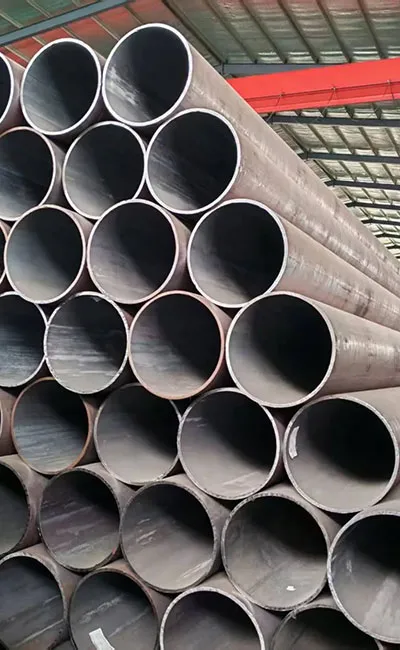
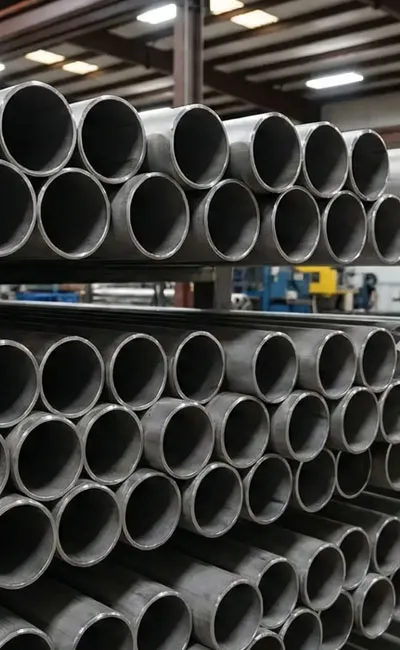
Deviation of large-diameter steel pipes in production: Common large-diameter steel pipe size range: outer diameter: 114mm-1440mm wall thickness: 4mm-30mm. Length: can be made into fixed length or unfixed length according to customer requirements. Large-diameter steel pipes are widely used in various industrial sectors such as aviation, aerospace, energy, electronics, automobiles, light industry, etc., and are one of the important welding processes.
The main processing methods of large-diameter steel pipes are: Forging steel: a pressure processing method that uses the reciprocating impact force of the forging hammer or the pressure of the press to change the billet into the shape and size we need. Extrusion: It is a processing method in which steel puts metal in a closed extrusion cylinder, applies pressure at one end, and squeezes the metal out of the specified die hole to obtain a finished product with the same shape and size. It is mostly used in the production of non-ferrous metal steel. Rolling: A pressure processing method in which the steel metal billet passes through the gap (various shapes) of a pair of rotating rollers, and the material cross-section is reduced and the length is increased due to the compression of the rollers. Drawing steel: It is a processing method that draws the rolled metal billet (profile, tube, product, etc.) through the die hole to reduce the cross-section and increase the length. It is mostly used for cold processing.
Large-diameter steel pipes are mainly completed by tension reduction and continuous rolling of hollow base materials without mandrels. Under the premise of ensuring the spiral steel pipe, the spiral steel pipe is heated to a high temperature above 950℃ as a whole and then rolled into seamless steel pipes of various specifications through a tension reduction mill. The standard document for the production of large-diameter steel pipes shows that deviations are allowed in the manufacture of large-diameter steel pipes: Length allowable deviation: The length allowable deviation of the steel bar when it is delivered in fixed length shall not exceed +50mm. Curvature and end: The bending deformation of straight steel bars should not affect normal use, and the total curvature should not exceed 40% of the total length of the steel bar; the ends of the steel bars should be sheared straight, and local deformation should not affect use. Length: Steel bars are usually delivered in fixed lengths, and the specific delivery length should be indicated in the contract; when steel bars are delivered in coils, each coil should be a steel bar, and 5% of the coils in each batch are allowed to consist of two steel bars. The coil weight and coil diameter are determined by negotiation between the supply and demand parties.
Large-diameter steel pipe forming methods:
1. Hot push expansion method: The push expansion equipment is simple, low-cost, easy to maintain, economical, and durable, and the product specifications can be changed flexibly. If you need to prepare large-diameter steel pipes and other similar products, you only need to add some accessories. It is suitable for the production of medium and thin-walled large-diameter steel pipes, and can also produce thick-walled pipes that do not exceed the capacity of the equipment.
2. Hot extrusion method: The blank needs to be machined before extrusion. When extruding pipes with a diameter of less than 100mm, the equipment investment is small, the material waste is small, and the technology is relatively mature. However, once the diameter of the pipe increases, the hot extrusion method requires large-tonnage and high-power equipment, and the corresponding control system must also be upgraded.
3. Hot piercing rolling method: Hot piercing rolling is mainly longitudinal rolling extension and oblique rolling extension. Longitudinal extension rolling mainly includes limited mandrel continuous rolling, limited mandrel continuous rolling, three-roller limited mandrel continuous rolling, and floating mandrel continuous rolling. These methods have high production efficiency, low metal consumption, good products, and control systems, and are increasingly widely used.
Qualified parameters for flaw detection of large-diameter steel pipes:
In the production of large-diameter steel pipes, single circular inclusions and pores with a weld diameter not exceeding 3.0mm or T/3 (T is the specified wall thickness of the steel pipe) are qualified, whichever is smaller. Within any 150mm or 12T length weld range (whichever is smaller), when the interval between a single inclusion and a pore is less than 4T, the sum of the diameters of all the above defects that are allowed to exist separately should not exceed 6.0mm or 0.5T (whichever is smaller). Single strip inclusions with a length not exceeding 12.0mm or T (whichever is smaller) and a width not exceeding 1.5mm are qualified. Within any 150mm or 12T length weld (whichever is smaller), when the spacing between individual inclusions is less than 4T, the maximum cumulative length of all the above defects that are allowed to exist separately should not exceed 12.0mm. A single bite edge of any length with a maximum depth of 0.4mm is qualified. A single bite edge with a maximum length of T/2, a maximum depth of 0.5mm and not exceeding 10% of the specified wall thickness is qualified as long as there are no more than two bite edges within any 300mm weld length. All such bite edges should be ground. Any bite edge exceeding the above range should be repaired, the problematic area should be cut off, or the entire steel pipe should be rejected. Bites of any length and depth that overlap each other on the same side of the inner weld and the outer weld in the longitudinal direction are unqualified.
Post time: Aug-30-2024










 English
 Español
 русский язык
 Português