Price List

Hunan Great Steel Pipe Co., Ltd
electric resistance welded pipe,alloy pipe,stainless pipe

Deviations in the production of large-diameter steel pipes

Date: 2024-01-05
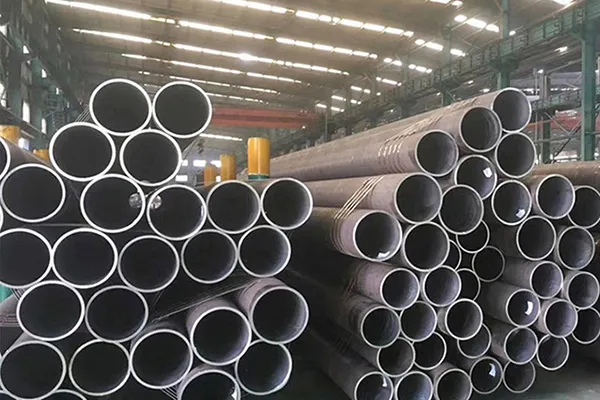
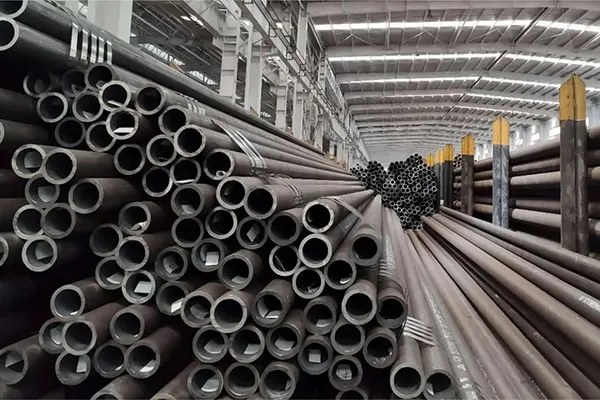
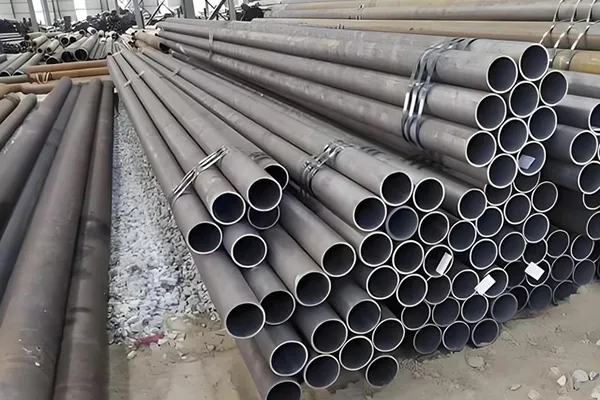
Deviations in the production of large-diameter steel pipes Common large diameter steel pipe size range: outer diameter: 114mm-1440mm wall thickness: 4mm-30mm. Length: It can be made to fixed length or irregular length according to customer requirements. Large-diameter steel pipes are widely used in various industrial sectors such as energy, electronics, automobiles, and light industry, and are an important welding process. The main processing methods of large-diameter steel pipes are Forged steel: A pressure processing method that uses the reciprocating impact of a forging hammer or the pressure of a press to change the blank into the shape and size we require. Extrusion: It is a steel processing method in which metal is placed in a closed extrusion cylinder and pressure is applied on one end to extrude the metal from a specified die hole to obtain a finished product of the same shape and size. It is mostly used to produce non-ferrous metals and steel. Rolling: A pressure processing method in which a steel metal blank is passed through the gap between a pair of rotating rollers (of various shapes). Due to the compression of the rollers, the cross-section of the material is reduced and the length is increased. Drawing steel: It is a processing method that draws the rolled metal blank (shaped, tube, product, etc.) through the die hole into a reduced cross-section and an increased length. Most of them are used for cold processing. Large-diameter steel pipes are mainly completed through tension reduction and continuous rolling of the hollow base material without a mandrel. On the premise of ensuring the spiral steel pipe, the entire spiral steel pipe is heated to a high temperature above 950°C and then rolled into seamless steel pipes of various specifications through a tension reducer. Documents for standard setting and production of large-diameter steel pipes show that deviations are allowed when manufacturing and producing large-diameter steel pipes: Length deviation: When steel bars are delivered to a fixed length, the length deviation shall not be greater than +50mm. Curvature and ends: The bending strain of straight steel bars does not affect normal use, and the total curvature is not greater than 40% of the total length of the steel bars; the ends of the steel bars should be sheared straight, and local deformation should not affect use. Length: Steel bars are usually delivered in fixed lengths, and the specific delivery length should be specified in the contract; when steel bars are delivered in coils, each coil should be one steel bar, and 5% of the coils in each batch are allowed to be composed of two steel bars. composition. The disc weight and disc diameter are determined by negotiation between the supply and demand parties. Post time: Jan-05-2024

Latest news list

  • hollow section corrosion protection,square steel pipe corrosion,rectangular steel pipe corrosion,hollow section protection,steel hollow section maintenance
    Square and rectangular hollow sections are widely used in structural frames,equipment supports,industrial platforms and fabricated steel structures,Their closed profiles provide an efficient combination of strength,stiffness and clean geometry,but carbon steel hollow sections can corrode when they are exposed to moisture,salts,chemicals or other aggressive conditions,
  • hollow section manufacturing,square steel pipe,rectangular steel pipe,hollow section production,hollow section quality control
    Square and rectangular hollow sections are widely used in structural frames,industrial equipment,construction projects and fabricated steel structures,Their appearance is simple,but producing a section with consistent dimensions,wall thickness,straightness and material performance requires control at several stages,
  • alloy steel pipe buying guide,buy alloy steel pipe,alloy steel pipe supplier,alloy steel pipe export
    Buying alloy steel pipe for an international project involves more than comparing prices per tonne,For EPC contractors,distributors and industrial buyers,procurement needs to connect technical specifications,quality control,inspection,documentation and logistics,A well-defined purchasing process helps reduce specification gaps,inspection delays and delivery problems before the pipe reaches the project site,
  • how to select alloy steel pipe,alloy steel pipe selection,alloy steel pipe buying guide,high temperature alloy steel pipe
    Selecting alloy steel pipe should start with the actual service conditions,not simply with a supplier's product catalog,In boiler,power generation and refinery applications,temperature,pressure,process medium and material properties all affect pipe selection,For example,ASTM A335,A335M-26 covers seamless ferritic alloy-steel pipe for high-temperature service,The standard states that selection depends on design,service conditions,mechanical properties and high-temperature characteristics,For buyers,a structured selection process helps prevent specification gaps before production begins,
  • alloy steel pipe maintenance,alloy steel pipe boiler usage,alloy steel pipe refinery,high temperature pipe maintenance
    Alloy steel pipe is widely used in boiler,power generation and refinery systems where piping is exposed to elevated temperatures,pressure and demanding process conditions,Selecting the correct alloy grade is important,but material selection alone does not determine service life,Long-term performance also depends on operating conditions,thermal exposure,wall thickness,fabrication quality,inspection and maintenance,For example,ASTM A335,A335M-26 covers seamless ferritic alloy-steel pipe for high-temperature service and states that material selection depends on design,service conditions,mechanical properties and high-temperature characteristics,

Find what you need ?

close
We use cookies and other tracking technologies to improve your browsing experience on our website, to show you personalized content and targeted ads, to analyze our website traffic, and to understand where our visitors are coming from.