Price List

Hunan Great Steel Pipe Co., Ltd
SSAW steel pipe supplier,galvanized pipe,spiral welded steel pipe

Measures to avoid warping of 3PE anti-corrosion layer pipe ends

Date: 2020-10-10
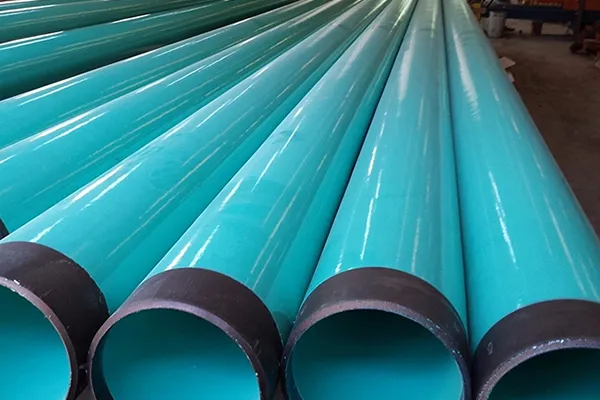
Measures to avoid warping of 3PE anti-corrosion layer pipe ends 1. Under the condition of not affecting the welding of the nozzle, the reserved length of the epoxy powder at the end of the polyethylene layer should be appropriately increased to prevent the 3PE anti-corrosion warping caused by the long stacking time of the steel pipe and the serious metal corrosion of the pipe end. 2. When anticorrosive pipes are stacked in the open air for a long time, they should be covered at the pipe ends to prevent rainwater from corroding and causing serious corrosion of the pipe ends. 3. If the pipeline construction period is long, weldable anti-rust paint can be painted on the bare metal of the pipe end to prevent the 3PE anti-corrosion layer from warping due to corrosion during storage. 4. Strictly control the grinding quality of the welding seam reserved at the pipe end. The outsides of the polyethylene groove at the weld is the same as the other parts of the pipe body. Keep the epoxy powder longer than 20mm to prevent the bottom of the epoxy powder at the weld from being corroded first and causing the 3PE anti-corrosion layer of warp. Attention should be paid to the grinding of pipe end welds: 1) From the beginning of the welding seam grinding to the polyethylene chamfer, there should be a flat section of the polyethylene layer of 10-20mm with no excess weld height and the same as the pipe body to ensure the extrusion and bonding of the polyethylene groove at the pipe end quality. 2) The reinforcement of the weld seam after grinding should be as flush as possible with the pipe body, and there should be no obvious reinforcement to prevent the epoxy powder from being polished off when grinding the chamfer of the polyethylene layer. 3) The chamfer of the undressed top of the weld and the transition section of the repaired place should also be the same as the chamfer of the polyethylene layer (≤30°) so that the squeezing force of the squeeze roller can evenly press the polyethylene layer To prevent the polyethylene layer from curling due to poor adhesion of the anti-corrosive layer at the groove. 5. The epoxy powder coating of the reserved section can delay the edge warping caused by corrosion only when the protection is complete. Domestic pipe end polyethylene bevel processing is done by steel wire wheel grinding, which will damage the epoxy powder coating. The bevel should be machined instead, and the bottom layer of the knife-edge should be limited by a device to control the cutting depth of the tool, so as not to damage the epoxy powder coating. Post time: Oct-10-2020

Latest news list

  • FBE steel pipe field joint coating,FBE pipe welding protection,field joint coating,FBE coating repair,FBE field joint inspection
    FBE (fusion-bonded epoxy) coating provides external corrosion protection for steel pipes used in pipeline projects,However,during pipeline construction,the coating near pipe ends must be protected while individual pipe sections are joined by welding,The exposed joint area then requires a suitable field joint coating system,If this work is not properly controlled,damage or poor bonding at the joint can compromise the continuity of the pipeline's corrosion protection,Protecting the factory coating and applying the correct field joint system are therefore important parts of pipeline construction,
  • how to choose FBE coated steel pipe,FBE pipe selection,FBE coated pipeline requirements,FBE coated steel pipe size,FBE coated steel pipe purchase
    Selecting FBE coated steel pipes for a pipeline project involves more than specifying pipe diameter,wall thickness and coating thickness,Buyers must consider the base pipe,coating system,operating environment,installation conditions and inspection requirements as one coordinated package,A well-defined purchase specification helps prevent material mismatches,coating defects and documentation gaps before production begins,The following points provide a practical checklist for engineers,EPC contractors and procurement teams,
  • FBE coating and cathodic protection,FBE coated steel pipe,external pipeline corrosion control,cathodic protection monitoring,FBE coating disbondment
    Buried steel pipelines are exposed to moisture,soil chemicals and other environmental conditions that can cause external corrosion,To reduce this risk,pipeline projects commonly combine external fusion-bonded epoxy (FBE) coating with cathodic protection (CP),Although both methods help protect steel against corrosion,they work in different ways,FBE coating provides a physical barrier between the pipe surface and its surroundings,while cathodic protection uses an electrochemical process to reduce corrosion at exposed areas,Their effectiveness depends on proper design,installation,inspection and long-term monitoring,
  • FBE coated steel pipe quality control,FBE coating inspection,FBE coating thickness measurement,FBE pipe inspection,FBE coating quality control
    The quality of an FBE (Fusion Bonded Epoxy) coated steel pipe cannot be judged by its appearance alone,A smooth coating surface does not necessarily mean that the coating has achieved the required thickness,adhesion,or curing condition,For pipeline applications,quality control starts with the incoming bare steel pipe and continues through surface preparation,coating application,curing,and final inspection,Each stage should follow an approved procedure and the requirements specified for the project,A documented inspection process also allows buyers to verify that the supplied pipes meet the agreed technical requirements,
  • FBE coated steel pipes for buried pipelines,buried pipeline corrosion protection,FBE coated steel pipe installation
    FBE (Fusion Bonded Epoxy) coating is widely used to protect steel pipes against external corrosion in buried pipeline systems,It forms a protective barrier between the steel surface and the surrounding soil,However,coating performance depends on more than the quality of the factory-applied layer,Soil conditions,transportation,installation,field joint protection and cathodic protection all affect the long-term integrity of a buried pipeline,A reliable protection strategy should address these factors before the pipe is placed underground,

Find what you need ?

close
We use cookies and other tracking technologies to improve your browsing experience on our website, to show you personalized content and targeted ads, to analyze our website traffic, and to understand where our visitors are coming from.