Technical Characteristics, Application Areas, and Manufacturing Process Details of P11
Date: 2025-11-11
Technical Characteristics, Application Areas, and Manufacturing Process Details of P11 High-Pressure Boiler Steel Tubes
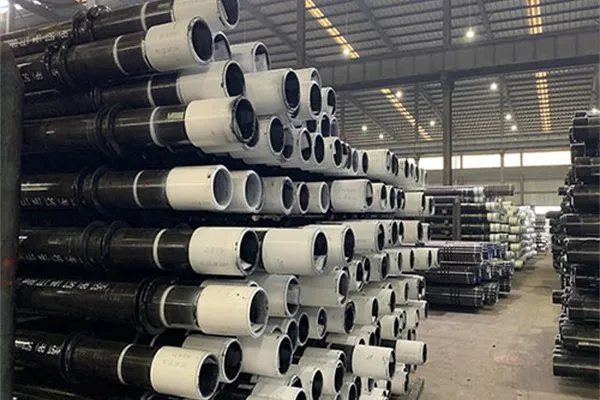
P11 boiler steel tubes, as an important high-temperature and high-pressure alloy tube, play an irreplaceable role in the power, petrochemical, and other fields. This type of steel tube, with chromium and molybdenum as the main alloying elements, has become the preferred material for high-temperature and high-pressure conditions due to its excellent mechanical properties and corrosion resistance.
From a material composition perspective, P11 boiler steel tubes belong to the P11 grade alloy steel tube in the ASTM A335 standard, with its main chemical composition being 1.25% chromium and 0.5% molybdenum. This special alloy ratio endows the material with excellent high-temperature strength and oxidation resistance. In practical applications, P11 steel tubes can operate stably for extended periods at a high temperature of 593℃, and short-term operating temperatures can even reach 650℃. Compared with ordinary carbon steel tubes, P11 alloy tubes have significantly improved creep resistance, making them particularly outstanding in critical components such as boiler superheaters and reheaters.
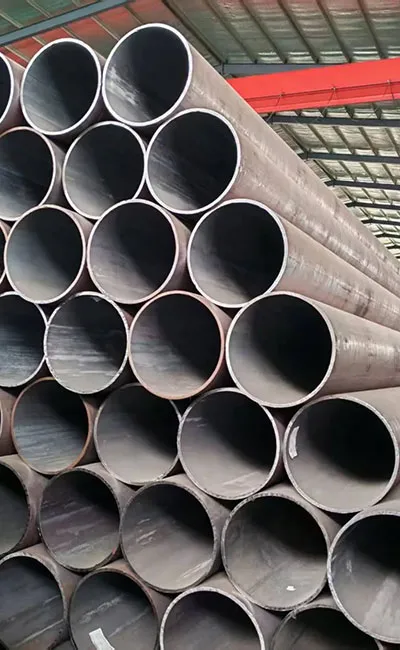
In terms of manufacturing process, P11 high-pressure boiler steel tubes are typically manufactured using hot rolling or cold drawing processes. Hot rolling is suitable for producing large-diameter, thick-walled tubes, achieving a uniform microstructure through high-temperature rolling. Cold drawing, on the other hand, is better suited for small-diameter, precision tubes, providing more precise dimensional control and a smoother surface finish. Regardless of the process, P11 steel tubes must undergo rigorous heat treatment processes, including normalizing and tempering, to ensure optimal mechanical properties. Notably, the application of modern advanced continuous rolling technology and online heat treatment processes has significantly improved the performance stability and production efficiency of P11 boiler steel tubes.
In quality control, P11 high-pressure boiler steel tubes undergo numerous stringent tests. In addition to routine chemical composition analysis and mechanical property testing, non-destructive testing such as ultrasonic flaw detection and eddy current testing is required to ensure the tubes are free of internal defects. Simultaneously, hydrostatic testing is a crucial step in verifying the pressure-bearing capacity of the steel tubes; the test pressure is typically 1.5 times the working pressure. These stringent quality control measures guarantee the safety and reliability of P11 boiler steel tubes under extreme operating conditions.
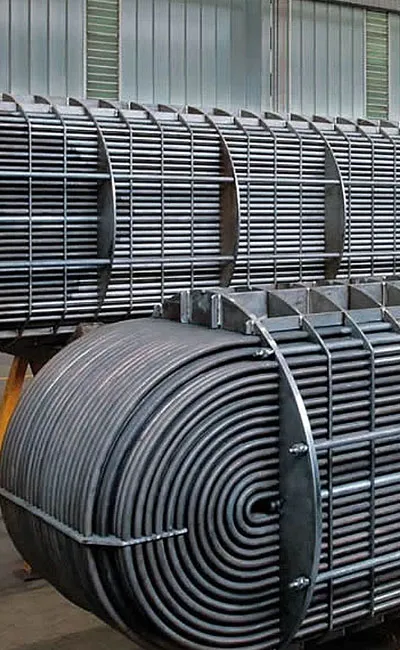
In terms of application areas, P11 high-pressure boiler steel tubes primarily serve three major industries: the power industry for superheaters and reheaters in supercritical and ultra-supercritical power plant boilers; the petrochemical industry for high-temperature cracking units and hydrogenation reactors; and some non-nuclear-grade systems in nuclear power equipment. Especially in modern large-scale power plant boilers, P11 steel tubes, due to their excellent weldability and high-temperature creep strength, are an ideal choice for connecting parts of the boiler at different pressure levels. With the development of clean energy technologies, P11 boiler steel tubes are also showing broad application prospects in emerging fields such as biomass power generation and waste incineration.
Market conditions show that global demand for P11 boiler steel tubes maintains a steady growth trend. Statistics indicate that the global high-pressure boiler steel tube market size exceeded US$5 billion in 2024, with P11 grade products accounting for approximately 25% of the market share. As the world’s largest producer of boiler steel tubes, China’s P11 steel tube production technology has reached international advanced levels, and its products not only meet domestic demand but are also exported to Southeast Asia, the Middle East, and other regions. It is worth noting that with increasingly stringent environmental protection requirements, the recycling technology of P11 boiler steel tubes is receiving growing attention, with a recyclability rate exceeding 95%, aligning with the development trend of green manufacturing.
In terms of technological innovation, P11 boiler steel tubes are developing towards higher performance. The application of new micro-alloying technology has extended the service life of P11 steel tubes by more than 30%; surface modification technologies, such as internal shot peening, significantly improve the tube’s resistance to steam oxidation; and the introduction of computer simulation technology has optimized the heat treatment process parameters of the steel tubes. These technological advancements not only improve the performance indicators of P11 boiler steel tubes but also expand their application range.
In terms of use and maintenance, proper installation and regular inspection of P11 high-pressure boiler steel tubes are crucial. Special attention should be paid to the selection of welding processes during installation, with preheating and post-weld heat treatment recommended; during operation, wall thickness measurements and metallographic examinations should be performed regularly to promptly detect signs of material aging; and anti-corrosion treatment should be carried out during boiler shutdown maintenance. Practice shows that standardized use and maintenance can extend the service life of P11 boiler steel tubes to more than 20 years.
Looking ahead, P11 boiler steel tube technology will face both new opportunities and challenges. On the one hand, the promotion of ultra-supercritical power generation technology places higher demands on boiler steel tube materials; on the other hand, the emergence of new heat-resistant materials has also brought some competitive pressure. However, it is foreseeable that, thanks to its mature process system and excellent cost-effectiveness, P11 high-pressure boiler steel tubes will maintain their market dominance for a considerable period. Industry experts predict that the global annual demand for P11 boiler steel tubes will maintain a stable growth of 3-5% over the next five years, especially given the accelerated infrastructure construction in developing countries, where the market outlook remains promising.
In summary, as a key industrial material, the technical characteristics and application value of P11 boiler steel tubes have been widely recognized. From material research and development to production processes, from quality control to application and maintenance, P11 high-pressure boiler steel tubes have formed a complete technical system. With the continuous advancement of related technologies and the ongoing expansion of application areas, P11 boiler steel tubes will undoubtedly play an even more important role in the energy equipment field, providing a solid guarantee for the development of modern industry.
Post time: Nov-11-2025










 English
 Español
 русский язык
 Português