Type of Mild Steel Pipe
Date: 2019-09-05
Type of Mild Steel Pipe
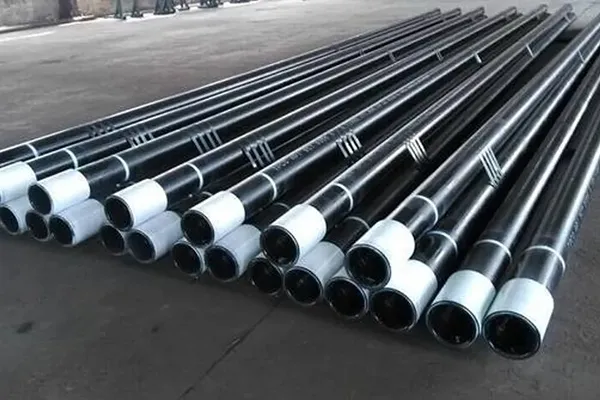
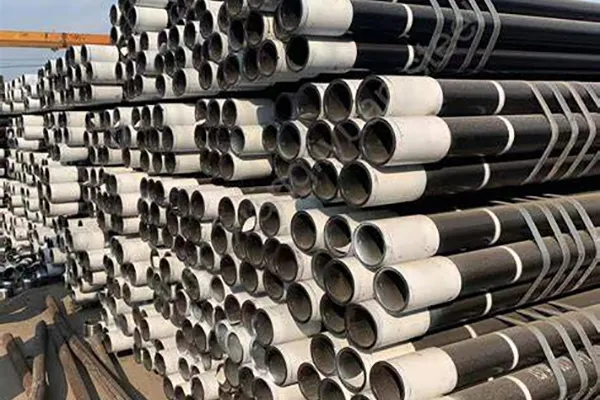
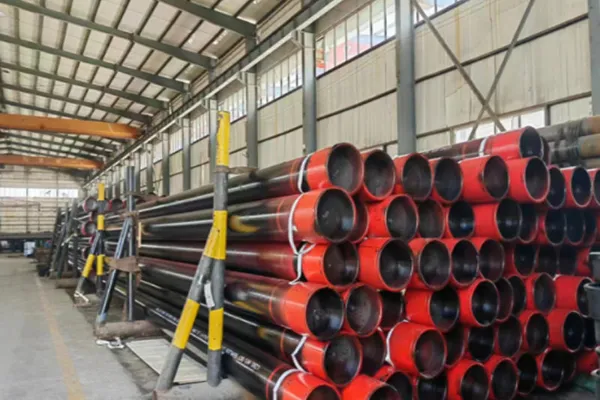
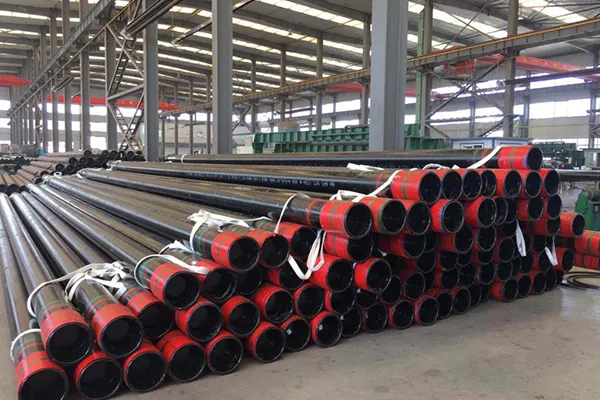
Mild steel pipe refers to the content of less than 0.25% carbon steel because of its low strength, low hardness and soft. It includes most of the part of ordinary carbon steel and high-quality carbon structural steel, mostly without heat treatment used in engineering structures, some carburizing heat treatment and other mechanical parts required for wear. Mild steel pipe annealing organization ferrite and pearlite is lower its strength and hardness, ductility and toughness. Therefore, the cold formability is good and can be crimping, bending, punching and other methods of cold forming. Like that mild steel pipe has good weldability. Carbon content from 0.10 to 0.30% of mild steel is easy to accept all kinds of processing such as forging, welding and cutting, commonly used in the manufacture of chains, rivets, bolts, shafts, etc.
Ordinary mild steel pipe is for the production of building components, containers, tank, furnace and farm machinery. Quality mild steel pipe is for making car cab, hood and other deep-red products; also rolled into bars, strength requirements for the production of mechanical parts. Before using mild steel pipe is generally not by heat treatment, the carbon content of more than 0.15% by carburizing or cyanide treatment, used to require high surface temperature, wear good shafts, bushings, sprockets and other parts. Due to the low strength of the low-carbon steel, use is restricted. Appropriate to increase the carbon content of manganese and add trace vanadium, titanium, niobium and other alloying elements, can greatly improve the strength of steel. If you reduce the carbon content of the steel and add a small amount of aluminum, and a small amount of boron carbide forming elements, you can get ULCB set high enough intensity, and maintain good ductility and toughness.
Low carbon content of mild steel pipe is very low hardness and poor machinability, normalizing process may improve machinability. Mild steel pipe tends to have a greater timeliness, both quench aging tendencies, as well as a tendency to strain aging. When the rapid cooling from a high temperature steel, ferritic scraping carbon, nitrogen saturation, it can also slow the formation of iron carbonitride was at room temperature, and thus the strength and hardness of steel, the lower the ductility and toughness, a phenomenon called quench aging. Even without quenching and low carbon air cooling will produce aging. Produce large amounts of low-carbon steel by deformation dislocations ferrite from carbon, nitrogen atom elastic dislocation interactions, carbon, nitrogen atom reign gathered around the wrong line. Such a combination of carbon and nitrogen atoms and the dislocation line is called the Coriolis-year-old air mass (Ke lop air mass). It will increase the strength and hardness of steel while reducing ductility and toughness, a phenomenon known as strain aging. Than quench aging of mild steel pipe during deformation plasticity and toughness greater dangers in the tensile curve has obvious upper and lower yield point. Since the yield on the yield point elongation occurs until the end, appear deformed due to uneven surface with folds formed on the surface of the sample, called Luders band. So many stampings are often scrapped. There are two methods of its prevention. A high pre-deformation method, the pre-deformed steel stamping place after a period of time will produce Luders band, so the pre-deformed steel stamping is placed before the time not too long. Another steel, aluminum or titanium is added to the formation of a stable compound with the nitrogen to prevent the formation of air masses caused by the Coriolis deformation of aging.
Post time: Sep-05-2019










 English
 Español
 русский язык
 Português












