Price List

Hunan Great Steel Pipe Co., Ltd
anti-corrosion steel pipe,hot dipped galvanized pipe,tubing pipe

The Best Materials To Use for Water and Wastewater Treatment

Date: 2022-05-23
The Best Materials To Use for Water and Wastewater Treatment Constant upkeep on water and wastewater infrastructure continues to be a challenge as there are many older systems that are deteriorating and becoming out of date. To address these repair issues, engineers and technicians must adopt new technologies that offer more economical installation, higher durability and reduced total life-cycle costs. Thankfully technology has improved water and wastewater treatment systems over the last 50 years. Why You Should Replace Your Water and Wastewater Systems Old water and wastewater systems can fail and create an ecological disaster. In fact, industrial companies and municipalities that fail to properly treat water and wastewater can potentially harm both the environment and make people sick. If your company or government body is caught improperly treating wastewater can cause you to be fined thousands if not millions of dollars, have lawsuits filed against you or your company and in extreme cases, people can be sentenced to jail time. But How Do You Choose the Best Wastewater Treatment System For Your Plant? There are many factors you will need to consider when choosing a wastewater treatment system. Two of the main ones are: What are the characterizations of the production facility? What are the governmental regulatory requirements for discharge from the plant? What Are The Regulatory Requirements For Discharge From The Plant? This is one of the most important aspects to consider when looking at treatment systems. Different municipalities have different bylaws when it comes to wastewater treatment and should be taken into consideration. How Does Your Facility Waste Determine Your Ideal Wastewater Treatment System? Obviously one big factor that determines what system to use is the quality of the equipment used in the system. But quality does further than the type of parts or metal used. Here are some important questions to address: Does the system process food that leaves the wastewater heavy in organic materials or other by-products such as oil and grease? Does the facility’s process include the manufacturing of metals that contaminates the wastewater with metals such as zinc, copper iron, lead, and nickel? Are there high levels of inorganic contaminants that need to be removed? Releasing Wastewater into The Environment If your facility plans on using a water or wastewater treatment system, you need to abide by the National Pollutant Discharge Elimination System. Discharging Wastewater into The Local Municipality You should look at your local municipal regulations to determine the correct way to set up a wastewater system. Water Treatment Piping Options Much of a wastewater system is made up of pipes and therefore are very important. Carbon steel and stainless steel have traditionally been the best materials for water and wastewater applications because of their durability and strength. Outdoor Weathering in Water Treatment Systems Since a large amount of wastewater and water treatment systems are installed outdoors, the effect of weather elements like snow, wind and sunlight on the material must be taken into account. Post time: May-23-2022

Latest news list

  • stainless welded steel pipe corrosion,stainless welded pipe maintenance,stainless steel pipe industrial applications
    Stainless welded steel pipe is widely used in industrial systems because stainless steel provides good corrosion resistance in many service environments,However,stainless steel is not corrosion-proof,Chlorides,deposits,contamination,unsuitable material selection,poor fabrication practices and aggressive operating conditions can all create corrosion risks,For this reason,preventing stainless welded steel pipe corrosion starts before installation and continues throughout the service life of the system,
  • stainless welded steel pipe,stainless welded pipe manufacturing,welded stainless steel pipe
    Stainless welded steel pipe is produced by forming stainless steel strip or plate into a tubular shape and joining the longitudinal edges by welding,While the basic process is straightforward,consistent pipe quality depends on controlling the material,forming,weld,dimensions,surface condition and inspection requirements from start to finish,For industrial orders,the manufacturing process must also maintain material traceability and match the pipe with the specified grade,dimensions,standard,surface finish and testing requirements,
  • 3PE anti corrosion steel pipe stock,3PE steel pipe availability,3PE pipe in stock,3PE steel pipe supplier,3PE coated pipe
    Pipeline projects do not always follow the original procurement schedule,A maintenance replacement may become urgent,A construction team may need additional pipe after the main order has been delivered,A distributor may also receive a short-notice customer request,In these situations,3PE anti corrosion steel pipe available from stock can provide an alternative to starting a new production cycle,However,faster availability does not remove the need for technical verification,The pipe must still match the project specification,coating requirements,inspection scope,and delivery conditions,
  • 3PE anti corrosion steel pipe,3PE coated steel pipe,3PE pipe shipment,3PE steel pipe transportation
    For a 3PE anti corrosion steel pipe order,manufacturing is only one part of successful project delivery,The pipe must also be inspected,protected,identified,loaded,transported,and delivered in a condition suitable for the next stage of the project,For overseas pipeline projects,shipment preparation therefore connects technical compliance with logistics execution,Good preparation helps reduce coating damage,identification problems,documentation gaps,and delays at the destination,
  • 3PE anti corrosion steel pipe,3PE coated steel pipe,3PE coating problems,3PE pipe corrosion protection
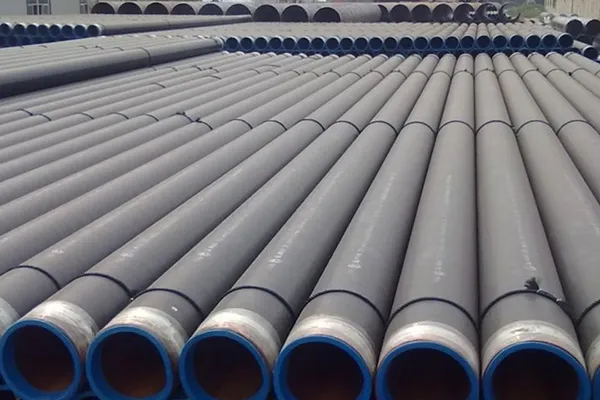
    3PE anti corrosion steel pipe is widely used to reduce external corrosion risk in buried and submerged pipeline applications,The system combines a fusion-bonded epoxy layer,adhesive layer,and polyethylene outer layer to protect the steel pipe from its surrounding environment,ISO 21809-1:2018 specifies requirements for plant-applied three-layer polyethylene and polypropylene coatings for relevant pipeline transportation systems,although project specifications may define additional requirements,However,3PE coating performance depends on more than the coating material itself,Problems can occur during surface preparation,coating application,transportation,installation,field joint coating,or pipeline operation,Identifying these risks early helps project teams prevent coating failure and unnecessary repair,

Find what you need ?

close
We use cookies and other tracking technologies to improve your browsing experience on our website, to show you personalized content and targeted ads, to analyze our website traffic, and to understand where our visitors are coming from.