What are the main characteristics of pipeline steel and steel pipes
Date: 2024-03-18
What are the main characteristics of pipeline steel and steel pipes
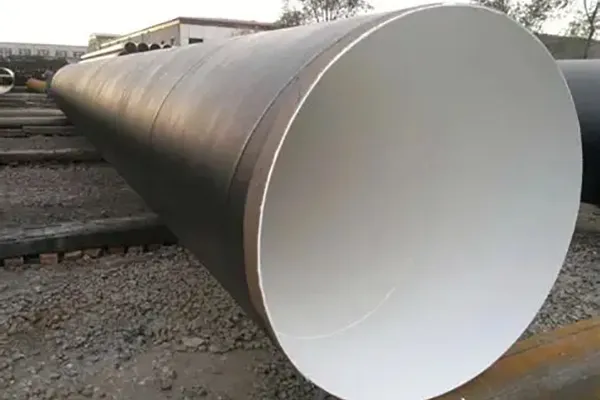
Generally speaking, pipeline steel refers to coils (steel strips) and steel plates used to produce high-frequency welded pipes, spiral submerged arc welded pipes, and straight seam submerged arc welded pipes.
With the increase in pipeline transportation pressure and pipe diameter, high-strength pipeline steel (X56, X60, X65, X70, etc.) has been developed based on low-alloy high-strength steel since the 1960s. Rolling technology. By adding trace elements (the total amount is not more than 0.2%) such as niobium (Nb), vanadium (V), titanium (Ti), and other alloying elements into the steel, and by controlling the rolling process, the comprehensive mechanical properties of the steel are significantly improved. High-strength pipeline steel is a high-tech, high-value-added product, and its production applies almost all new achievements in process technology in the metallurgical field. It can be seen that the materials used in long-distance natural gas pipelines represent the level of a country’s metallurgical industry to a certain extent.
Long-distance natural gas pipelines have problems such as harsh operating environments, complex geological conditions, long lines, difficult maintenance, and prone to fracture and failure. Therefore, pipeline steel should have good properties such as high strength, high toughness, weldability, resistance to severe cold and low temperatures, and fracture resistance.
Selecting high-strength pipeline steel or increasing the wall thickness of pipeline steel pipes can enable natural gas pipelines to withstand higher transmission pressure, thereby increasing natural gas transmission capacity. Although the price of micro-alloy high-strength steel for steel pipes with the same diameter is about 5% to 10% higher than ordinary steel, the weight of the steel pipe can be reduced by about 1/3, the manufacturing and welding process is easier, and the transportation and laying costs are also lower. Practice has proven that the cost of using high-strength pipeline steel pipes is only about 1/2 of the cost of ordinary steel pipes with the same pressure and diameter, and the pipe wall is thinned and the possibility of brittle fracture of the pipe is also reduced. Therefore, it is generally chosen to increase the strength of the steel pipe to increase the pipeline capacity, rather than increasing the wall thickness of the steel pipe.
The strength indicators of pipeline steel mainly include tensile strength and yield strength. Pipeline steel with higher yield strength can reduce the amount of steel used in gas pipelines, but too high a yield strength will reduce the toughness of the steel pipe, causing the steel pipe to tear, crack, etc., and cause safety accidents. While requiring high strength, the ratio of yield strength to tensile strength (yield-strength ratio) of pipeline steel must be comprehensively considered. A suitable yield-to-strength ratio can ensure that the steel pipe has sufficient strength and sufficient toughness, thereby improving the safety of the pipeline structure.
Once a high-pressure gas pipeline breaks and fails, the compressed gas will rapidly expand and release a large amount of energy, causing serious consequences such as explosions and fires. To minimize the occurrence of such accidents, pipeline design should carefully consider the fracture control plan from the following two aspects: First, the steel pipe should always work in a tough state, that is, the ductile-brittle transition temperature of the pipe must be lower than the service ambient temperature of the pipeline to ensure No brittle fracture accidents occur in steel pipes. Second, after ductile fracture occurs, the crack must be stopped within 1 to 2 pipe lengths to avoid greater losses caused by long-term crack expansion. Long-distance natural gas pipelines use a girth welding process to connect steel pipes one by one. The harsh construction environment in the field has a greater impact on the quality of girth welding, easily causing cracks at the weld, reducing the toughness of the weld and the heat-affected zone, and increasing the possibility of pipeline rupture. Therefore, pipeline steel itself has excellent weldability, which is crucial to ensuring the welding quality and overall safety of the pipeline.
In recent years, with the development and mining of natural gas extending to deserts, mountainous areas, polar regions, and oceans, long-distance pipelines often have to pass through areas with very complex geological and climatic conditions such as permafrost zones, landslide zones, and earthquake zones. To prevent steel pipes from deforming due to ground collapse and movement during service, gas transmission pipelines located in areas prone to earthquakes and geological disasters should use strain-based design-resistant pipeline steel pipes that resist large deformation. Non-buried pipelines that pass through overhead areas, frozen soil areas, high altitudes, or high-latitude low-temperature areas are subject to the test of high cold all year round. Pipeline steel pipes with excellent low-temperature brittle fracture resistance should be selected; buried pipelines that are corroded by groundwater and highly conductive soil For pipelines, anti-corrosion treatment inside and outside the pipelines should be strengthened.
Post time: Mar-18-2024










 English
 Español
 русский язык
 Português