Company News

Hunan Great Steel Pipe Co., Ltd
316L stainless steel pipe,steel tube provider,coated carbon steel pipe

The problem of uneven thickness of anti-corrosion coating on spiral steel pipes and how to deal with it

Date: 2024-01-25
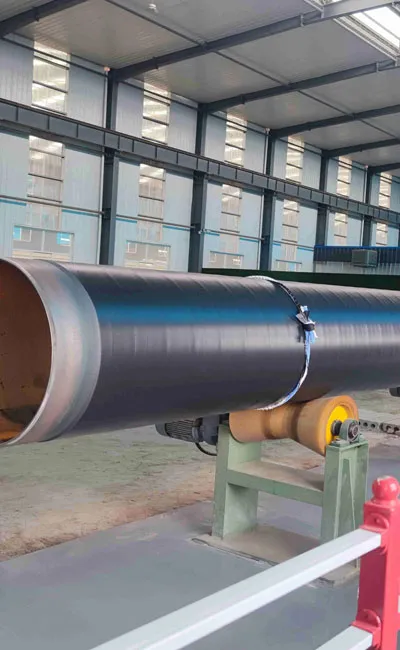
The problem of uneven thickness of anti-corrosion coating on spiral steel pipes and how to deal with it Spiral steel pipes are mainly used as fluid pipes and piling pipes. If the steel pipe is used for water drainage, it will generally undergo anti-corrosion treatment on the inner or outer surface. Common anti-corrosion treatments include 3pe anti-corrosion, epoxy coal tar anti-corrosion, and epoxy powder anti-corrosion. Wait, because the epoxy powder dipping process is troubled by adhesion problems, the epoxy powder dipping process has never been promoted. Now, with the successful development of the special phosphating solution for epoxy powder dipping, the adhesion problem of the epoxy powder dipping process has been overcome for the first time, and the emerging process of epoxy powder dipping has begun to appear. Analyzing the causes of uneven anti-corrosion coating thickness on spiral steel pipes, the uneven thickness of 3PE spiral steel pipe coatings is mainly reflected in the uneven thickness of test points on each side distributed in the circumferential direction. The industry standard SY/T0413-2002 has no rules for thickness uniformity. It stipulates the thickness value of the coating but requires that the thickness value of the coating cannot be lower than the thickness value of a point, rather than the average value of multiple test points. If the coating thickness is uneven during the coating process of spiral steel pipes, the coating material will inevitably be wasted. This is because when the thickness of the coating at the thinnest part reaches the specification, the thickness of the thick part will be greater than the Coating specification thickness. Moreover, uneven coating can easily cause the coating thickness at the thinnest part of the steel pipe to fail to meet the specifications. The main reasons for the uneven thickness during the production process are uneven material dispensing and bending of the steel pipe. An effective way to control the uneven coating of 3PE anti-corrosion pipes is to adjust several extrusion dies to make the anti-corrosion coating thickness in several places as uniform as possible and to prevent unqualified steel pipes from being coated online. Wrinkles on the surface of the coating: Extrusion and winding of the polyethylene material onto the steel pipe requires the use of a silicone roller. Improper adjustment during this process may cause wrinkles on the surface of the coating. In addition, the rupture of the melt film when the polyethylene material leaves the exit die during the extrusion process will also produce quality defects similar to wrinkles. The corresponding control methods for the causes of wrinkles include adjusting the hardness and pressure of the rubber roller and the pressure roller. From this perspective, appropriately increase the extrusion amount of polyethylene to control melting film rupture. Post time: Jan-29-2024

Latest news list

  • stainless seamless steel pipe,high temperature stainless steel pipe,stainless steel pipe selection
    High-temperature piping requires more than simply selecting a stainless steel grade,As temperature increases,material strength,corrosion behavior,thermal expansion,pressure resistance,and long-term stability become increasingly important,For this reason,stainless seamless steel pipe should be selected against the complete service condition rather than temperature alone,
  • stainless seamless steel pipe,stainless seamless steel pipe manufacturing,stainless steel pipe quality control
    Stainless seamless steel pipe is used in chemical processing,oil and gas,power generation,water treatment,food processing,and other applications where material performance and pressure integrity matter,But a finished pipe does not become reliable simply because it is made from stainless steel,Its quality is built through material control,forming,heat treatment,dimensional control,inspection,and traceability,Understanding how stainless seamless steel pipe is manufactured gives engineers and technical buyers a better way to evaluate suppliers beyond price,surface appearance,or a product catalogue,
  • LSAW steel pipe maintenance,LSAW pipe maintenance,LSAW steel pipe inspection,LSAW pipeline maintenance
    Installing a properly specified LSAW steel pipe does not eliminate the need for pipeline maintenance,Once a pipeline enters service,corrosion,coating deterioration,mechanical loading,ground movement,operating changes,and environmental exposure can gradually affect its condition,For large-diameter pipelines,a practical maintenance program should focus on identifying changes early and taking corrective action before a manageable condition develops into an integrity problem,The objective is not simply to inspect the pipe,It is to understand the condition of the complete pipeline system and respond based on evidence,
  • LSAW steel pipe,LSAW steel pipe for high pressure,high-pressure pipeline,LSAW pipe wall thickness
    High-pressure pipeline systems place demanding requirements on pipe material,dimensions,weld integrity,inspection,and operating conditions,For large-diameter pipelines,LSAW steel pipe can be an effective solution because its manufacturing process allows large outside diameters and substantial wall thicknesses to be produced from steel plate,However,selecting LSAW steel pipe for pressure service is not simply a matter of choosing a thicker wall,The pipe specification needs to match the actual design pressure,temperature,fluid,diameter,applicable code,and service environment,
  • LSAW steel pipe corrosion,LSAW steel pipe coating,3PE coated LSAW steel pipe,FBE coated steel pipe
    LSAW steel pipe is widely used for large-diameter water transmission,buried pipelines,and other infrastructure projects where strength,dimensional control,and long-term service reliability are important,However,pipe strength alone does not prevent corrosion,For buried or water pipeline systems,corrosion protection should be considered from material selection and coating through transportation,field welding,installation,and long-term inspection,A coating system should also be selected according to the actual operating environment rather than simply by initial cost,

Find what you need ?

close
We use cookies and other tracking technologies to improve your browsing experience on our website, to show you personalized content and targeted ads, to analyze our website traffic, and to understand where our visitors are coming from.