What details should thick-walled steel pipes go through before use
Date: 2025-04-15
What details should thick-walled steel pipes go through before use
The selection of welding methods for thick-walled steel pipes should be based on the material and wall thickness of the thick-walled steel pipes. Because different welding methods have different arc heat and arc force, different welding methods have different characteristics. For example: Tungsten arc welding is characterized by low current density, stable arc burning, and good weld formation, which is particularly suitable for thin plate welding, but thick plate welding is not a choice; the characteristics of plasma arc are high arc column temperature, high energy density, good straightness of plasma arc, and its rigidity and flexibility have a wide adjustment range, and stable operation, but it is more complicated to operate; submerged arc welding has the characteristics of high penetration ability and high welding wire deposition rate, so the welding speed can be greatly improved, the welding cost is low, but the working conditions and environment are relatively poor. It can be seen that different welding methods have different capabilities and different operating costs. According to the material and wall thickness of thick-walled steel pipes, it is a very important task to reasonably select welding methods to ensure welding quality, improve productivity, and reduce costs.
Pickling of thick-walled steel pipes is a method of using an acid solution to remove oxide scale and rust on the surface of steel. Acids used for pickling include sulfuric acid, hydrochloric acid, phosphoric acid, and mixed acid. The pickling process is to remove the surface oxide scale, and then undergo lubrication treatment (carbon steel-phosphorus saponification, stainless steel-tallow lime, copper and aluminum tubes-oiling), and then use the old process-copper plating), and then draw deep processing. If the thick-walled steel pipe is not pickled, there may be oxides and oil stains on the surface, and the phosphating liquid core cannot remove them, and the phosphating quality will be reduced. Moreover, during the manufacturing process of thick-walled steel pipes, after multiple processes, if you are not careful, scars will be left on the surface of the thick-walled steel pipe, which will reduce the corrosion resistance of the parts and directly affect the service life.
What details should thick-walled steel pipes undergo before use?
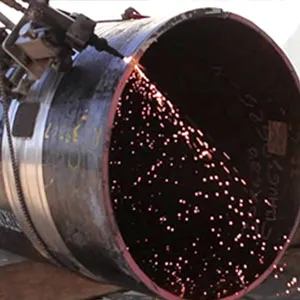
1. Cutting of thick-walled steel pipes: According to the actual required pipeline length, metal saws, and toothless saws should be used to cut the pipeline. When using water welding during the cutting process, the raw materials should be protected accordingly. When cutting, fireproof and heat-resistant materials should be used as baffles at both ends of the fracture to catch the sparks and hot iron water beans falling during cutting, and protect the original plastic layer of the raw materials.
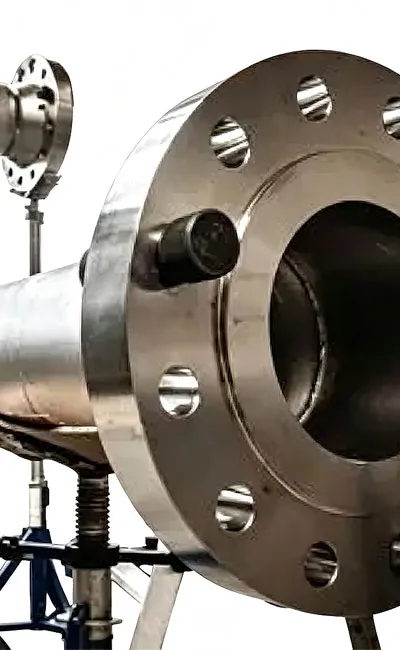
2. Thick-walled steel pipe connection: After the plastic filling is completed, the pipe and the pipe fittings are connected and installed. Rubber pads are added between the flanges during the connection process, and the bolts are tightened to a sealed state.
3. Thick-walled steel pipe plastic coating: After polishing, oxygen and C2H2 are used to heat the pipe mouth on the outside of the pipe until the internal plastic layer is melted. Then the technical workers will use the prepared plastic powder to evenly apply the pipe mouth. It should be noted that the corresponding application should be in place, and the flange plastic coating should be applied above the water stop line. The heating temperature should be strictly controlled during this process. If the temperature is too high, bubbles will be generated during the plastic coating process. If the temperature is too low, the plastic powder will not be completely melted during the plastic coating process. The above situation will cause the plastic layer to fall off after the pipeline is put into use, and the thick-walled steel pipe part of the pipeline will be corroded and damaged in the later stage.
4. Grinding of the pipe mouth of thick-walled steel pipe: After cutting, the plastic layer of the pipe mouth should be polished with an angle grinder to avoid melting or even burning of the plastic layer during flange welding, which may damage the pipe. Use an angle grinder to grind the plastic layer of the pipe mouth.
In order to improve the corrosion resistance of thick-walled steel pipes and extend the service life of products, thick-walled steel pipes need to be pickled and passivated to form a protective film on the surface. Thick-walled steel pipes have high hardenability, good machinability, and medium cold deformation plasticity and weldability. In addition, the toughness of steel does not decrease much during heat treatment, but it has quite high strength and wear resistance, especially when water quenching. However, this steel is highly sensitive to white spots, has a tendency to temper brittleness and overheating sensitivity during heat treatment, has high strength and hardenability, good toughness, small deformation during quenching, and high creep strength and long-term strength at high temperatures. It is used to manufacture forgings that require higher strength than 35CrMo steel and larger quenched and tempered sections, such as large gears for locomotive traction, supercharger transmission gears, rear axles, connecting rods, and spring clips with heavy loads. It can also be used for deep well drill pipe joints and salvage tools below 2000m and can be used for bending machine molds.
Post time: Apr-15-2025










 English
 Español
 русский язык
 Português