What is the material of the spiral pipe
Date: 2023-08-11
What is the material of the spiral pipe?
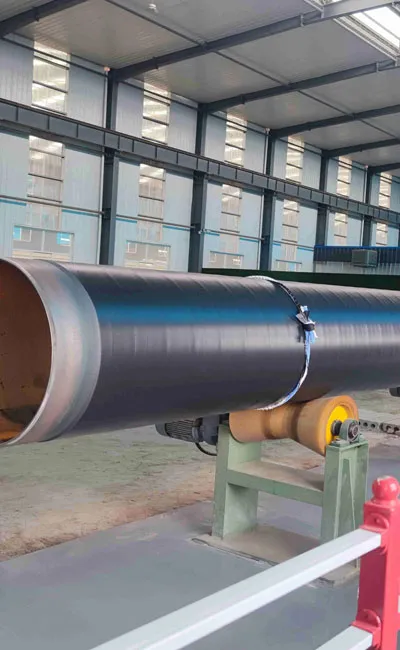
Spiral pipe is a spiral seam steel pipe made of strip steel coil as raw material, extruded at regular temperature, and welded by automatic double-wire double-sided submerged arc welding process. The spiral steel pipe feeds the steel strip into the welded pipe unit. After being rolled by multiple rollers, the strip steel is gradually rolled up to form a circular tube billet with an opening gap. Adjust the reduction of the extrusion roller to control the weld seam gap at 1~3mm and make the two ends of the weld joint flush.
Spiral pipe material:
Q235A, Q235B, 10#, 20#, Q345 (16Mn),
L245(B), L290(X42), L320(X46), L360(X52), L390(X56), L415(X60), L450(X65), L485(X70), L555(X80)
L290NB/MB(X42N/M), L360NB/MB(X52N/M), L390NB/MB(X56N/M), L415NB/MB(X60N/M), L450MB(X65), L485MB(X70), L555MB(X80).
Spiral pipe production process:
(1) Raw materials are strip steel coils, welding wires, and fluxes. Before putting into use, they must go through strict physical and chemical tests.
(2) The head-to-tail butt joint of strip steel adopts single-wire or double-wire submerged arc welding, and automatic submerged arc welding is used for repair welding after being rolled into steel pipes.
(3) Before forming, the strip steel is leveled, trimmed, planed, surface cleaned, transported and pre-bent.
(4) Electric contact pressure gauges are used to control the pressure of the cylinders on both sides of the conveyor to ensure the smooth conveying of the strip.
(5) Adopt external control or internal control roll forming.
(6) The weld gap control device is used to ensure that the weld gap meets the welding requirements, and the pipe diameter, misalignment and weld gap are strictly controlled.
(7) Both internal welding and external welding use American Lincoln welding machine for single-wire or double-wire submerged arc welding, so as to obtain stable welding quality.
(8) All the welded seams are inspected by the online continuous ultrasonic automatic flaw detector, which ensures 100% non-destructive testing coverage of the spiral welds. If there is a defect, it will automatically alarm and spray the mark, and the production workers can adjust the process parameters at any time according to this to eliminate the defect in time.
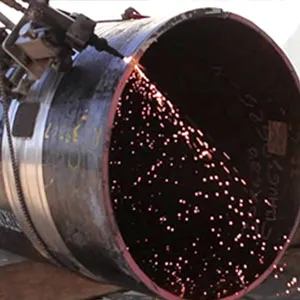
(9) Use an air plasma cutting machine to cut the steel pipe into single pieces.
(10) After cutting into single steel pipes, each batch of steel pipes must undergo a strict first inspection system to check the mechanical properties, chemical composition, fusion status of the welds, steel pipe surface quality and non-destructive testing to ensure that the pipe making process is qualified before it can be formally put into production.
(11) The parts marked by continuous ultrasonic flaw detection on the weld shall undergo manual ultrasonic and X-ray re-examination. If there are indeed defects, after repairing, they shall undergo non-destructive inspection again until the defects are confirmed to be eliminated.
(12) The tubes where the strip steel butt welds and the D-joints intersected with the spiral welds are all inspected by X-ray TV or film.
(13) Each steel pipe has undergone a hydrostatic pressure test, and the pressure is radially sealed. The test pressure and time are strictly controlled by the steel pipe water pressure microcomputer detection device. The test parameters are automatically printed and recorded.
(14) The pipe end is machined to accurately control the verticality of the end face, the bevel angle and the blunt edge.
The main process characteristics of spiral pipe:
a. During the forming process, the deformation of the steel plate is uniform, the residual stress is small, and the surface does not produce scratches. The processed spiral steel pipe has greater flexibility in the size and specification range of diameter and wall thickness, especially in the production of high-grade thick-walled pipes, especially small and medium-diameter thick-walled pipes.
b. Using advanced double-sided submerged arc welding technology, welding can be realized at the best position, and it is not easy to have defects such as misalignment, welding deviation and incomplete penetration, and it is easy to control the welding quality.
c. Carry out 100% quality inspection of steel pipes, so that the whole process of steel pipe production is under effective inspection and monitoring, effectively ensuring product quality.
d. All the equipment of the entire production line has the function of networking with the computer data acquisition system to realize real-time data transmission, and the technical parameters in the production process are checked by the central control room.
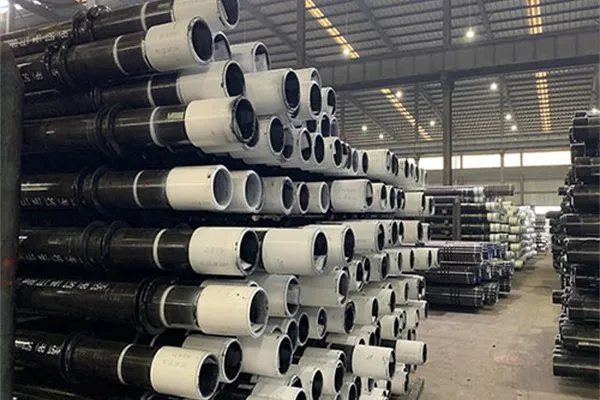
The stacking principles of spiral pipes require:
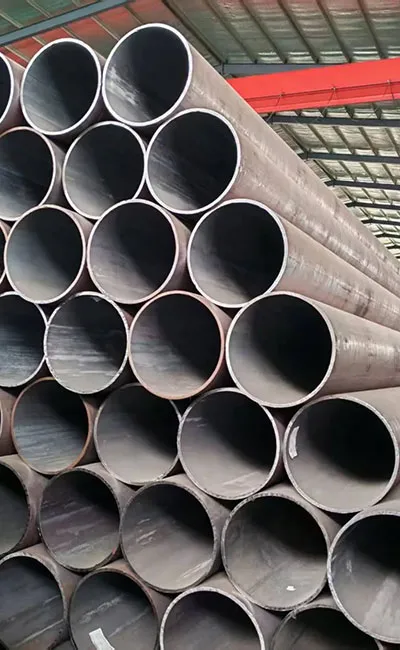
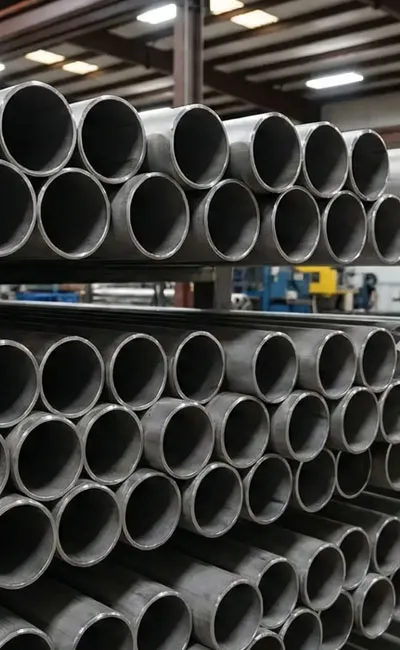
1. The principle requirement of spiral steel pipe stacking is to stack according to varieties and specifications under the premise of stable stacking and ensuring safety. Different types of materials should be stacked separately to prevent confusion and mutual erosion;
2. It is forbidden to store items that corrode steel around the stack of spiral steel pipes;
3. The bottom of the spiral steel pipe pile should be high, firm and flat to prevent the material from being damp or deformed;
4. The same material is stacked separately according to the order of storage;
5. For the spiral steel pipe sections stacked in the open air, there must be wooden pads or stone strips underneath, and the stacking surface is slightly inclined to facilitate drainage, and attention should be paid to placing the materials straight to prevent bending deformation;
6. The stacking height of spiral steel pipes shall not exceed 1.2m for manual work, 1.5m for mechanical work, and the stack width shall not exceed 2.5m;
7. There should be a certain channel between the stacks. The inspection channel is generally 0.5m, and the access channel depends on the size of the material and the transport machinery, generally 1.5-2.0m;
8. The angle steel and channel steel should be stacked in the open air, that is, the mouth should face downward, and the I-beam should be placed vertically. The I-channel surface of the steel should not face upward, so as to avoid water accumulation and rust;
9. The bottom of the stack is raised. If the warehouse is on a sunny concrete floor, it can be raised by 0.1m; if it is a mud floor, it must be raised by 0.2-0.5m. If it is an open field, the concrete floor shall be cushioned with a height of 0.3-0.5m, and the sand and mud surface shall be cushioned with a height of 0.5-0.7m.
Post time: Aug-11-2023










 English
 Español
 русский язык
 Português