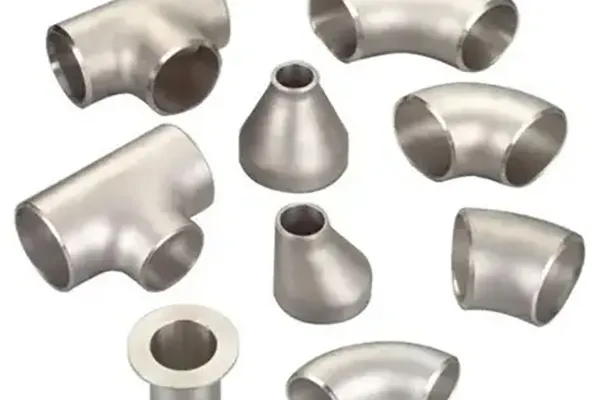
4. Confirm the Specification Before Ordering
A Steel Reducer inquiry should contain enough information for the supplier to identify the required product without making assumptions.
Confirm the following details:
- Steel Reducer type: Concentric or eccentric.
- Dimensions: Large-end and small-end nominal sizes.
- Material: Required grade and material specification.
- Wall thickness: Schedule or specified thickness at the relevant ends.
- Product standard: Applicable standard and edition.
- Connection details: End preparation and any specified dimensional requirements.
- Orientation: Required flat-side orientation for eccentric Steel Reducers, where applicable.
- Quality requirements: Inspection, testing, material certificates and other required documentation.
- Delivery details: Quantity, destination, packaging and requested delivery date.
Standards such as ASME B16.9 and EN 10253-2 cover specified categories of butt-welding fittings, including concentric and eccentric Steel Reducers within their respective scopes. They are not interchangeable by default. Confirm the required standard, material specification and inspection criteria against the project documents before placing an order. For further information, see the related article on Steel Reducer manufacturing and quality inspection once its verified company website URL is available.
5. Compare Quotations on a Like-for-Like Basis
A lower quotation does not necessarily represent a comparable offer. Before making a purchasing decision, check whether each supplier has quoted the same Steel Reducer type, sizes, material grade, wall thickness, standard and inspection scope. A concentric Steel Reducer is not an equivalent substitute for an eccentric Steel Reducer when the approved design requires an offset connection. Likewise, an offer that excludes required certificates or inspection should not be compared directly with one that includes those items. For international procurement, confirm the actual availability of the specified configuration and quantity. If stock is proposed to shorten delivery time, verify the product details and documentation before relying on the quoted lead time.
Common purchasing errors include specifying only the two nominal sizes, omitting the applicable standard, overlooking wall thickness or failing to state the required orientation of an eccentric Steel Reducer. These omissions can cause quotation delays, technical clarification requests or installation problems. Providing an approved drawing, piping isometric or item schedule helps communicate the intended configuration and reduces the risk of assumptions during procurement.
FAQ
Q1: Which is better, a concentric or eccentric Steel Reducer?
A1: Neither is universally better. A concentric Steel Reducer provides a centered transition, while an eccentric Steel Reducer allows one side to remain aligned. Selection depends on the piping layout, equipment requirements and operating conditions.
Q2: Are concentric and eccentric Steel Reducers interchangeable?
A2: Not automatically. Their geometry differs, and substituting one for the other may change the pipe alignment or affect the intended installation. Any substitution should be reviewed and approved by the responsible engineering team.
Q3: Should an eccentric Steel Reducer be installed flat-side up or flat-side down?
A3: It depends on the piping arrangement and service requirements. Confirm the orientation from the approved drawings and applicable engineering guidance rather than applying a universal rule.
Q4: What information is needed to order a Steel Reducer?
A4: Specify the Steel Reducer type, both end sizes, material grade, wall thickness, applicable standard, quantity, inspection requirements and delivery details. Include the required orientation for an eccentric Steel Reducer where applicable.
Choosing between concentric and eccentric Steel Reducers starts with the piping design, not the price or appearance of the fitting. Clear specifications and confirmation of orientation, material and inspection requirements help keep procurement aligned with project needs.












 English
 Español
 русский язык
 Português