
Hunan Great Steel Pipe Co., Ltd. has successfully completed the production and shipment of a batch of customized finned steel tubes for a waste heat recovery upgrade at a petrochemical refinery in Southeast Asia. The refinery was replacing an aging economizer that had gradually lost heat transfer efficiency after years of continuous service. Elevated flue gas temperatures were reducing energy recovery performance and increasing boiler fuel consumption. During the Front-End Engineering Design (FEED) stage, our engineering team worked with the customer to review operating temperatures, available installation space, corrosion conditions, and maintenance requirements before selecting the most suitable finned tube configuration. Instead of using a single fin design throughout the unit, the economizer was divided into high- and low-temperature operating zones. This approach improved thermal efficiency while balancing equipment reliability, maintenance intervals, and overall project cost.
The main challenge was the large difference between gas-side and liquid-side heat transfer performance. Expanding the heat exchanger footprint was not feasible because the existing economizer bay had limited space. Finned steel tubes were selected because they increase the external heat transfer surface area without requiring major equipment modifications. The additional fin surface allows more heat to be transferred from the flue gas to the process fluid, improving waste heat recovery efficiency and reducing energy consumption. For the high-temperature inlet section, high-frequency welded (HFW) steel finned tubes were chosen due to their strong metallurgical bond and stable performance under elevated operating temperatures. As the flue gas temperature decreased through the economizer, extruded aluminum finned tubes were used in the downstream section to provide excellent corrosion resistance and cost-effective heat transfer performance. Matching different fin structures to different operating conditions enabled the refinery to achieve both technical reliability and long-term operating efficiency.
Quality control was integrated throughout the manufacturing process rather than being limited to the final inspection stage. Each finned steel tube underwent dimensional inspection covering tube diameter, wall thickness, fin height, fin spacing, straightness, and overall length. Hydrostatic testing verified the pressure integrity of the base tubes, while ultrasonic testing and eddy current testing were used to identify potential manufacturing defects without damaging the finished products. Positive Material Identification (PMI) was also performed where required to confirm material grades against certified mill documentation. Before shipment, an independent SGS inspection team visited the manufacturing facility to witness hydrostatic testing, review production records, and randomly verify finished products. Following successful inspection, all finned steel tubes were released with EN 10204 Type 3.1 Material Test Certificates together with complete quality documentation, providing full traceability throughout the project.
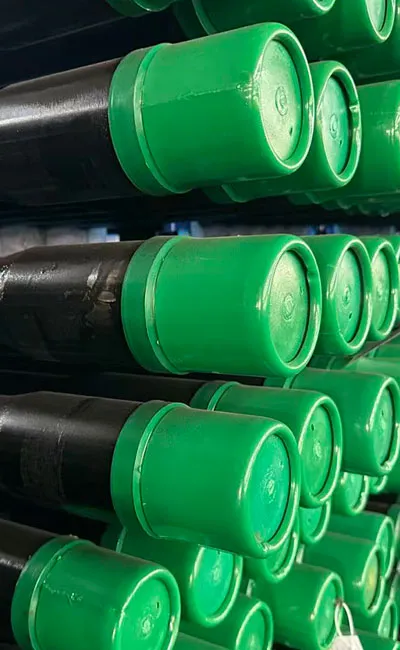
Because finned tubes are more susceptible to mechanical damage than plain steel pipes, transportation protection was carefully planned before shipment. Each tube was fitted with protective end caps and securely packed in reinforced steel crates with wooden supports to prevent movement during handling and ocean transportation. Moisture-resistant wrapping and desiccant materials were added to reduce the risk of corrosion during international transit. Detailed package labels identified product specifications, heat numbers, and inspection records, enabling efficient installation and traceability at the refinery site. The shipment was completed on schedule, allowing the customer to begin installation during the planned refinery shutdown without affecting the overall project timeline.
Finned steel tubes are widely used in boiler economizers, air-cooled heat exchangers, waste heat recovery systems, petrochemical facilities, power plants, offshore platforms, chemical processing equipment, and industrial HVAC applications. Selecting the appropriate fin type, material combination, and manufacturing process is critical for improving thermal efficiency, reducing maintenance costs, and extending equipment service life. With more than three decades of manufacturing experience, Hunan Great Steel Pipe Co., Ltd. provides customized finned steel tube solutions for industrial projects worldwide. From engineering consultation and manufacturing to inspection, documentation, and international logistics support, the company helps EPC contractors, equipment manufacturers, and industrial end users complete heat exchange projects with confidence.
Whether supporting a new facility or replacing existing equipment during scheduled maintenance, our engineering team works closely with customers to recommend finned steel tube solutions based on operating conditions, project requirements, and delivery schedules.








 English
 Español
 русский язык
 Português