Proper
pipe spool maintenance is essential for extending service life, preventing leaks, reducing unplanned shutdowns, and maintaining the integrity of industrial piping systems. A complete maintenance program typically includes routine visual inspection, corrosion protection, flange and weld inspection, support verification, periodic non-destructive testing (NDT), and maintenance record management. When these practices are performed according to the operating environment and applicable industry standards, pipe spools can deliver reliable performance throughout their design life. Proper material selection and
shop fabrication get you started. Maintenance keeps you running. This guide covers inspection intervals, corrosion protection, connection checks, and record-keeping for pipe spool systems across oil and gas, petrochemical, power, and industrial facilities.
Why Maintenance Matters
Piping systems run hot, pressurized, and often corrosive. Over time, that wears on walls, welds, flanges, and coatings. The question isn't if degradation happens — it's when and how fast. A preventive maintenance program delivers:
-
Fewer unplanned shutdowns
-
Extended equipment life
-
Lower repair costs — catching issues early costs 3-5× less than emergency fixes
-
Compliance with facility safety requirements
-
Support for ASME B31.3, API 570, and ASME PCC-2 maintenance standards
Most facilities build spool inspections into turnaround schedules. Critical process lines get more frequent checks than utility piping.
One interval doesn't fit all. Base frequency on operating conditions, not convenience. Routine inspection scope:
-
External visual check — corrosion, coating damage, dents, impact marks
-
Weld examination — surface cracks, discoloration, deformation
-
Flange and gasket checks — leaks, loose bolts, gasket condition
-
Support verification — hangers, guides, thermal expansion clearance
-
Vibration monitoring — investigate any movement that wasn't there six months ago
When to increase inspection frequency:
-
Corrosive service — H₂S, chlorides, acids
-
High temperature — above 400°C
-
Cycling service — daily starts and stops
-
Offshore or marine exposure
-
Vibration-prone locations — near compressors or turbines
Corrosion Protection — Where Most Failures Start
Corrosion is the leading cause of
pipe spool degradation. Proper coating during fabrication is the first line of defense. Maintenance is the second. Regular check points:
-
Coating condition at support points and clamp locations — where moisture collects
-
Weld heat-affected zones — corrosion initiates here if coating was damaged
-
Flange faces and bolt threads — crevice corrosion sites
-
Insulated lines — CUI (corrosion under insulation) is common in steam and chilled water service above 120°C
Coating damage repair rule: Fix it the same shift you spot it. Moisture under damaged coating spreads corrosion faster than exposed steel. Use a compatible repair system matching the original specification. For buried spools, verify cathodic protection readings per the facility schedule. For offshore installations, inspect coatings at least annually and wash down salt-exposed surfaces.
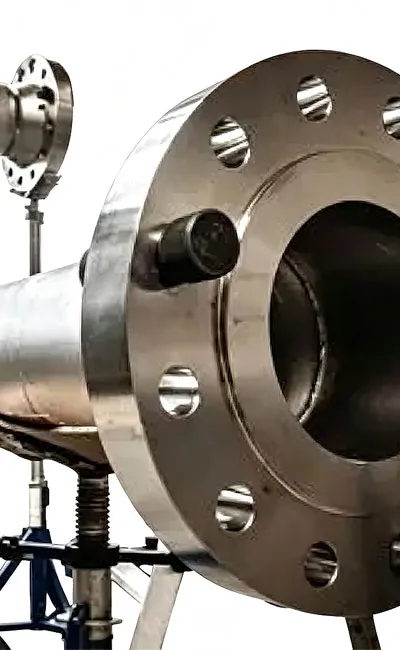
Welds and flanges are the highest-risk points on any spool. This is where leaks start and stress concentrates. Flange maintenance:
-
Re-torque bolts after the first heat cycle and at scheduled intervals — thermal cycling loosens fasteners
-
Inspect gaskets during shutdowns — replace if crushed, extruded, or aged
-
Check flange sealing surfaces — pitting or scratches deeper than 0.5 mm require resurfacing or replacement
Weld inspection:
-
Visual for cracks, undercut, or discoloration (overheating)
-
For critical services, NDE on a scheduled basis: MT or PT for surface cracks, UT or RT for subsurface defects
Practical rule: If a flange leaks, don't just tighten it. Check the gasket and flange faces. If the gasket is damaged, replace it. If faces are warped, replacement is required — more torque won't fix it.
Support and Mechanical Stress Checks
Pipe spools rely on supports for load distribution and thermal movement. When supports fail, stress transfers to welds and flanges. What to check:
-
Support alignment — pipe should rest on the support, not be forced
-
Thermal clearance — guides must allow movement, not restrict it
-
Pipe displacement — observe during startup for excessive movement
Investigate new vibration immediately. It usually means support loosening, foundation settlement, or equipment imbalance. All three stress the piping system.
Record-Keeping — Not Paperwork, Trend Data
Maintenance records are engineering data, not administrative files. What to log:
-
Inspection dates and results
-
UT thickness readings — trend wall loss rates over time
-
Coating repairs — location, date, material used
-
Flange torque values and gasket types installed
-
NDE findings and locations
Why it matters: A spool that lost 0.5 mm of wall thickness in one year will lose another 0.5 mm in the next — unless something changes. Records show the trend. Guessing doesn't.
Common Maintenance Mistakes
|
Mistake
|
Result
|
|
Delaying coating repair
|
Corrosion spreads under damaged area
|
|
Ignoring small flange leaks
|
Gasket failure becomes full leak during startup
|
|
Using non-spec replacement fasteners
|
Corrosion accelerates, torque values don't hold
|
|
Skipping scheduled UT checks
|
Wall thinning undetected until perforation
|
|
Not logging repair history
|
Same issue repeats, no one knows why
|
Frequently Asked Questions
Q1: How often should pipe spools be inspected?
A1: Depends on service. Critical process lines: annual UT and visual checks. Utility lines: every 2-3 years or at scheduled turnaround.
Q2: What's the most common cause of pipe spool failure?
A2: Corrosion — external coating damage and internal process corrosion are the top two.
Q3: Should NDE be part of maintenance programs?
A3: Yes. For high-pressure, high-temperature, or sour service, periodic UT or MT detects hidden defects before they cause failure.
Q4: Why are maintenance records important?
A4: Records track wall loss trends, identify recurring issues, and support replacement planning — not just documentation.
Summary
Pipe spools don't fail suddenly. They degrade — coating gets damaged, walls thin, flanges relax, corrosion spreads. Maintenance catches these before they become leaks or ruptures. Set inspection intervals based on service severity. Check coatings, flanges, welds, and supports. Re-torque after thermal cycles. Log UT thickness readings and repair histories. Facilities that treat maintenance as engineering work — not checklist activity — consistently get 20+ years out of properly specified spools. Those that don't, replace them at the next turnaround. And that costs more.










 English
 Español
 русский язык
 Português