Product News

Hunan Great Steel Pipe Co., Ltd
pipe spool procurement,pipe spool supplier,prefabricated piping,ASME B31,3 spool fabrication,pipe spool quotation,NDE for pipe spools

How to Procure Pipe Spools: Specifications, Supplier Evaluation, and Quality Control Guide

Date: 2026-06-24

Pipe spools are shop-fabricated piping assemblies delivered to site for final tie-in. They reduce field welds by 60-80% and compress installation schedules by 30-40%. But procurement is where many projects stumble — not at fabrication, but during specification and supplier selection. This guide covers the procurement fundamentals: technical documentation, supplier capability assessment, inspection planning, corrosion protection, and logistics coordination.


Why Pipe Spool Procurement Matters

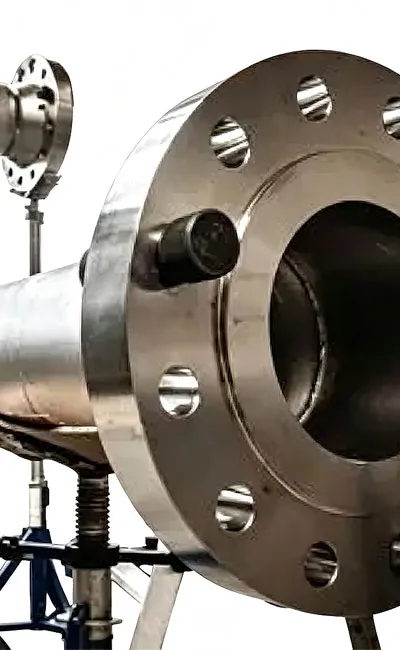
Pipe spools are prefabricated assemblies consisting of pipes, fittings, flanges, and welded joints that are manufactured in a controlled workshop environment and delivered to site for final installation. Widely used in oil and gas, power generation, petrochemical, water treatment, and industrial facilities, pipe spools help reduce field welding, improve installation efficiency, and enhance construction quality. However, many project delays and budget overruns originate during the procurement stage. Incomplete specifications, inadequate supplier qualification, and unclear inspection requirements can lead to costly rework and installation challenges. A structured procurement process helps ensure that every spool meets project requirements before it arrives on site.


Start with Complete Technical Documentation

Accurate documentation is the foundation of successful pipe spool procurement. Before requesting quotations, buyers should prepare:

  • Spool drawings or fabrication isometrics
  • Material specifications and applicable standards
  • Pipe dimensions and wall thickness requirements
  • Flange ratings and facing types
  • Welding and inspection requirements
  • Surface treatment or coating specifications
  • Applicable design codes such as ASME B31.3 or ASME B31.1


For critical applications involving sour service, high pressure, or elevated temperatures, additional requirements such as NACE compliance, hardness limitations, and post-weld heat treatment (PWHT) should be clearly defined at the quotation stage.


  • NACE MR0175 / ISO 15156 compliance for H₂S resistance
  • Maximum hardness limits — typically ≤22 HRC for weld caps
  • Post-weld heat treatment (PWHT) requirements

Providing complete technical information reduces clarification cycles, improves quotation accuracy, and minimizes project delays.


Evaluate Suppliers Beyond Price

Selecting a supplier based solely on the lowest quotation often creates higher costs later through repairs, schedule delays, and quality issues. A qualified supplier should demonstrate strength in four key areas:
Welding Capability. Verify the manufacturer can provide qualified Welding Procedure Specifications (WPS), Procedure Qualification Records (PQR), and certified welders for the required processes. For alloy steel, duplex stainless steel, or nickel alloy projects, proven experience with similar materials is critical.
Quality Control and NDE Capability. Suppliers should have established inspection procedures and in-house or direct access to required Non-Destructive Examination (NDE) methods including Visual Testing (VT), Radiographic Testing (RT), Ultrasonic Testing (UT), Magnetic Particle Testing (MT), and Dye Penetrant Testing (PT). Shops with in-house NDE capability typically deliver faster turnaround than those that subcontract.
Dimensional Accuracy. Pipe spools must fit precisely during installation. Manufacturers should perform dimensional inspections throughout fabrication and maintain tolerances per ASME B31.3 — typically ±3 mm on end-to-end dimensions and ±1.5 mm on flange bolt-hole rotation.
Production Capacity. Evaluate manufacturing capability, delivery history, workshop capacity, and current backlog. A shop operating at 90% capacity will struggle to expedite urgent orders.


Define Inspection Requirements Clearly

Inspection requirements should be included directly in the purchase order and Inspection & Test Plan (ITP). The table below summarizes common quality control checkpoints.

Production Stage

Inspection Activity

Material Receiving

Material certificate verification, PMI (if specified)

Fit-Up Inspection

Dimensional verification per spool drawing

Welding Completion

Visual inspection and NDE (RT/UT/MT/PT per spec)

Heat Treatment (if required)

Hardness testing — ≤22 HRC or per project specification

Pressure Testing

Hydrostatic testing at 1.5× design pressure — 10 sec hold minimum

Final Inspection

Documentation review, coating DFT, and release

Hold points — where the buyer must witness inspections — should be stated upfront. Do not assume the supplier will pause production without a formal hold point in the ITP.

Select the Right Corrosion Protection System

Corrosion protection requirements vary significantly depending on operating conditions.


Service Environment

Typical Protection Method

Indoor Industrial Service

Shop primer only — temporary protection

Outdoor Exposure

Epoxy coating (80-120 µm DFT)

Underground Pipelines

FBE or 3PE coating — impact- and abrasion-resistant

Marine and Offshore Service

Glass-flake epoxy or hot-dip galvanizing

Chemical / Sour Service

Specialized linings (PTFE, rubber, or internal coatings)

For buried spools, specify tape wrapping or shrink-sleeve protection at field joints — shop coating alone is insufficient for long-term underground service.


Plan Logistics Early

Even well-manufactured pipe spools create project challenges if logistics are overlooked. Before placing an order, confirm:
  • Maximum transport dimensions and weight limits against site crane and road access
  • Packaging requirements — steel cribbing, end caps, waterproof wrapping for sea freight
  • Delivery sequence — spools should arrive in installation order, not all at once
  • Storage conditions at the project site
A common mistake: ordering all spools in one shipment, then paying double handling and extra laydown area costs. Stage deliveries to match the mechanical completion schedule.

Common Procurement Pitfalls

Industry data from energy, petrochemical, and infrastructure projects consistently shows that the most common procurement challenges stem from:
  • Incomplete or ambiguous specifications that generate clarification delays
  • Inspection requirements not defined in the purchase order, leading to disputes
  • Delivery schedules misaligned with site installation sequence

Early engineering review, formal supplier qualification, and a detailed ITP address all three. Projects that treat procurement as a technical engineering function — not a purchasing exercise — consistently report fewer field modifications and faster mechanical completion.
Frequently Asked Questions

Q1: What information is required for a pipe spool quotation?
A1: Suppliers typically need spool drawings, material specifications, dimensions, applicable standards, inspection requirements, coating specifications, and project quantities.

Q2: How do I evaluate a pipe spool supplier?
A2: Review welding qualifications, NDE capability, dimensional control processes, quality management systems, delivery performance, and relevant project experience.

Q3: Which inspections are commonly required for pipe spools?
A3: Common inspections include VT, RT, UT, MT, PT, hydrostatic testing, dimensional inspection, and coating inspection — scope depends on project specifications.

Q4: Why is supplier capability more important than price?
A4: Experienced suppliers deliver higher weld acceptance rates (95-98% vs. 85-90% in field), reduce rework, and minimize installation delays — often delivering greater overall value than the lowest initial quotation.

Summary

Effective pipe spool procurement starts with complete technical specifications and extends through supplier qualification, defined inspection points, appropriate corrosion protection, and logistics sequencing. Projects that prioritize engineering requirements and quality control over initial price achieve smoother installation, lower rework rates, and reduced total ownership costs. A structured procurement process — with clear documentation and supplier capability verification — directly improves project outcomes and long-term operational reliability.

Latest news list

  • pipe spool installation,install pipe spools,prefabricated piping installation,ASME B31,3 piping,field welding for pipe spools,piping system commissioning
    Pipe spools reduce field welds by 60-80% and compress installation schedules by 30-40%,By moving fabrication from site to shop,project teams gain consistent weld quality and fewer weather delays,But a well-fabricated spool still needs proper installation — receiving checks,lifting,alignment,field welding,testing,and commissioning all affect final system performance,This guide covers the complete installation process for oil and gas,petrochemical,power generation,and industrial construction projects,
  • pipe spool fabrication,pipe spool manufacturing,spool welding,ASME B31,3 pipe fabrication,prefabricated piping,NDE for pipe spools
    Pipe spools are shop‑assembled piping sections built from pipes,fittings,flanges,and welded joints,They arrive on site ready for final tie‑in — reducing field welds by 60‑80% and cutting installation schedules by 30‑40%,Oil and gas facilities,power plants,chemical processors,and water treatment projects all rely on them,
  • pipe spool,pipe spool configuration,pipe spool selection,prefabricated pipe spool,industrial piping systems,pipe spool fabrication,oil and gas pipe spool
    A pipe spool is a shop-fabricated assembly of pipe sections,fittings,flanges,and welded joints that is manufactured according to engineering drawings and delivered to site ready for installation,While the concept is straightforward,selecting the correct pipe spool configuration requires careful consideration of operating conditions,material performance,fabrication requirements,and inspection standards,
  • overseas warehouse,global warehouse network,steel pipe local stock,overseas inventory solutions,steel procurement logistics,fast steel pipe delivery,global supply chain solutions
    To address growing global demand for faster delivery,lower logistics costs and reliable supply chains,our group has officially launched a global overseas warehouse layout,with operational facilities in the United Arab Emirates (Middle East),Poland (Europe),and Brazil (South America),By establishing local stock and fulfillment centers,we enable direct local spot delivery,shorten lead times from 20–45 days to 1–3 days,reduce international logistics expenses by 30–50%,and deliver consistent,stable performance for global buyers,
  • pipe spool,pipe spool fabrication,prefabricated pipe spool,pipe spool manufacturing,ASME B31,3 pipe spool,pipe spool applications,piping prefabrication,welded pipe spool
    A pipe spool is a prefabricated section of a piping system that includes pipes,fittings,flanges,and welded components assembled in a controlled fabrication facility before being transported to a project site for installation,Pipe spools are widely used in oil and gas,petrochemical,power generation,offshore,and industrial processing projects because they improve construction efficiency,quality control,and project scheduling,

Find what you need ?

close
We use cookies and other tracking technologies to improve your browsing experience on our website, to show you personalized content and targeted ads, to analyze our website traffic, and to understand where our visitors are coming from.