Product News

Hunan Great Steel Pipe Co., Ltd
pipe spool failure,pipe spool troubleshooting,flange leak repair,corrosion in pipe spools,weld defect repair,pipe spool inspection,ASME B31,3 maintenance

How to Troubleshoot Pipe Spool Failures: Causes, Repairs, and Prevention Guide

Date: 2026-06-25

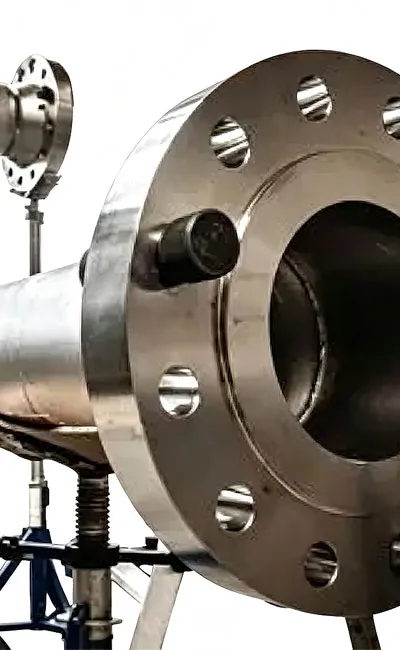
Pipe spools are shop-fabricated piping assemblies. They reduce field welds by 60-80% and speed up installation. But failures still happen — corrosion, vibration, thermal stress, or installation errors all take their toll. When a spool fails, the priority is two things: get the system back online, and figure out why it failed. Fixing the symptom without finding the cause guarantees a repeat failure. This guide covers common failure types, how to troubleshoot them, and what works for prevention.


Common Failure Types and What Causes Them

Most pipe spool failures fall into four buckets:

Failure Type

Typical Cause

What You See

Flange leakage

Gasket failure, uneven bolt torque, misalignment

Drips, pressure drop

Corrosion/wall thinning

Aggressive media, coating damage, moisture

Reduced wall thickness, pitting

Weld cracking

Thermal stress, poor WPS, fatigue

Visible cracks, failed NDE

Deformation

Support failure, thermal expansion, vibration

Misaligned flanges, bent sections


Each failure type has a different root cause. The repair method follows the root cause — not the symptom.
Step 1: Isolate and Gather Data

Before any repair, shut down and isolate the affected line per plant procedure. Depressurize, drain, and verify zero energy. What to collect before touching the spool:
  • Operating records — pressure, temperature, flow rates at time of failure
  • Maintenance history — previous repairs, inspection dates, coating work
  • Original spool drawing and material spec
  • Design conditions vs. actual operating conditions
In many cases, the failure trace goes back to an operating change — higher temperature, different feedstock, or a startup/shutdown cycle that wasn't recorded. That data is your first lead.

Step 2: Root Cause Analysis — Don't Guess

Flange Leaks

Flange leaks are common. Most trace to one of these:
  • Gasket material wrong for the service temperature or chemical exposure
  • Bolt torque not applied in sequence, or torque wrench not calibrated
  • Flange face damage — scratches, pitting, or warped from over-tightening
  • Thermal cycling — flanges loosen after repeated heat-cold cycles
Check: Look at the old gasket. If it's crushed unevenly, bolt torque was inconsistent. If it's deformed or discolored, wrong material.

Corrosion and Wall Thinning

Corrosion happens internally (process fluid) or externally (coating failure, moisture).

Quick field check: Ultrasonic thickness (UT) readings at multiple points around the spool. Compare to original wall thickness. If wall loss exceeds 12.5% of nominal (per ASME B31.3 allowance), replacement is typically required. Common corrosion drivers:
  • Chlorides in the process stream
  • Condensation under insulation (CUI — corrosion under insulation)
  • Coating damage from installation or impact

Weld Defects and Cracking

Weld cracking shows up in NDE — RT, UT, MT, or PT depending on material and access.
Causes:
  • WPS not qualified for the material/wall thickness combination
  • Preheat skipped or interpass temperature not controlled (especially on alloy steels)
  • Fatigue — cyclic pressure or thermal loading
  • Hydrogen cracking — common on high-strength carbon steel without proper PWHT
Hardness testing at the weld cap can reveal problems — readings above 22 HRC for sour service or 25 HRC for general carbon steel indicate excessive hardness and cracking risk.

Step 3: Repair Options — What Works, What Doesn't

Flange Leak Repairs

  • Retorque bolts to specified value using a calibrated wrench. Criss-cross sequence, three stages (30% → 60% → 100%).
  • If leak continues, replace gasket. Inspect flange faces — scratches deeper than 0.5 mm require resurfacing or replacement.
  • If flange faces are warped (beyond 0.5 mm out-of-flat), the flange needs replacement. Resurfacing won't fix warped flanges.

Corrosion Damage

  • Wall loss under 12.5%: acceptable per ASME B31.3 — monitor and re-inspect.
  • Wall loss 12.5-25%: weld overlay or reinforcement sleeve — but this requires engineering evaluation and WPS qualification.
  • Wall loss above 25%: replace the spool. Sleeving at this level is temporary at best.
Replacement is almost always cheaper than sleeving when you factor in engineering time, NDE, and risk.

Weld Repairs

  • Grind out the defective weld area.
  • Re-weld using qualified WPS — same preheat, interpass, and PWHT requirements as original.
  • NDE the repair — RT or UT for pressure welds, MT/PT for surface.
  • Hydrotest if the repair is on a pressure-containing weld.
Critical rule: No shortcuts on PWHT. If the original spec required post-weld heat treatment, the repair does too. Cold cracking shows up days or weeks later.

Step 4: Verification — Test Before You Re-start

After repair:
  • VT (visual) on all repaired welds and flange connections
  • NDE per the original spec — RT, UT, MT, or PT as required
  • Hydrotest at 1.5× design pressure — 10-minute hold, no leakage
Hydrotest catches what NDE misses — pinhole leaks, gasket seating issues, flange alignment problems.

Prevention — What Actually Works

Three prevention strategies that deliver measurable results:
1. Fixed-interval UT thickness checks. Annual on critical service, biennial on general. Track the trend — wall loss accelerates once coating fails.
2. Flange management program. Each flange gets a record: bolt size, torque value, gasket type, and installation date. Re-torque after first heat cycle — most leaks happen then.
3. Coating repair on sight. If you see coating damage, repair it the same shift. Moisture under coating is a corrosion starter.

Frequently Asked Questions

Q1: What's the most common pipe spool failure in refineries?
A1: Flange leaks, followed by wall thinning from corrosion under insulation (CUI).

Q2: When do you replace vs. repair a spool?
A2: Wall loss above 25% of nominal thickness — replace. Weld defects — repair if confined to a single joint. Multiple defects across the spool — replace.

Q3: How often should spools be inspected?
A3: Critical services (high pressure, H₂S, >400°C): annually. Non-critical: every 2-3 years, or at turnaround.

Summary

Pipe spool failures — flange leaks, corrosion, weld cracking, or deformation — are manageable when you follow a structured process: isolate, gather data, identify the root cause, select the right repair, and verify with testing. The most expensive repair is the one you do twice because you didn't fix the cause. Prevention is inspection, documentation, and timely action — not guesswork. Spools that get regular UT checks and flange torque records consistently outlast those that don't.

Latest news list

  • pipe spool installation,install pipe spools,prefabricated piping installation,ASME B31,3 piping,field welding for pipe spools,piping system commissioning
    Pipe spools reduce field welds by 60-80% and compress installation schedules by 30-40%,By moving fabrication from site to shop,project teams gain consistent weld quality and fewer weather delays,But a well-fabricated spool still needs proper installation — receiving checks,lifting,alignment,field welding,testing,and commissioning all affect final system performance,This guide covers the complete installation process for oil and gas,petrochemical,power generation,and industrial construction projects,
  • pipe spool procurement,pipe spool supplier,prefabricated piping,ASME B31,3 spool fabrication,pipe spool quotation,NDE for pipe spools
    Pipe spools are shop-fabricated piping assemblies delivered to site for final tie-in,They reduce field welds by 60-80% and compress installation schedules by 30-40%,But procurement is where many projects stumble — not at fabrication,but during specification and supplier selection,This guide covers the procurement fundamentals: technical documentation,supplier capability assessment,inspection planning,corrosion protection,and logistics coordination
  • pipe spool fabrication,pipe spool manufacturing,spool welding,ASME B31,3 pipe fabrication,prefabricated piping,NDE for pipe spools
    Pipe spools are shop‑assembled piping sections built from pipes,fittings,flanges,and welded joints,They arrive on site ready for final tie‑in — reducing field welds by 60‑80% and cutting installation schedules by 30‑40%,Oil and gas facilities,power plants,chemical processors,and water treatment projects all rely on them,
  • pipe spool,pipe spool configuration,pipe spool selection,prefabricated pipe spool,industrial piping systems,pipe spool fabrication,oil and gas pipe spool
    A pipe spool is a shop-fabricated assembly of pipe sections,fittings,flanges,and welded joints that is manufactured according to engineering drawings and delivered to site ready for installation,While the concept is straightforward,selecting the correct pipe spool configuration requires careful consideration of operating conditions,material performance,fabrication requirements,and inspection standards,
  • overseas warehouse,global warehouse network,steel pipe local stock,overseas inventory solutions,steel procurement logistics,fast steel pipe delivery,global supply chain solutions
    To address growing global demand for faster delivery,lower logistics costs and reliable supply chains,our group has officially launched a global overseas warehouse layout,with operational facilities in the United Arab Emirates (Middle East),Poland (Europe),and Brazil (South America),By establishing local stock and fulfillment centers,we enable direct local spot delivery,shorten lead times from 20–45 days to 1–3 days,reduce international logistics expenses by 30–50%,and deliver consistent,stable performance for global buyers,

Find what you need ?

close
We use cookies and other tracking technologies to improve your browsing experience on our website, to show you personalized content and targeted ads, to analyze our website traffic, and to understand where our visitors are coming from.