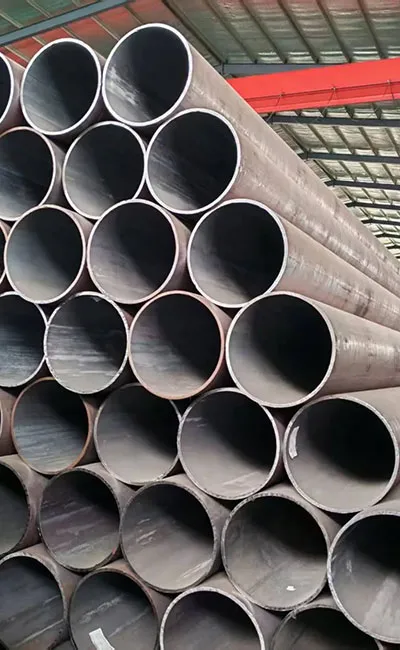
5. Confirm OD, Wall Thickness and Schedule
A suitable grade can still be unsuitable if the dimensions are incorrect. Buyers should confirm:
-
Nominal pipe size or outside diameter
-
Wall thickness
-
Schedule, where applicable
-
Pipe length
-
End preparation
-
Dimensional tolerances
ASME B36.19 covers the standardized dimensions of welded and seamless wrought stainless steel pipe for high- or low-temperature and pressure applications. For project orders, dimensional requirements should be confirmed before production rather than adjusted after the material has been manufactured.
The product standard defines important requirements for material, manufacturing, testing and acceptance. ASTM A312/A312M, for example, covers seamless, straight-seam welded and heavily cold-worked welded austenitic stainless steel pipe for high-temperature and general corrosive service. Depending on the specified grade and purchase requirements, inspection can include chemical, mechanical, dimensional and nondestructive testing. Not every project requires the same supplementary inspection. The purchase specification should clearly identify the applicable tests, inspection level and documentation requirements.
7. Consider Thermal Expansion and the Complete Piping System
Stainless steel expands when heated. Long piping systems therefore need to accommodate thermal movement through appropriate supports, guides, expansion loops or other engineering measures where required. The pipe itself may meet the material specification, but the overall system can still experience stress or deformation if thermal expansion is not properly considered. This is why pipe selection should be coordinated with fittings, flanges, valves, supports, insulation and the applicable piping design.
8. What Should Buyers Confirm Before Ordering?
For a high-temperature stainless seamless steel pipe RFQ, buyers should provide at least:
(1)Material grade
(2)Product standard
(3)Design temperature and pressure
(4)Process fluid
(5)OD and wall thickness
(6)Length and quantity
(7)End preparation
(8)Inspection and testing requirements
(9)MTC and heat-number traceability requirements
(10)Packing and delivery requirements
Providing this information at the quotation stage reduces specification gaps and makes supplier comparisons more meaningful.
FAQ
Q1: What stainless steel grade is suitable for high-temperature applications?
A1: There is no single grade suitable for every high-temperature application. Selection depends on temperature, pressure, fluid chemistry, corrosion conditions, design code and project requirements. Some H-grade austenitic stainless steels are specifically intended for service where creep and stress-rupture properties are important.
Q2: Is seamless stainless steel pipe always better for high-temperature service?
A2: No. Seamless construction may be required for specific pressure, temperature or project conditions, but it should be selected according to the applicable design and purchasing requirements.
Q3: Does wall thickness affect high-temperature pipe performance?
A3: Yes. Wall thickness must satisfy the pressure and mechanical requirements of the piping design. Corrosion allowance may also need to be considered for corrosive service.
Q4: What should be included in a high-temperature stainless pipe RFQ?
A4: The RFQ should normally define the grade, product standard, design temperature, design pressure, process fluid, dimensions, length, end preparation, inspection requirements, documentation and delivery conditions.
Final Takeaway
Choosing stainless seamless steel pipe for high-temperature service is a specification decision, not simply a material-grade decision. Temperature, pressure, process fluid, stainless grade, seamless construction, wall thickness, applicable standards, inspection and thermal expansion all need to be considered together. For project procurement, a clear technical specification before quotation provides a better basis for comparing suppliers and reduces the risk of material or documentation problems later in the project.










 English
 Español
 русский язык
 Português