5. Inspect the Pipe Surface
Surface inspection can identify visible conditions that may affect service, fabrication, or further processing. Depending on the specification and application, checks may identify:
-
Cracks
-
Pits
-
Laps
-
Scratches
-
Scale
-
Surface marks
-
Other unacceptable imperfections
Surface requirements are not identical for every application. A process pipe, heat-exchanger component, and general industrial pipe may have different finishing and acceptance requirements. The buyer should therefore evaluate the surface against the agreed specification rather than judging quality only by appearance.
6. Define the Appropriate NDT
Non-destructive testing can provide additional information about specified discontinuities without damaging the pipe. Depending on the applicable standard and project requirements, inspection may involve ultrasonic, eddy current, or other specified examination methods. The inspection method should be linked to the product specification and expected damage mechanism. Buyers should confirm:
-
NDT method
-
Inspection extent
-
Acceptance criteria
-
Applicable standard
-
Inspection records
NDT should be treated as a defined inspection requirement, not simply listed as a marketing claim.
7. Confirm Hydrostatic or Alternative Testing
For pressure-service applications, hydrostatic testing may be required by the governing specification. ASTM A312/A312M, for example, requires each pipe to undergo the specified nondestructive electric test or hydrostatic test under the standard's requirements. The buyer should confirm which test applies to the order and what documentation is required. Hydrostatic testing, NDT, dimensional inspection, and mechanical testing provide different types of evidence. One test should not automatically be treated as a replacement for another requirement unless the applicable specification permits it.
8. Check MTC and Full Traceability
Inspection results become much more valuable when they can be traced back to the material and production record. Depending on the order, the documentation package may include:
-
Material Test Certificate (MTC)
-
Chemical analysis
-
Mechanical test results
-
Heat-treatment records
-
NDT reports
-
Dimensional inspection records
-
Hydrostatic test records
-
Certificate of conformity
-
Inspection certificate according to EN 10204, where specified
For international projects, buyers should agree on documentation requirements before production starts.
What Should Buyers Ask a Stainless Seamless Steel Pipe Supplier?
Instead of asking only whether a supplier has “quality control,” ask specific questions:
-
What standard and grade will be used?
-
How is the heat number controlled?
-
What manufacturing and heat-treatment route is proposed?
-
Which inspections and tests are included?
-
What are the acceptance criteria?
-
Can the inspection results be traced to the supplied pipes?
-
What documents will be included before shipment?
These questions make supplier comparison more objective and reduce uncertainty during receiving inspection and project acceptance.
Quality Control Evidence Buyers Should Look For
Where available, real manufacturing and inspection evidence can help verify the supplier's process. Useful evidence may include:
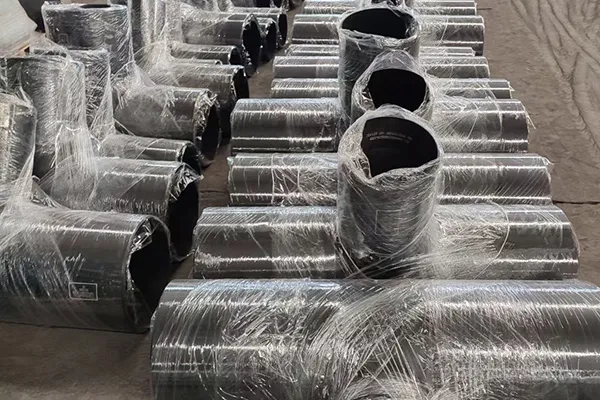
Billet identification → Heat treatment → Dimensional inspection → NDT → Testing → Marking → Final inspection. Factory photographs, inspection records, sample MTCs, and traceability examples can demonstrate how quality is controlled in practice. For project procurement, evidence of the process is generally more useful than broad claims such as “strict quality control” or “advanced technology.”
FAQ
Q1: What is the most important quality check for stainless seamless steel pipe?
A1: There is no single inspection that proves overall quality. Material verification, dimensional inspection, mechanical testing, heat-treatment control, NDT where required, pressure testing, and traceability should be considered together.
Q2: How can buyers verify the stainless steel grade?
A2: Review the material certificate and chemical analysis and confirm that the heat number on the documentation can be traced to the supplied pipe.
Q3: Is hydrostatic testing always required?
A3: Not necessarily. Testing requirements depend on the applicable product standard, pipe grade, service conditions, and purchase specification. Buyers should confirm the requirement before production.
Q4: What documents should accompany stainless seamless steel pipe?
A4: Depending on the project, documentation may include MTCs, chemical and mechanical test results, heat-treatment records, NDT reports, dimensional inspection records, test reports, and EN 10204 inspection documentation where specified.
Q5: Why is traceability important?
A5: Traceability connects the finished pipe with its original material, production information, inspection results, and certificates. It provides buyers with evidence that the supplied pipe corresponds to the agreed specification.
Final Takeaway
Stainless seamless steel pipe quality is not established by final visual inspection alone. A reliable quality-control system connects:
Raw Material → Manufacturing → Heat Treatment → Dimensional Control → Testing → NDT → Traceability → Documentation. For technical buyers, the key question is not simply “Does the pipe look good?”It is:
“Can the supplier provide verifiable evidence that the pipe was manufactured, inspected, tested, and documented according to our specification?”That is the basis for a more reliable stainless seamless steel pipe procurement decision.








 English
 Español
 русский язык
 Português