How to choose seamless pipe, welded pipe and forged pipe
Date: 2023-03-22
How to choose seamless pipe, welded pipe and forged pipe?
When you’re first looking for steel pipe, whether for a desalination plant, an oil rig, or a nuclear power plant, the first question you need to ask yourself is “do I need seamless, welded, or forged “pipes”?” These three Each type has different benefits and is therefore suitable for different applications and environments. There are several factors that should be considered when choosing what is right for a particular project.
Engineers will likely know the answer to this question intuitively, but let’s take a moment to explore these seamless pipe, welded pipe and forged pipes and their various properties.
1. Seamless pipe
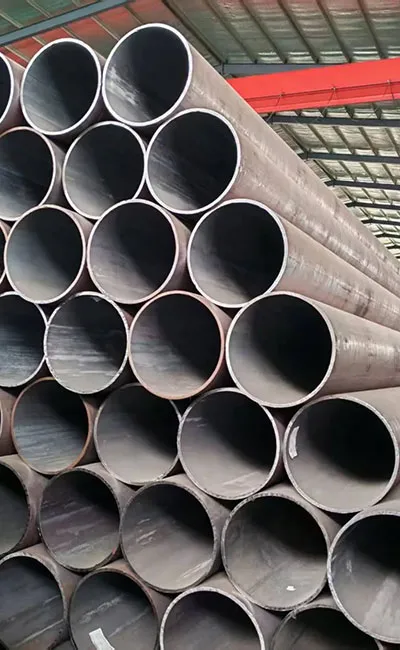
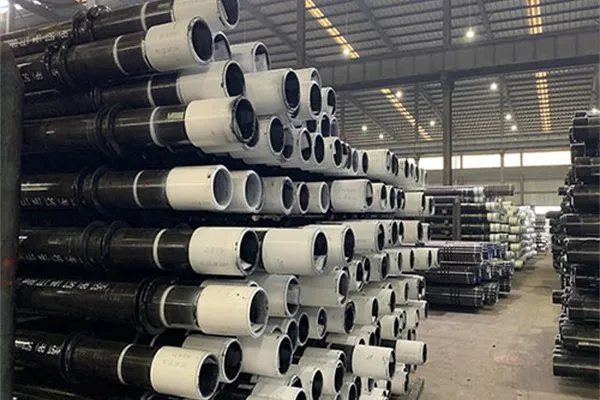
Let’s start with seamless pipe. As the name suggests, a seamless pipe is a pipe without any seams or welds.
Manufacturing and Application:
Seamless tubing can be manufactured using a variety of different methods, largely depending on the desired diameter, or ratio of diameter to wall thickness. Generally speaking, the seamless pipe manufacturing process begins with casting raw steel into a more workable form—a hot solid billet. Then stretch it and push or pull it over a form. This hollow tube then goes through an extrusion process where it is forced through a die and mandrel. This helps to increase the inner diameter and reduce the outer diameter.
Seamless steel pipe is commonly used to transport fluids such as water, natural gas, waste and air. It is also frequently required in many high pressure, highly corrosive environments such as the oil and gas, power generation and pharmaceutical industries.
Advantage:
High strength: Seamless pipe has the obvious advantage of no seams, so there will be no weak seams. This means that typically, seamless pipe can withstand 20% higher working pressures than welded pipe of the same material grade and size.
High Resistance: The absence of seams means that seamless pipes can provide higher corrosion resistance, as problems such as impurities and defects are more likely to occur at the welds.
Less testing: Needless to say, seamless tubing does not need to be tested for weld integrity – no weld means no test!
2. Welded pipe
There are three types of welded pipes: outer diameter welding, inner diameter welding or double-sided welding. The common denominator is that they all have seams!
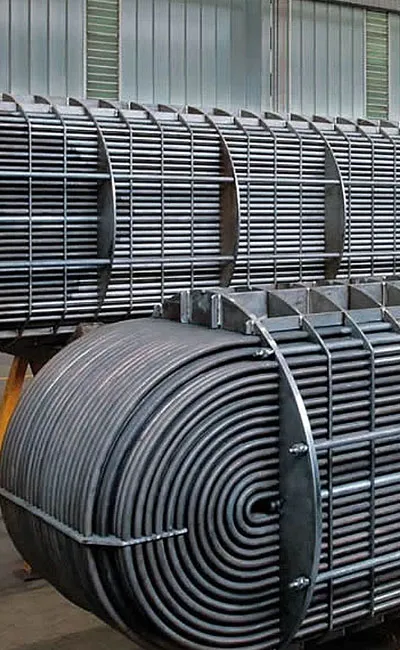
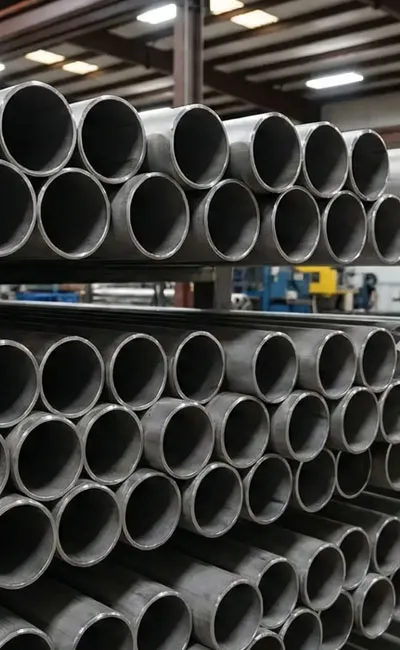
The manufacturing process of welded pipe begins by rolling a coil of steel to the desired thickness to form flat strip or plate. It is then rolled up and the seams of the resulting tube are welded in a chemically neutral environment.
Regarding which types of steel are weldable, austenitic steels are generally the most weldable, while ferritic steels weld thin sections. Duplex steels are now considered fully weldable, but they do require more attention than austenitic steels.
Welded pipe manufacturing technology is considered to have improved greatly over the past few years. Arguably the most important advance was the development of welding techniques using high-frequency currents. This greatly improves the welded pipe’s ability to avoid corrosion and joint failure.
While the seams in welded pipe are theoretically correct to make it weaker, manufacturing methods and quality assurance procedures are far superior today. This means that as long as the stated temperature and pressure tolerances of welded pipe are not exceeded, there is no reason why it should not perform as well as seamless pipe in numerous industries.
Cost: One of the great advantages of welded pipe is that it is the cheapest of all pipe types and more readily available.
Consistency: It is generally accepted that welded pipe is much more consistent in wall thickness than seamless pipe. This is because the manufacturing process begins with a single sheet of steel.
Surface Quality: Avoiding the extrusion process also means that the surface of welded pipes can also be smoother than seamless pipes.
Speed: Welded pipe requires shorter procurement lead times due to the simpler manufacturing process.
3. Forged pipe
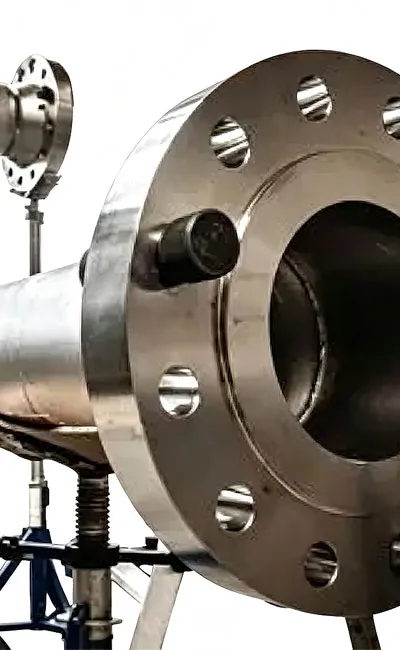
Steel forging is a metal forming process that uses compressive forces and extreme heat and pressure to shape metal.
The manufacture of forged pipes begins by placing a piece of steel (whether 6% molybdenum, super duplex, duplex, stainless steel, nickel alloy) between the upper and lower dies. The steel is formed by heat and pressure into the desired shape and then finished by a machining process to meet all required specifications.
This complex manufacturing process does result in an increased cost of the forged tube.
The many advantages of forged tube mean that it has many different applications in different fields such as oil and gas, hydraulic machinery, fertilization and chemical industry. The fact that forged steel has no seams or welds allows it to successfully contain potentially harmful or corrosive substances and their fumes. Therefore, it can be used in many heavy industries.
High Strength: Forged pipes generally produce a strong and very reliable end product because forging causes the steel’s grain flow to change and align. In other words, the steel has become finer and the structure of the pipe has changed significantly, resulting in sheer strength and high impact resistance.
Long Life: Forging eliminates potential porosity, shrinkage, cavities and cold pouring issues.
Economical: The forging process is generally considered to be very economical as no material is wasted.
Flexibility: The steel forging process is very flexible and can produce tubes in many different sizes.
Post time: Mar-22-2023










 English
 Español
 русский язык
 Português