Inspection standards and welding control issues for thick-walled steel pipes
Date: 2023-10-25
Inspection standards and welding control issues for thick-walled steel pipes
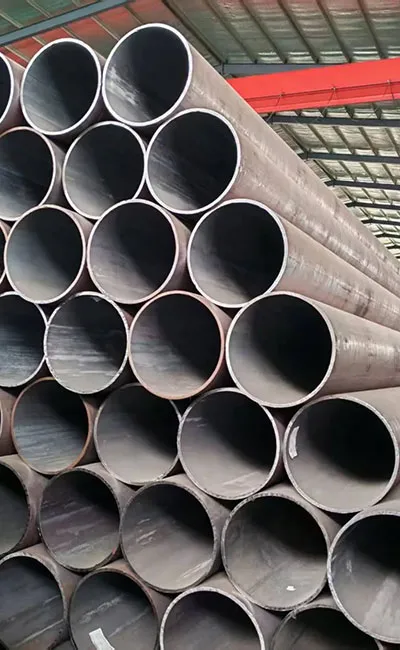
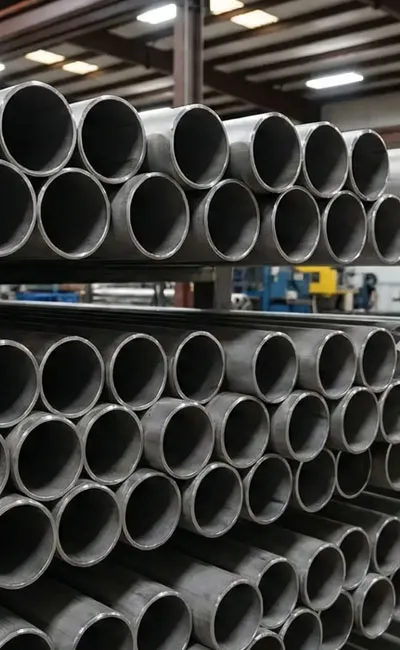
Through observation, it is not difficult to find that whenever thick-walled steel pipes, thermally expanded pipes, etc. are produced, strip steel is used as the production raw material, and the pipes obtained by thick-walled welding on high-frequency welding equipment are called thick-walled steel pipes. Among them, according to different uses and different back-end production processes, they can be roughly divided into scaffolding tubes, fluid tubes, wire casings, bracket tubes, guardrail tubes, etc.). Standard for thick-walled welded pipes GB/T3091-2008. Low-pressure fluid welded pipes are a type of thick-walled welded pipes. They are usually used for transportation of water and gas. After welding, there is one more hydraulic test than ordinary welded pipes. Therefore, low-pressure fluid pipes have thicker walls than ordinary welded pipes. Welded pipe quotes are usually a bit higher.
The inspection standards for thick-walled steel pipes mainly include the following points:
1. Thick-walled steel pipes should be submitted for inspection in batches, and the batching rules should comply with the regulations of the corresponding product standards.
2. The inspection items, sampling quantity, sampling locations, and test methods of thick-walled steel pipes shall be by the regulations of the corresponding product specifications. With the consent of the purchaser, hot-rolled seamless thick-walled steel pipes can be sampled in batches according to the rolling root number.
3. If the test results of thick-walled steel pipes do not meet the requirements of the product standards, the unqualified ones should be singled out, and double the number of samples should be randomly selected from the same batch of thick-walled steel pipes to carry out the unqualified items. re-inspection. If the re-inspection results fail, the batch of thick-walled steel pipes shall not be delivered.
4. For thick-walled steel pipes with unqualified re-inspection results, the supplier can submit them for inspection one by one; or they can undergo heat treatment again and submit a new batch for inspection.
5. If there are no special provisions in the product specifications, the chemical composition of thick-walled steel pipes shall be inspected according to the melting composition.
6. Inspection and inspection of thick-walled steel pipes should be carried out by the supplier’s technical supervision department.
7. The supplier has rules to ensure that the delivered thick-walled steel pipes comply with the corresponding product specifications. The purchaser has the right to conduct inspection and inspection according to the corresponding commodity specifications.
In addition, there are some things we need to know about the welding control of thick-walled steel pipes:
1. Welding temperature control of thick-walled steel pipes: The welding temperature is affected by the high-frequency eddy current thermal power. According to the formula, the high-frequency eddy current thermal power is affected by the current frequency. The eddy current thermal power is proportional to the square of the current encouragement frequency; The current stimulation frequency is affected by the stimulation voltage, current, capacitance, and inductance. The formula for encouragement frequency is:
f=1/[2π(CL)1/2]…(1) In the formula: f-encourage frequency (Hz); C-capacitance in the encouragement loop (F), capacitance = power/voltage; L-encouragement loop Inductance, inductance = magnetic flux/current, it can be seen from the above formula that the excitation frequency is inversely proportional to the square root of the capacitance and inductance in the excitation circuit, or directly proportional to the square root of the voltage and current. As long as the capacitance, inductance, or voltage and current in the circuit are changed, The size of the excitation frequency can be changed to achieve the purpose of controlling the welding temperature. For low carbon steel, the welding temperature is controlled at 1250~1460℃, which can meet the welding penetration requirements of pipe wall thickness of 3~5mm. In addition, the welding temperature can also be achieved by adjusting the welding speed. When the input heat is insufficient, the heated edge of the weld does not reach the welding temperature, and the metal structure remains solid, resulting in incomplete fusion or incomplete penetration; when the input heat is insufficient, the heated edge of the weld exceeds the welding temperature, resulting in Over-burning or molten droplets cause the weld to form a molten hole.
2. Control of the weld gap of thick-walled steel pipes: Send the strip steel into the welded pipe unit, and roll it through multiple rollers. The strip steel is gradually rolled up to form a round tube blank with open gaps. Adjust the pressure of the kneading roller. The amount should be adjusted so that the weld gap is controlled at 1~3mm and both ends of the weld are flush. If the gap is too large, the nearby effect will be reduced, the eddy current heat will be insufficient, and the inter-crystal bonding of the weld will be poor, resulting in non-fusion or cracking. If the gap is too small, the nearby effect will increase, and the welding heat will be too large, causing the weld to be burned; or the weld will form a deep pit after being kneaded and rolled, affecting the surface of the weld.
Post time: Oct-25-2023










 English
 Español
 русский язык
 Português