Product News

Hunan Great Steel Pipe Co., Ltd
how to choose LSAW steel pipe,LSAW pipe buying guide,LSAW pipe selection,LSAW steel pipe procurement

How to Choose the Right LSAW Steel Pipe for a Pipeline Project

Date: 2026-09-01

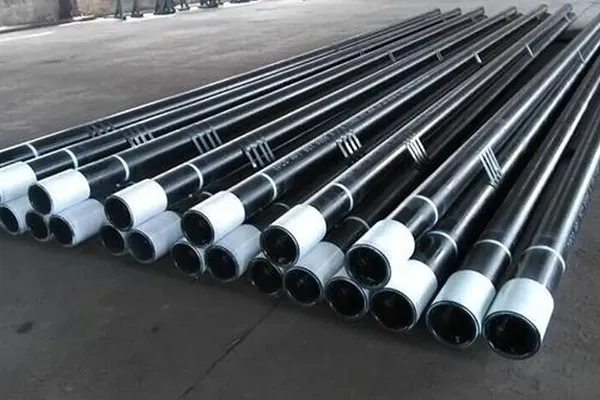
Choosing LSAW steel pipe should start with the pipeline's engineering requirements, not with the lowest price per ton. The right pipe needs to match the operating conditions, applicable standard, steel grade, dimensions, welding requirements, inspection scope, and delivery conditions of the project. LSAW (Longitudinal Submerged Arc Welding) steel pipe is widely used for large-diameter pipeline applications, including oil and gas transmission, water infrastructure and other industrial systems. However, selecting the correct product requires more than specifying “LSAW steel pipe” on an RFQ.


1. Start With the Pipeline Application

First define what the pipeline will transport and where it will operate. A natural gas transmission pipeline, for example, may have different requirements from a water pipeline. Offshore and sour-service applications can introduce additional requirements for toughness, corrosion resistance, inspection and material control. Before requesting quotations, identify:
  • Transport medium
  • Design pressure and temperature
  • Installation environment
  • Required service life
  • Pipeline design conditions
  • Connection or end preparation
  • Applicable engineering standard
These parameters provide the basis for selecting the pipe rather than relying on a standard stock specification.

2. Confirm the Applicable Standard and PSL

The applicable standard should be established before comparing suppliers. For oil and gas transmission, API Specification 5L is a key line pipe specification covering seamless and welded steel pipe, including requirements for manufacturing, inspection, testing, marking and traceability. API published the 47th edition in June 2026, with updates covering areas such as NDT, hardness testing, sour-service requirements, lamination control and CO₂ transportation. Depending on the project, other standards such as GB/T 9711 may apply. Buyers should also confirm whether PSL 1 or PSL 2 is required. PSL affects the technical and inspection requirements of the supplied pipe, so simply asking for “API 5L LSAW steel pipe” may not provide enough information for an accurate quotation.

3. Choose the Steel Grade for the Actual Service

A higher-strength grade is not automatically the best choice. The selected grade needs to satisfy the project's requirements for yield strength, tensile strength, toughness, weldability and operating conditions. For certain applications, additional requirements may apply to chemical composition, impact testing, hardness or resistance to specific service environments. For example, a pipeline operating at low temperature or under demanding service conditions may require more than adequate yield strength. Material toughness and weldability can be equally important. The objective is not to select the strongest available grade, but the grade that meets the complete design specification.

4. Confirm OD and Wall Thickness From the Design

Outside diameter and wall thickness should come from the engineering design or approved pipe specification. Increasing wall thickness simply because a thicker size is available can add unnecessary weight, coating area, transportation cost and installation load. Reducing wall thickness to lower the purchase price can create unacceptable pressure or structural risks. For large-diameter LSAW steel pipe, buyers should provide the exact OD, wall thickness and length requirements when requesting a quotation. This allows the manufacturer to evaluate production feasibility and material requirements accurately.

5. Look Beyond the Pipe Body: Check Welding and NDT

LSAW steel pipe relies on a longitudinal submerged arc weld, making weld quality and inspection an important part of procurement. Before placing an order, confirm:
  • Welding procedure and qualification requirements
  • Weld seam inspection scope
  • Applicable NDT methods
  • Hydrostatic testing requirements
  • Dimensional inspection
  • Weld repair requirements
  • Third-party inspection, if required
  • Heat-number and pipe-level traceability
For critical pipeline projects, inspection should be defined before production rather than added after the pipe has been manufactured.

6. Consider Coating, Handling and Total Project Cost

For buried, offshore or otherwise corrosive environments, corrosion protection may be an important part of the supply scope. Depending on the project, the coating system may include 3PE, FBE or another specified protection system. Logistics also matter. Large-diameter pipe requires suitable loading, transportation, storage and handling arrangements. Therefore, the lowest ex-factory price is not necessarily the lowest project cost. Buyers should consider pipe, coating, inspection, transportation, port handling and delivery schedule as part of the total procurement decision.

7. Use a Complete RFQ Specification

A well-prepared RFQ reduces clarification time and makes supplier quotations easier to compare.
Item What to Specify
Standard API 5L / GB/T 9711 / Project Specification
Grade Project-specified grade
PSL PSL 1 / PSL 2
OD & WT Engineering requirement
Length Fixed / Random
Ends Plain / Beveled
Coating 3PE / FBE / Other
Inspection NDT / Hydrostatic / Third Party
Documents MTC / Inspection Dossier
For international projects, also confirm packing, marking, export documentation, port requirements and delivery schedule.

Common Mistakes to Avoid

Choosing by steel grade alone: Higher strength does not automatically mean better project performance.
Comparing prices before specifications: Different testing, PSL, coating or documentation scopes can make quotations difficult to compare.
Leaving NDT requirements unclear: Inspection scope should be agreed before production.
Ignoring logistics: Large-diameter pipe can require specialized transportation and handling.
Treating coating as an afterthought: Coating requirements can affect both project cost and delivery schedule.

Conclusion

Choosing the right LSAW steel pipe is a project decision, not simply a product purchase. The specification should connect application, design conditions, material grade, dimensions, welding, inspection, coating and logistics into one clear procurement requirement. For project-based LSAW steel pipe sourcing, providing the complete technical specification at the RFQ stage allows the supplier to evaluate manufacturing feasibility, inspection requirements and delivery conditions more accurately. This helps reduce specification changes, procurement delays and unexpected costs later in the project.

Latest news list

  • LSAW steel pipe problems,LSAW steel pipe troubleshooting,LSAW pipe maintenance,LSAW pipe inspection
    When an LSAW steel pipeline develops a problem,replacing the pipe immediately is rarely the best first step,The priority is to determine what changed,where the damage occurred and why it happened,LSAW (Longitudinal Submerged Arc Welding) pipe is widely used in large-diameter pipeline systems,During service,however,pipeline problems can result from corrosion,coating failure,external loading,operating conditions,connection problems or weld-related issues,A structured troubleshooting process helps maintenance teams distinguish between a local defect and a broader integrity problem,
  • LSAW steel pipe quality control,LSAW pipe inspection,LSAW NDT,LSAW hydrostatic test,LSAW pipe quality
    For large-diameter LSAW steel pipe,quality control is more than checking the appearance of the finished pipe,A reliable inspection system must verify material identity,weld integrity,mechanical performance,dimensional accuracy and pressure resistance,For project buyers,this matters because a pipe can look acceptable externally while still failing to meet a required technical specification,
  • LSAW steel pipe manufacturing process,LSAW production process,UOE steel pipe,JCOE steel pipe
    Large-diameter LSAW steel pipe is manufactured from steel plate rather than continuously formed from coil,The plate is prepared,shaped into a pipe,longitudinally welded,and then inspected to meet the required dimensional and performance standards,From a manufacturer's perspective,each stage matters because a problem introduced during plate preparation or forming can affect welding,dimensional accuracy,and final pipe performance,For project buyers,understanding this sequence makes it easier to evaluate both the product and the supplier behind it,
  • carbon seamless steel pipe service life,extend carbon steel pipe life,carbon seamless pipe maintenance
    Carbon seamless steel pipe can provide reliable service for many years,but its actual service life depends on how well the pipe matches the operating conditions and how consistently it is inspected and maintained,In industrial service,extending pipe life is not simply about using a thicker pipe or applying a protective coating,A practical approach is to control the factors that cause deterioration: material selection,operating conditions,corrosion,installation,inspection,and maintenance,For in-service piping,inspection programs such as API 570 focus on maintaining the integrity of metallic piping through inspection,rating,repair,and alteration,
  • carbon seamless steel pipe shipment,ASTM A106 Gr,B pipe,carbon seamless steel pipe export,carbon seamless steel pipe
    Exporting carbon seamless steel pipe requires more than completing production,Before an order leaves the factory,the pipe must pass through specification review,raw material preparation,manufacturing,inspection,marking,packing,and logistics coordination,We recently prepared a 593-ton carbon seamless steel pipe order for an overseas customer,The order was supplied to ASTM A106,A106M,with a pipe size of 219,1 mm × 8 mm,This shipment provides a practical example of how a large seamless pipe order is prepared for international delivery,

Find what you need ?

close
We use cookies and other tracking technologies to improve your browsing experience on our website, to show you personalized content and targeted ads, to analyze our website traffic, and to understand where our visitors are coming from.