Industry News

Hunan Great Steel Pipe Co., Ltd
stainless seamless steel pipe,stainless seamless pipe selection,304 pipe,316 pipe,stainless seamless pipe supplier

How to Choose the Right Stainless Seamless Steel Pipe for Your Application

Date: 2026-09-09
Choosing stainless seamless steel pipe should start with the service conditions, not the supplier's lowest price. The correct pipe needs to match the fluid, temperature, pressure, corrosion environment, dimensions, applicable standard, inspection requirements, and project schedule. A clear selection process helps buyers avoid material mismatches, specification changes, and problems during installation or acceptance.

1. Start With the Service Conditions

Before selecting a grade or size, define how the pipe will be used. Important factors include:
  • Fluid composition
  • Chloride or salt exposure
  • Acidity or alkalinity
  • Operating temperature
  • Design and operating pressure
  • Internal and external environment
  • Cleaning chemicals
  • Required service life
A stainless steel grade that performs well in one application may not be suitable for another. Grade selection should therefore be based on actual service conditions and the applicable engineering requirements.

2. Select the Appropriate Stainless Steel Grade

304, 304L, 316, and 316L are commonly specified stainless steel grades, but they should not be treated as interchangeable. 304 is widely used for general corrosion-resistant service. 316 contains molybdenum and is commonly considered where chloride exposure or more aggressive corrosion conditions are involved. The low-carbon grades 304L and 316L may be selected where welding and related corrosion considerations are important. The correct choice depends on the actual medium, concentration, temperature, fabrication requirements, and project specification. “316 is always better than 304” is not a sufficient engineering selection rule.

3. Decide Whether Seamless Construction Is Required

The choice between seamless and welded stainless steel pipe should be based on the application and governing specification. Seamless pipe may be specified for demanding pressure, temperature, or process applications where the project requires seamless construction. Welded pipe may also be appropriate for many applications when it complies with the applicable standard and inspection requirements. Buyers should therefore confirm:
  • Whether seamless construction is specified
  • Required pressure and temperature rating
  • Applicable product standard
  • Pipe dimensions and wall thickness
  • Required testing and acceptance criteria
For example, ASTM A312/A312M covers both seamless and certain welded austenitic stainless steel pipe for high-temperature and general corrosive service. The specification also establishes requirements related to heat treatment, mechanical properties, and specified testing.

4. Confirm Outside Diameter and Wall Thickness

“Stainless seamless pipe” is not a complete purchasing specification. The RFQ should clearly state the required outside diameter, wall thickness, length, quantity, and dimensional standard. Wall thickness affects pressure capability, mechanical strength, weight, and corrosion allowance. Outside diameter affects connection compatibility, installation, and fabrication. For standardized stainless steel pipe dimensions, buyers may encounter ASME B36.19 requirements referenced by applicable product specifications. The final dimensional requirements should always be taken from the governing standard and project specification.

5. Check the Product and Testing Standards

The purchase specification should identify the standard governing the pipe. Depending on the project, buyers may encounter ASTM, ASME, EN, API, or other standards. Do not confirm only the standard number. Check what the specification requires for:
  • Chemical composition
  • Heat treatment
  • Mechanical properties
  • Dimensions and tolerances
  • Testing
  • Marking
  • Documentation
A supplier should be able to explain how each requirement will be controlled and verified.

6. Define Inspection Requirements Before Ordering

Inspection requirements should be agreed before production starts. Depending on the applicable standard and project specification, the order may require:
  • Chemical analysis
  • Mechanical testing
  • Dimensional inspection
  • Surface inspection
  • NDT
  • Hydrostatic testing
  • Third-party inspection
  • Material certification
The inspection scope should include the applicable test method, acceptance criteria, inspection extent, and required records. For buyers who need more detail, see our related guide onStainless Seamless Steel Pipe Quality Control.

7. Confirm End Preparation and Packaging

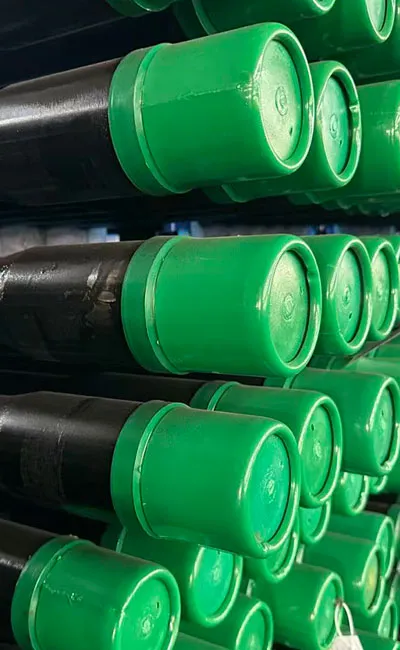
End preparation can affect fabrication and installation. Depending on the application, pipes may be supplied with plain ends, beveled ends, or other specified end conditions. Packaging also matters for international shipments. Buyers should confirm protection against impact, contamination, moisture, and handling damage, especially when pipes will be stored before installation.

8. Evaluate the Supplier Beyond Unit Price

A lower pipe price does not necessarily mean a lower project cost. Compare suppliers based on their ability to meet the complete specification, including:
  • Required material grades
  • Manufacturing capability
  • Dimensional range
  • Testing and inspection
  • Traceability
  • Documentation
  • Packaging
  • Production lead time
  • Export and logistics capability
For project procurement, the better supplier is usually the one that can provide consistent technical and documentary support—not simply the lowest quotation.

Practical Stainless Seamless Pipe Procurement Checklist

Before placing an order, confirm:
  • Application:Is the grade suitable for the actual service environment?
  • Construction:Is seamless pipe required by the specification?
  • Material:Are grade and heat-number requirements clearly defined?
  • Dimensions:Are OD, wall thickness, and length specified?
  • Standard:Is one governing product standard clearly identified?
  • Inspection:Are testing methods and acceptance criteria agreed?
  • Documentation:Are MTC, traceability, and inspection records defined?
  • Delivery:Can the supplier meet the required project schedule?

FAQ

Q1: What information should be included in a stainless seamless pipe RFQ?
A1: At minimum, provide the grade, product standard, OD, wall thickness, length, quantity, end condition, inspection requirements, documentation requirements, and delivery destination.
Q2: Is stainless seamless pipe always better than welded pipe?
A2: No. The choice should depend on service conditions, applicable standards, dimensions, fabrication requirements, and project specifications. Seamless construction should be selected when it is technically or contractually required.
Q3: Should I choose 304 or 316 stainless seamless pipe?
A3: It depends on the service environment. 316 is commonly considered for applications involving greater chloride exposure, while 304 is widely used for general corrosion-resistant service. Final grade selection should be based on the actual medium and engineering requirements.
Q4: What documents should buyers request?
A4: Depending on the order, documentation may include the MTC, chemical and mechanical test results, dimensional inspection records, NDT reports, hydrostatic test records, traceability information, and specified inspection certificates.

Final Recommendation

The right stainless seamless steel pipe is the one that matches the complete project requirement—not simply the lowest quoted price. Before ordering, connectservice conditions, material grade, seamless construction, dimensions, standards, inspection, documentation, and deliveryinto one clear purchase specification. That gives both buyer and supplier the same technical reference before production begins and reduces avoidable risks during inspection, shipment, and installation.

Latest news list

  • stainless seamless steel pipe,corrosion resistant stainless steel pipe,304 stainless steel pipe
    Corrosion is a major consideration when selecting piping for chemical processing,water treatment,marine service,and other industrial systems,Stainless seamless steel pipe can provide reliable corrosion resistance,but stainless steel is not immune to every corrosive condition,The correct selection depends on the process fluid,temperature,chemical concentration,material grade,piping design,and inspection requirements,
  • stainless seamless steel pipe quality control,stainless seamless pipe inspection,stainless pipe NDT
    A stainless seamless steel pipe can look clean and uniform while still failing to meet a project's technical requirements,Appearance alone cannot confirm the steel grade,chemical composition,mechanical properties,dimensional accuracy,heat-treatment condition,or internal quality,For technical buyers,quality control should therefore be viewed as a complete chain from raw material to final documentation,The following inspections are the key points buyers should verify before accepting stainless seamless steel pipe,
  • stainless seamless steel pipe,high temperature stainless steel pipe,stainless steel pipe selection
    High-temperature piping requires more than simply selecting a stainless steel grade,As temperature increases,material strength,corrosion behavior,thermal expansion,pressure resistance,and long-term stability become increasingly important,For this reason,stainless seamless steel pipe should be selected against the complete service condition rather than temperature alone,
  • stainless seamless steel pipe,stainless seamless steel pipe manufacturing,stainless steel pipe quality control
    Stainless seamless steel pipe is used in chemical processing,oil and gas,power generation,water treatment,food processing,and other applications where material performance and pressure integrity matter,But a finished pipe does not become reliable simply because it is made from stainless steel,Its quality is built through material control,forming,heat treatment,dimensional control,inspection,and traceability,Understanding how stainless seamless steel pipe is manufactured gives engineers and technical buyers a better way to evaluate suppliers beyond price,surface appearance,or a product catalogue,
  • LSAW steel pipe maintenance,LSAW pipe maintenance,LSAW steel pipe inspection,LSAW pipeline maintenance
    Installing a properly specified LSAW steel pipe does not eliminate the need for pipeline maintenance,Once a pipeline enters service,corrosion,coating deterioration,mechanical loading,ground movement,operating changes,and environmental exposure can gradually affect its condition,For large-diameter pipelines,a practical maintenance program should focus on identifying changes early and taking corrective action before a manageable condition develops into an integrity problem,The objective is not simply to inspect the pipe,It is to understand the condition of the complete pipeline system and respond based on evidence,

Find what you need ?

close
We use cookies and other tracking technologies to improve your browsing experience on our website, to show you personalized content and targeted ads, to analyze our website traffic, and to understand where our visitors are coming from.