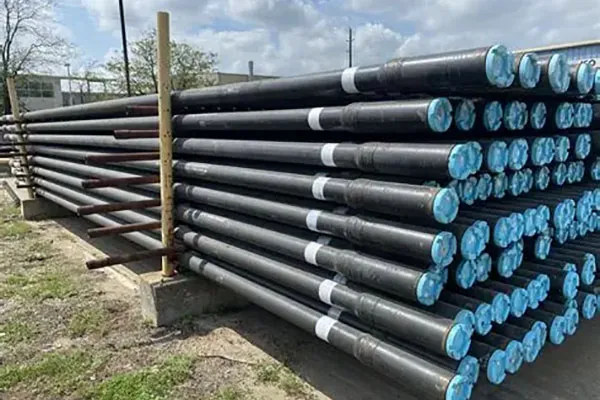
Drill pipe is a critical part of the drill string, transmitting torque, circulating drilling fluid and supporting drilling operations under demanding mechanical conditions. Its service performance depends not only on steel grade, but also on pipe body dimensions, upset geometry, tool joint design, welding quality and connection integrity. For drilling contractors, engineers and procurement teams, understanding drill pipe structure and material requirements is essential when specifying products for different well conditions. This guide explains the main components, common steel grades and relevant API requirements.
1. What Are the Main Components of Drill Pipe?
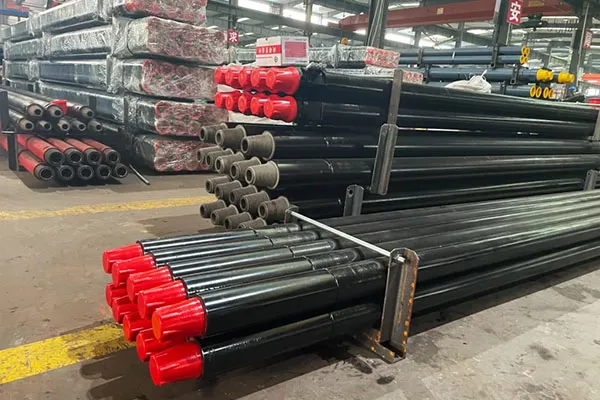
A conventional steel drill pipe consists of a seamless steel pipe body with upset ends and two separately manufactured tool joints joined to the pipe body by friction welding.
Pipe Body: The pipe body is the main tubular section of the drill pipe. It provides the internal passage for drilling fluid and carries tensile, torsional and bending loads during operation. Its outside diameter, wall thickness, length and steel grade influence the pipe's mechanical capacity and compatibility with the drill string.
Upset Ends: Upset ends are locally thickened sections formed at both ends of the pipe body. They provide additional material for friction welding and help create a stronger transition between the pipe body and tool joints. Common configurations include:
-
Internal Upset (IU): increased wall thickness toward the inside.
-
External Upset (EU): increased outside diameter.
-
Internal-External Upset (IEU): increased wall thickness on both sides.
The appropriate configuration depends on the drill pipe design and applicable specification.
Tool Joints: Tool joints are heavier connection components fitted with rotary shouldered threads. The pin and box ends allow individual drill pipes to be connected into a drill string. They are manufactured separately and friction-welded to the upset pipe body ends. Tool joint material and heat treatment requirements differ from those of the pipe body. Their connection dimensions, thread condition and shoulder integrity are particularly important for reliable drilling operations.
2. What Are the Common Drill Pipe Steel Grades?
API Spec 5DP covers Grade E and the high-strength grades X, G and S. Common commercial designations include E75, X95, G105 and S135. The following values summarize typical pipe body tensile property requirements associated with these grades:
|
Common Grade Designation
|
Minimum Yield Strength (ksi)
|
Maximum Yield Strength (ksi)
|
Minimum Tensile Strength (ksi)
|
|
E75
|
75
|
105
|
100
|
|
X95
|
95
|
125
|
105
|
|
G105
|
105
|
135
|
115
|
|
S135
|
135
|
165
|
145
|
Higher-strength grades are commonly considered for drilling conditions involving greater tensile loads. However, a higher yield strength does not automatically make a drill pipe suitable for every application. Pipe dimensions, fatigue resistance, connection design, operating loads and drilling conditions must also be evaluated. The required grade should therefore be selected according to the drill string design and project operating requirements, rather than strength alone.
3. What Does API Spec 5DP Require for Drill Pipe?
API Spec 5DP establishes technical delivery conditions for steel drill pipe with upset pipe body ends and weld-on tool joints used in petroleum and natural gas drilling and production operations. It defines three Product Specification Levels: PSL-1, PSL-2 and PSL-3. These levels have different technical requirements. The appropriate level should be specified in the purchase order based on the project requirements and applicable standard provisions. PSL should not be treated as a simple ranking of overall product performance. API Spec 5DP addresses product requirements such as dimensions, materials, mechanical properties, manufacturing controls, inspection, testing, marking and documentation. Rotary shouldered connections also require attention. API Spec 7-2 addresses the threading and gauging of rotary shouldered connections, including relevant thread dimensions and gauging practices. In practical terms, API Spec 5DP defines drill pipe delivery requirements, while API Spec 7-2 focuses on connection threading and gauging. When ordering, buyers should confirm the applicable editions, addenda and errata. API Spec 5DP's second edition was published in May 2020, with Addendum 1 and subsequent errata issued in 2025.










 English
 Español
 русский язык
 Português