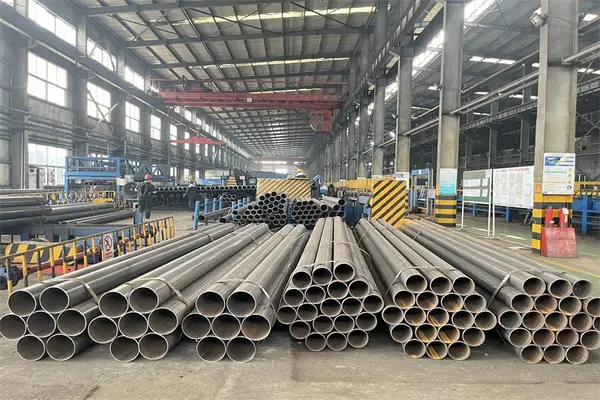
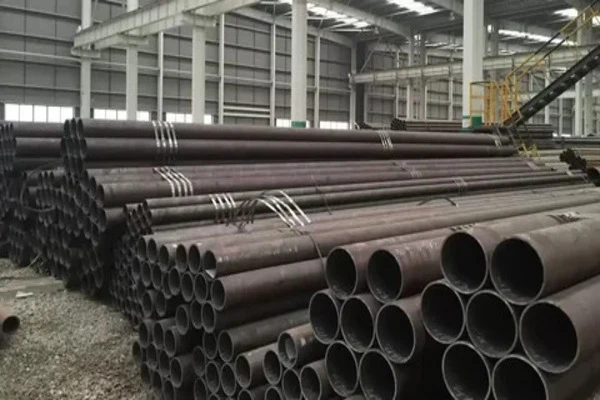
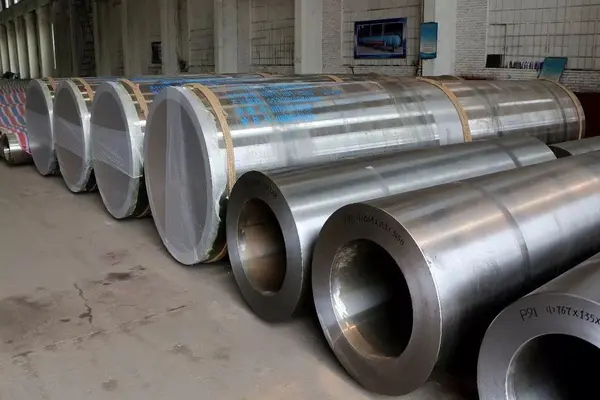
Coating
Coating Service
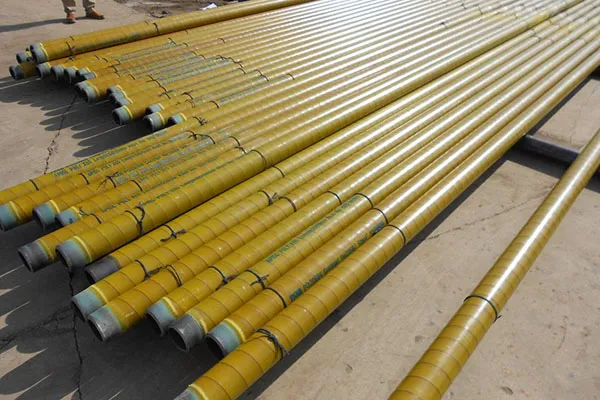
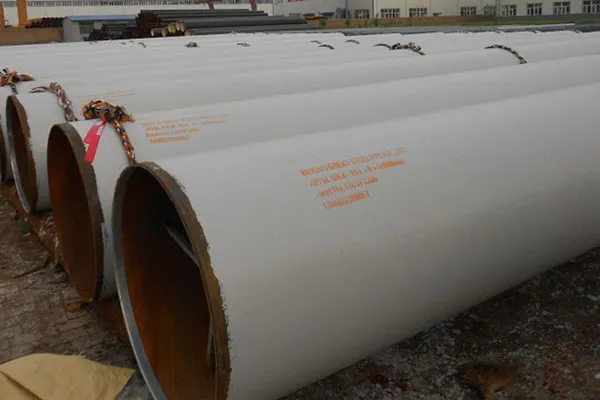
Our coating service is mainly committed to providing professional anti-corrosion solutions for industrial pipelines. Pipeline corrosion refers to the chemical or electrochemical reactions that damage pipelines under the influence of the service environment and transported media. To effectively prevent or control pipeline corrosion, new and more effective anti-corrosion technologies are constantly emerging, which can be roughly divided into the following types:
1. Grease Paint
Grease paint is a type of coating with drying oil as the main film-forming substance. It is characterized by easy production, good brushability, excellent wettability on the object surface, low cost, and flexible film. However, it has drawbacks such as slow film drying, soft film texture, poor mechanical properties, and weak resistance to acids, water, and organic solvents. Drying oil is often combined with anti-rust pigments to form anti-rust paint, which is suitable for atmospheric environments with low corrosion requirements.
2. Lacquer (Country Paint)
Lacquer, also known as natural lacquer or Chinese lacquer, is one of China’s specialties. It is a milky viscous liquid that flows out when the bark of the lacquer tree is cut, which becomes pure after filtering impurities with muslin. When applied to the surface of an object, its color quickly changes from white to red, then from red to purple, and finally turns into a hard, shiny black film over time. Urushiol is the main component of lacquer, accounting for 30% to 70%. Generally speaking, the higher the urushiol content, the better the quality of the lacquer. Lacquer has strong adhesion, a tough film, and good gloss, with better resistance to soil corrosion than to water and oil. Its disadvantages are toxicity and easy skin irritation. In addition, it has poor resistance to strong oxidants and alkalis. Nowadays, many modified lacquers have been developed to overcome these shortcomings to varying degrees.
3. Phenolic Resin Coating
Phenolic resin coatings include alcohol-soluble phenolic resin, modified phenolic resin, novolac phenolic resin, etc. Alcohol-soluble phenolic resin coatings have good corrosion resistance but are inconvenient to construct, with poor flexibility and adhesion, thus having limited applications. Therefore, phenolic resin often needs to be modified. For example, rosin-modified phenolic resin refined with tung oil, mixed with various pigments and ground, can produce various enamels, which have tough films and low cost, and are widely used for painting furniture and doors and windows. Pure phenolic resin coatings have good adhesion, heat resistance, water resistance, corrosion resistance, and weather resistance.
4. Epoxy Coating
Epoxy coatings have excellent adhesion to metals, concrete, wood, glass, and other materials, as well as outstanding alkali resistance, oil resistance, water resistance, and electrical insulation properties. However, their aging resistance is poor. Epoxy anti-corrosion coatings are usually composed of two components: epoxy resin and curing agent. The performance of the curing agent also affects the film properties.
Commonly used curing agents are:
①Aliphatic amines and their modified compounds, which can cure at room temperature, but unmodified aliphatic amines are highly toxic.
②Aromatic amines and their modified products, which react slowly and often require heat curing, and are highly toxic.
③Polyamide resin, which has good weather resistance, low toxicity, good elasticity, but slightly poor corrosion resistance.
④Synthetic resins such as phenolic resin and urea-formaldehyde resin.
These resins crosslink with epoxy resin to form a film after high-temperature baking, which has excellent corrosion resistance, as well as good mechanical properties and decorative properties. Epoxy ester resin paint is a single-component coating system with epoxy ester resin as the film-forming substance. Epoxy ester resin is collectively made by esterification of epoxy resin and vegetable oil fatty acids. Compared with general epoxy coatings, this paint has lower cost but poor alkali resistance, and is commonly used as a primer for various metals and anti-corrosion paint for outdoor equipment in chemical plants.
5. Polyurethane Coating
Anti-corrosion coatings using polyurethane resin usually consist of two components: isocyanate group (-NCO) and hydroxyl group (-OH). When in use, the two components are mixed and cured to form polyurethane (PU). Its features are as follows:
1)Excellent physical and mechanical properties: The film is hard, flexible, bright, full, wear-resistant, and has strong adhesion.
2)Outstanding corrosion resistance: Resistant to oil, acids, chemicals, and industrial emissions, but its alkali resistance is slightly lower than that of epoxy coatings.
3)Better aging resistance than epoxy coatings: Commonly used as a topcoat, but can also be used as a primer.
4)Miscible with various resins: The formula can be adjusted within a wide range to meet various usage requirements.
5)Curable at room temperature or by heating, and can also be cured at low temperatures (0℃).
6)Poor storage stability of the polyisocyanate component: It must be isolated from moisture to avoid gelling.
Polyurethane coatings are relatively expensive, but have a long service life.
6. Polyethylene and Polypropylene Resin Coating
Anti-corrosion coatings of polyethylene resin are coatings with resin made from monomers as the film-forming substance. Polyethylene coatings are produced in large quantities. Polyethylene pipeline anti-corrosion has strong sealing, high mechanical strength, strong water resistance, stable quality, convenient construction, good applicability, and does not pollute the environment. PE has low water absorption (less than 0.01%), along with high strength, low water absorption, and good hot-melt flexibility. It has high corrosion reliability, but its disadvantage is that the cost is higher than other mending materials. With abundant raw materials, it has been widely used in corrosive environments.
7. Furan Resin Coating
Furan resin coatings are resistant to various non-oxidizing mineral acids, electrolyte solutions, and various organic solvents, and their alkali resistance is also very prominent, but their oxidation resistance is poor. The furan resin series of anti-corrosion coatings include furfuryl alcohol resin paint, furfural acetone formaldehyde resin paint, and modified furan resin paint.
8. Asphalt Coating
Asphalt is one of the important anti-corrosion coatings, especially coal tar pitch. Coal tar pitch coatings are cheap and have the following advantages:
- Good water resistance: Its water absorption is only 0.1% to 0.2% after being immersed in water for 10 years;
- Resistant to chemical erosion of certain media;
- Good wettability on steel surfaces that are not fully derusted;
- High solid content, allowing for thick film formation;
- Low cost.
Its disadvantages are brittleness in winter, softness in summer, poor toughness, and cracking of the paint film caused by the volatilization of some components after exposure to sunlight. These shortcomings can be improved by adding other resins. For example, adding chlorinated rubber to asphalt paint can accelerate drying and improve the shortcoming of brittleness in winter and softness in summer; adding epoxy resin to obtain epoxy asphalt paint, which has the advantages of both asphalt paint and epoxy paint, with very satisfactory anti-corrosion effect. Asphalt paint has a good anti-corrosion effect when used in occasions such as container bottoms, ship bottoms, dock gates, and cofferdams.
9. Heavy-Duty Anti-Corrosion Coatings
Heavy-duty anti-corrosion coatings are relative to general anti-corrosion coatings. Under severe corrosion conditions, they have several times better anti-corrosion effect than general anti-corrosion coatings. It is characterized by outstanding resistance to strong corrosive media, durability, and a service life of more than several years. It is mainly used for marine structures, chemical equipment, storage tanks, and pipelines.










 English
 Español
 русский язык
 Português