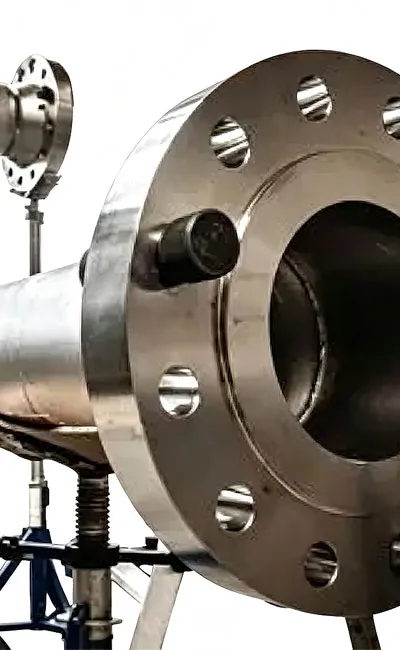
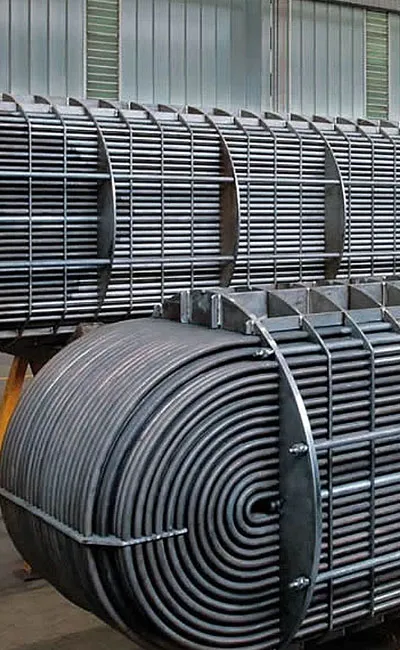
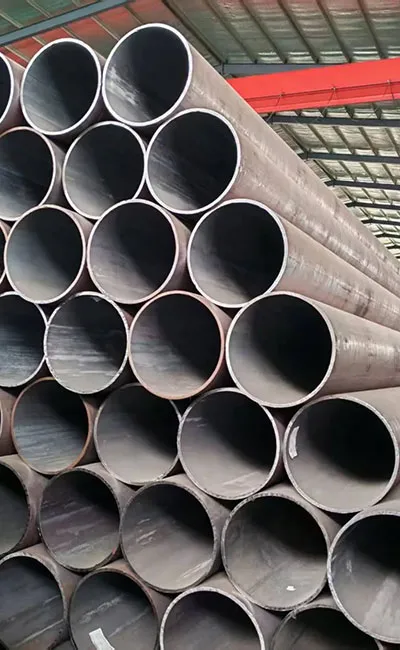
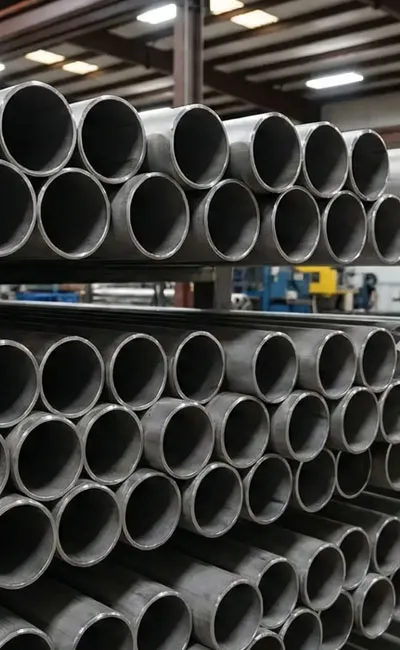
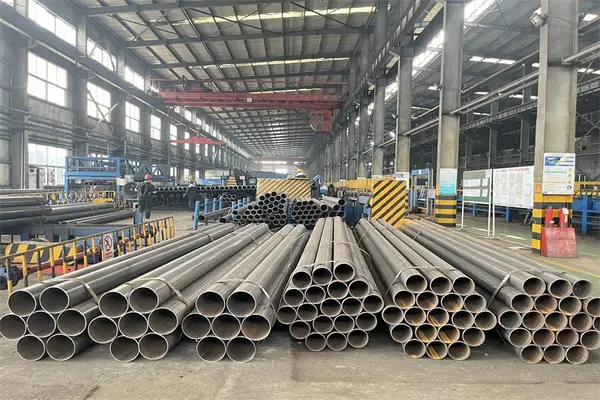
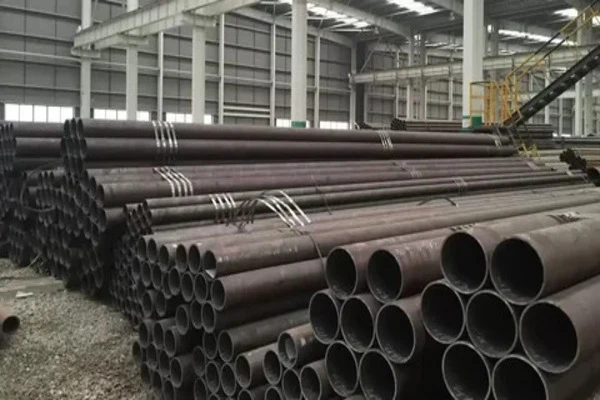
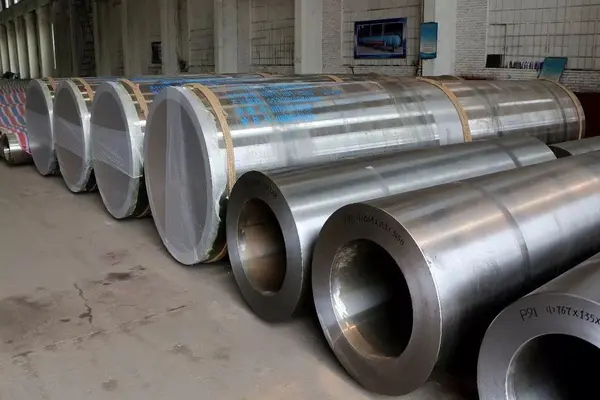
As the core of our high-value-added processing services and our key promoted service, our welding and assembly forming service is the most valuable core business, integrating precision processing, structural forming and quality control. It is committed to delivering high-strength, precision-engineered steel structures and fabricated components for a wide range of industrial applications. Supported by advanced fabrication facilities, qualified welding personnel, and standardized manufacturing procedures, we provide reliable, high-quality solutions that meet demanding structural and engineering requirements, creating core value for customers’ projects. The detailed definition, processing steps, welding methods, precautions and related specifications are as follows:
As our most valuable and key promoted service, welding and assembly forming has obvious core advantages compared with other processing services, integrating professionalism, efficiency and reliability, and becoming the core competitiveness of our high-value-added services:
- Integrated One-Stop Service: It closely connects with the previous five processing services (cutting, rolling and bending, coating, beveling, threading), realizing seamless connection from raw material processing to finished product forming, saving customers’ time and cost of multi-party cooperation.
- High-Quality Welding Team: We have a team of qualified professional welders with rich experience, who are proficient in various welding methods and can accurately handle complex welding tasks, ensuring the stability and reliability of weld seams.
- Advanced Equipment Support: Equipped with advanced welding and assembly equipment, including automatic welding machines, precision alignment equipment, calibrated fixtures, etc., which greatly improves processing efficiency and ensures the accuracy of structural forming.
- Strict Quality Control System: Implement full-process quality control from pre-processing preparation to finished product inspection, with multiple detection links to ensure that each finished product meets international standards and project requirements.
- Strong Customization Capability: According to the customer’s project drawings, technical requirements and application scenarios, provide customized welding and assembly solutions, adapting to projects of different complexity and scale.
Common Welding Methods
As a key promoted service, we have rich welding capabilities, covering various professional welding methods, which can be flexibly selected according to material characteristics, structural requirements and application scenarios to ensure optimal welding effect. The common welding methods are as follows:
1. MIG Welding (Metal Inert Gas Welding)
MIG welding is a common gas-shielded welding method, which uses a continuous wire electrode and inert gas (such as argon, helium) to protect the weld pool. It has the advantages of high welding efficiency, beautiful weld appearance, stable welding quality, and is suitable for welding carbon steel, stainless steel, alloy steel and other materials. It is widely used in medium and thin plate welding and large-scale assembly projects.
2. TIG Welding (Tungsten Inert Gas Welding)
TIG welding uses a non-consumable tungsten electrode and inert gas to protect the weld pool and electrode. It has the characteristics of precise welding control, small heat-affected zone, and high welding precision. It is suitable for welding thin-walled components, high-precision structures, and high-grade materials (such as stainless steel, high-alloy steel), and is often used in scenarios with high requirements for welding quality.
3. Submerged Arc Welding
Submerged arc welding is a welding method that uses arc combustion under the flux layer. It has the advantages of high welding efficiency, deep weld penetration, high mechanical strength of the weld seam, and small welding deformation. It is suitable for thick plate welding, large-scale structural welding (such as steel beams, steel columns, large pipes), and is widely used in heavy industry and infrastructure projects.
4. Shielded Metal Arc Welding (SMAW)
Shielded metal arc welding is a manual welding method that uses a coated electrode to generate an arc between the electrode and the workpiece. It has the advantages of simple equipment, flexible operation, strong adaptability, and can be used in various complex environments (such as on-site welding, outdoor welding). It is suitable for welding carbon steel, low-alloy steel and other materials, and is an important supplementary welding method for our assembly and forming services.
Welding and Assembly Forming Processing Steps
As our key promoted service, we strictly implement standardized and precise processing procedures, and each step is strictly controlled to ensure the quality of the finished product. The specific processing steps are as follows:
1)Pre-Processing Preparation: First, conduct a detailed review of technical drawings, material specifications and project standards to formulate a scientific welding and assembly plan. Inspect the prefabricated components (processed by cutting, beveling, threading and other processes) to verify dimensions, surface condition and material compliance, and remove rust, oil stains, burrs and other impurities on the welding surface to avoid affecting the welding quality.
2)Component Positioning and Fixing: Use precision alignment equipment and calibrated fixtures to position and fix the prefabricated components according to the assembly requirements. Ensure the accurate structural geometry and assembly consistency, and avoid component displacement during welding.
3)Welding Method Selection and Parameter Setting: According to the material characteristics, component thickness and structural requirements, select the appropriate welding method (MIG, TIG, submerged arc welding, etc.), and set the welding parameters (heat input, welding speed, current, voltage, etc.) to ensure stable penetration and uniform weld appearance.
4)Tack Welding and Formal Welding: First, perform tack welding on the fixed components to temporarily fix the components and ensure the stability of the structure during formal welding. Then, perform formal welding according to the preset welding sequence and parameters, and strictly control the welding deformation and residual stress during the welding process.
5)Assembly Forming and Reinforcement: For complex assemblies, complete the assembly and forming through staged welding, controlled fitting and structural reinforcement. For large-scale or heavy-duty structures, adopt sectional assembly and modular fabrication methods to improve efficiency and ensure forming quality.
6)Post-Welding Treatment: After the welding is completed, perform post-welding treatment, including weld grinding, weld finishing, straightening correction (if there is deformation), to improve the appearance quality and structural accuracy of the weld seam, and eliminate residual stress.
7)Full-Process Quality Inspection: Conduct comprehensive quality inspection on the finished product, including dimensional inspection, weld appearance check, non-destructive testing (according to project requirements), to ensure that the product meets international standards and project specifications. Unqualified products are reprocessed until they meet the standard.
Welding and Assembly Precautions
As our core promoted service, the safety and quality of welding and assembly forming are crucial. During the processing process, the following precautions must be strictly observed to ensure the safety of the processing process, the stability of the weld seam and the accuracy of the structural forming:
- Welding Parameter Control: Strictly follow the welding procedure and project requirements to set welding parameters, and avoid random adjustment of parameters, which may lead to welding defects such as incomplete penetration, pores and cracks.
- Welder Operation Standard: Welders must hold relevant certificates and be trained before taking up the job, and strictly operate in accordance with the operating procedures. It is forbidden to operate without authorization, and personal protective equipment must be worn during operation.
- Material and Component Inspection: Before welding and assembly, it is necessary to strictly inspect the prefabricated components and welding materials to ensure that the material, size and surface condition meet the requirements, and it is forbidden to use unqualified components and materials.
- Welding Deformation Control: During the welding process, adopt reasonable welding sequence, control heat input, and take anti-deformation measures to minimize welding deformation and ensure the dimensional accuracy of the structure.
- Safety Protection: The welding site must be equipped with fire-fighting equipment, and flammable and explosive materials are prohibited around. Operators must wear protective gloves, goggles, protective clothing and other equipment to avoid burns, electric shocks and other injuries.
- Quality Inspection Control: Implement full-process quality inspection, conduct timely inspection after each process (tack welding, formal welding, post-welding treatment), and handle unqualified parts in a timely manner to avoid affecting the overall quality.
- Environmental Requirements: The welding and assembly site should be clean and tidy, with good ventilation to avoid the accumulation of welding fumes. The temperature and humidity of the site should be controlled within a reasonable range to avoid affecting the welding quality.









 English
 Español
 русский язык
 Português