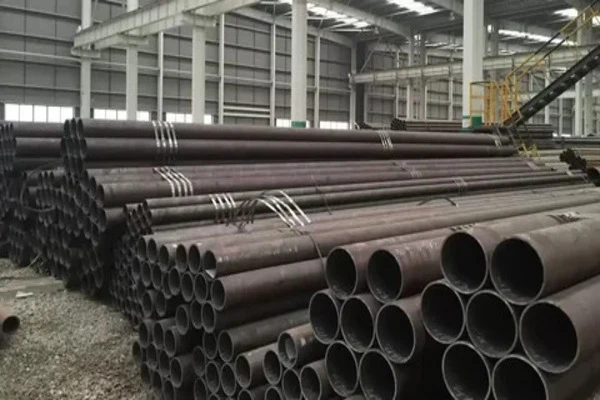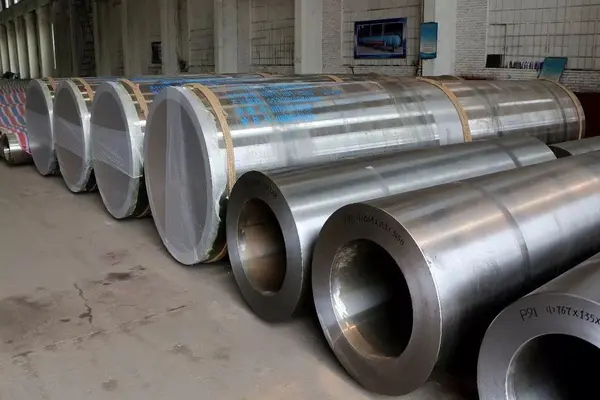

According to international standards and regional application habits, there are various types of pipe threads, each with its own characteristics and applicable scenarios. We can process various standard threads according to customer needs to meet the connection requirements of different regions and projects. The common pipe thread types are as follows:
1. NPT or NPS (National Pipe Tapered or Straight)
NPT (National Pipe Tapered) is a tapered pipe thread, and NPS (National Pipe Straight) is a straight pipe thread. Both are the most common thread types in North America, widely used in North American industrial pipelines, water supply and drainage systems, and mechanical equipment connections. They have good sealing performance and strong applicability.
2. MIP or FIP (Male or Female Iron Pipe)
MIP refers to male iron pipe threads, and FIP refers to female iron pipe threads. Their thread dimensions are the same as NPT threads, which can be compatible with NPT threaded fittings. They are often used in the connection of iron pipes and metal fittings, and are widely used in construction and industrial fields.
3. BSP(T) or BSP(S) (British Standard Pipe Tapered or Straight)
BSP(T) is a British standard tapered pipe thread, and BSP(S) is a British standard straight pipe thread. They are the most common thread types in Europe and most Commonwealth countries, and are widely used in European industrial pipelines, chemical equipment and water conservancy projects. Their structural design is reasonable and the connection is firm.
4. Compression
Compression thread is a unique threaded fitting, which has a special structural design and cannot be mated with other thread types. It is mainly used in scenarios that require high sealing performance, such as gas pipelines and high-pressure water supply pipelines, and has the advantages of convenient installation and reliable sealing.
5. UNS (National Unified Special)
UNS is a national unified special thread in the United States, which has special thread dimensions and specifications. Some UNS threads are compatible with compression fittings, and are often used in special equipment and precision mechanical connections that require high precision and special size requirements.
To ensure the safety of the processing process, the precision of the thread, and the reliability of the subsequent pipe connection, the following precautions must be strictly observed during the threading process:
- Parameter Control: Strictly follow international standards and customer requirements to set threading parameters (thread type, dimension, pitch, thread angle, etc.), and avoid random adjustment of parameters, which may lead to unqualified thread and affect the connection effect.
- Equipment Operation: Operators must be trained and certified before taking up the job, and strictly operate the threading equipment in accordance with the operating procedures. It is forbidden to operate the equipment without authorization or modify the equipment parameters, and regular maintenance and inspection of the equipment are required to avoid equipment failure.
- Material Adaptation: For different materials of steel pipes, select the appropriate threading speed and tool. For high-hardness materials (such as alloy steel), appropriately reduce the processing speed to avoid tool wear and thread defects; for stainless steel, take anti-adhesion measures to avoid thread damage.
- Workpiece Protection: During processing, avoid scratching the thread surface and the pipe body. After processing, handle the workpiece gently to avoid collision and damage to the thread, which may affect the connection tightness.
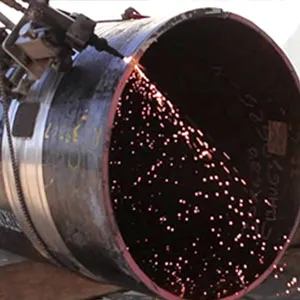
- Safety Protection: Operators must wear personal protective equipment (gloves, goggles, protective clothing, etc.) during operation to avoid injury caused by metal chips splashing during threading.
- Quality Inspection: Conduct full-process quality inspection during threading. For each batch of workpieces, sampling inspection and full inspection are combined to ensure that the thread quality meets the requirements. Unqualified workpieces are not allowed to enter the next process.








 English
 Español
 русский язык
 Português